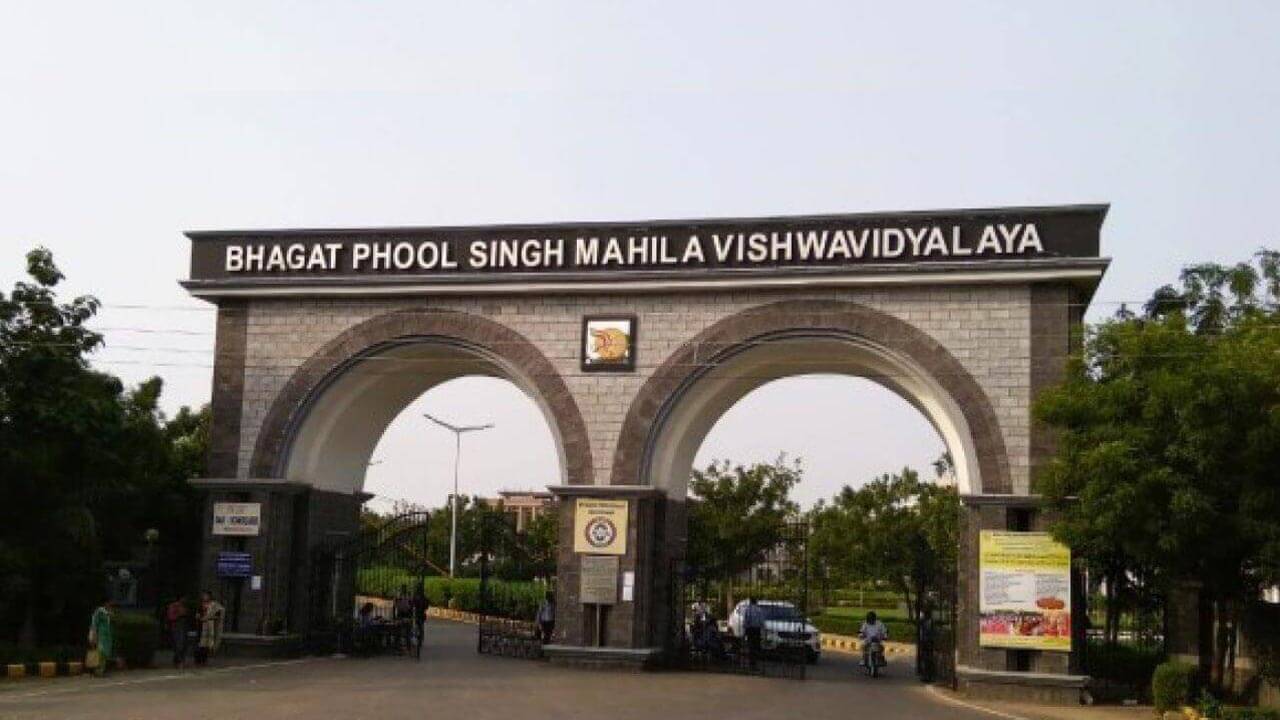
Introduction about Ph.D. From Dr. B. R. Ambedkar University of Social Sciences
Dr. B. R. Ambedkar University of Social Sciences, situated in Madhya Pradesh, stands as a pioneering institution dedicated to social sciences and interdisciplinary research, honoring the progressive vision of Dr. B. R. Ambedkar. The university provides an intellectually stimulating environment for scholars aspiring to excel in academia, policy-making, and various social sectors. At the core of its Ph.D. programs lies a commitment to advancing knowledge that addresses contemporary social challenges, fosters inclusive growth, and empowers marginalized communities.
Pursuing a Ph.D. from this esteemed university enables candidates to engage in rigorous research and develop critical insights that can shape public policy, social initiatives, and scholarly discourse. The faculty comprises a diverse group of academicians and researchers who bring their extensive expertise to mentoring doctoral candidates. By offering comprehensive coursework, well-equipped research centers, and a broad network of academic and industry collaborations, Dr. B. R. Ambedkar University of Social Sciences ensures that students are provided with the necessary resources to undertake groundbreaking work in their chosen disciplines.
In addition to academic pursuits, doctoral candidates benefit from the university’s emphasis on experiential learning, which includes fieldwork, workshops, national and international seminars, and community engagement programs. These activities broaden their understanding of real-world issues and create avenues for meaningful societal impact. The curriculum is carefully crafted to foster analytical thinking, empirical research skills, and ethical scholarship, enabling Ph.D. scholars to emerge as thought leaders and innovators. Thus, a Ph.D. from this university not only lays a strong foundation for a successful career in teaching or research but also empowers graduates to drive transformative change in society. Whether your goal is to advance in academia, undertake specialized research, or contribute to evidence-based policy-making, this university stands as an exemplary platform for realizing your academic ambitions.
Fee Structure for Ph.D. in Dr. B. R. Ambedkar University of Social Sciences
| Tuition Fee Per Year | Registration Fee | Total Fee |
|---|---|---|
| INR 25,000 | INR 5,000 | INR 30,000 |
Kindly note that the fee structure is subject to revision as per university norms. Prospective students should consult the official university website or contact the admissions office for updated fee details.
Admission Process For Ph.D. in Dr. B. R. Ambedkar University of Social Sciences
The university has developed a transparent and rigorous admission process to identify passionate scholars who can contribute significantly to social sciences research. Below is a concise overview of the key steps involved in the admission process:
- Fill out the online Ph.D. application form available on the university’s official website.
- Submit all necessary academic transcripts and certificates as per the specified eligibility criteria.
- Draft a comprehensive research proposal detailing the objectives, methodology, and relevance of your proposed study.
- Appear for an entrance exam if mandated for your subject area, or submit scores of a recognized national-level test where applicable.
- Undergo a personal interview or presentation round with the departmental research committee.
- Obtain final selection and admission offer based on cumulative performance and document verification.
- Complete the formalities by paying the admission fee and registering for the Ph.D. coursework.
Applicants are strongly advised to review the admission guidelines thoroughly and meet all deadlines to ensure a smooth application experience.
Ph.D. Subjects in Dr. B. R. Ambedkar University of Social Sciences
| Discipline | Research Areas |
|---|---|
| Economics | Microeconomics, Macroeconomics, Development Economics, Agricultural Economics |
| Sociology | Rural Sociology, Urban Sociology, Gender Studies, Social Change and Development |
| Political Science | International Relations, Political Theory, Indian Government and Politics, Public Administration |
| Social Work | Community Development, Child Welfare, Social Policy, Medical and Psychiatric Social Work |
| History | Modern Indian History, Social and Cultural History, Economic History |
| Philosophy | Ethics, Logic and Epistemology, Indian Philosophy, Western Philosophy |
| Extension Education | Agricultural Extension, Community Engagement, Adult Education, Participatory Research |
The university regularly updates its course offerings to reflect emerging areas of research in social sciences and allied disciplines.
Document Required For Ph.D. in Dr. B. R. Ambedkar University of Social Sciences
Candidates must submit a set of mandatory documents to validate their academic and personal credentials. Ensure that all documents are accurate, complete, and in the prescribed format to avoid delays during the admission review process.
- Completed Ph.D. application form (online or offline, as instructed).
- Proof of academic qualifications (Bachelor’s and Master’s degree certificates, mark sheets).
- Identity proof (Aadhaar, PAN card, Passport, or equivalent).
- Research proposal highlighting the study’s significance, methodology, and expected outcomes.
- Certificates of relevant work experience or published research, if any.
- No Objection Certificate (NOC) from employer, if applicable.
- Passport-sized photographs as per the specified guidelines.
- Proof of application fee payment (receipt or transaction ID).
Dr. B. R. Ambedkar University of Social Sciences Ph.D. Syllabus
| Year/Semester | Course Components |
|---|---|
| Year 1 | Core Modules: Research Methodology, Advanced Theories in Social Sciences, Quantitative & Qualitative Analysis Seminars & Workshops: Literature Review, Academic Writing, Ethical Research Practices |
| Year 2 | Specialized Courses: Discipline-Specific Electives, Field Work Preparation, Data Collection Tools Research Assignments: Pilot Study, Proposal Defense, Conferences & Symposiums |
| Year 3 | Dissertation Phase: Detailed Research, Thesis Drafting, Progress Seminars Viva & Publications: Final Defense, Journal Publication, Peer Review Feedback |
The above framework may vary slightly depending on the specific department and any updates implemented by the academic council.
Dr. B. R. Ambedkar University of Social Sciences Research Methodology
- Holistic approach integrating both quantitative and qualitative paradigms.
- Rigorous training in statistical techniques, survey design, and empirical data analysis.
- Workshops on software tools like SPSS, STATA, R, or NVivo for data management and analysis.
- Emphasis on participatory research methods and community engagement for real-world applicability.
- In-depth exploration of case study research, ethnographic methods, and comparative analysis.
- Continuous mentorship and feedback through research committees and faculty advisors.
- Encouragement for interdisciplinary methodologies to address complex societal challenges.
Dr. B. R. Ambedkar University of Social Sciences Highlights
| Highlight | Information |
|---|---|
| Founding Ethos | Inspired by Dr. B. R. Ambedkar’s vision for social justice and equality through education. |
| Academic Reputation | Renowned for in-depth research in social sciences, policy studies, and community engagement. |
| Infrastructure | Modern classrooms, extensive library with digital resources, and dedicated research centers. |
| Faculty Expertise | Accomplished academicians with diverse backgrounds and substantial research portfolios. |
| Collaborations | Tie-ups with government bodies, NGOs, and international universities for joint research projects. |
| Workshops & Seminars | Regular events focusing on contemporary issues, professional development, and interdisciplinary dialogue. |
| Community Outreach | Emphasis on field-based research, rural development programs, and social uplift initiatives. |
| Placement Assistance | Guidance for academic positions, government roles, and research opportunities in various sectors. |
How To Apply For Ph.D. in Dr. B. R. Ambedkar University of Social Sciences
- Visit the official university website and download the Ph.D. admission prospectus.
- Check eligibility criteria for your chosen specialization, ensuring you meet minimum academic requirements.
- Register on the university’s admissions portal and create a login ID and password.
- Accurately complete the online application form, providing personal, academic, and contact details.
- Upload scanned copies of your degree certificates, mark sheets, and other relevant documents.
- Draft a research proposal emphasizing the scope, methodology, and societal relevance of your study.
- Pay the application fee through the prescribed online or offline payment modes.
- Download your application confirmation or keep a printout as proof of successful submission.
- Appear for the entrance exam or interview if required by your department.
- Keep track of official notifications and emails for updates on shortlisting, result announcements, and further steps.
Courses After Ph.D. in Dr. B. R. Ambedkar University of Social Sciences
- Post-Doctoral Fellowships in specialized social science domains.
- Advanced Certifications in policy analysis, data science, or community development.
- Professional Diplomas focusing on leadership, innovation, or management.
- Research Associate or Research Scientist roles in academic and private institutions.
- UGC/ICSSR-funded research projects or international collaborative research programs.
Dr. B. R. Ambedkar University of Social Sciences Scholarship
Dr. B. R. Ambedkar University of Social Sciences offers a variety of scholarships aimed at supporting meritorious and financially disadvantaged students. The scholarships are designed to encourage research initiatives and foster academic excellence, ensuring that passionate researchers have the resources they need to succeed. The university’s scholarship policy also includes provisions for minority communities and special categories to promote inclusivity. Students enrolled in doctoral programs may apply for these scholarships by submitting an application along with relevant academic credentials, income certificates, and other required documents. Successful candidates often benefit from fee waivers, stipends, or grants that cover research-related costs such as field visits and data collection. By reducing the financial burden on scholars, these scholarships enable dedicated individuals to concentrate fully on their research endeavors, thereby contributing valuable insights to the field of social sciences.
- Merit-based scholarships for students with outstanding academic records.
- Government-sponsored scholarships for candidates from specific socio-economic backgrounds.
- Research project grants to fund specialized or community-based research initiatives.
- Teaching Assistantships that offer both a stipend and professional teaching experience.
Dr. B. R. Ambedkar University of Social Sciences FAQ's Regarding Ph.D.
- What is the minimum eligibility to apply for a Ph.D. program here?
Candidates typically need a Master’s degree in a relevant field with a minimum qualifying percentage. Some specializations may have additional criteria.
- How long does the Ph.D. program usually take to complete?
The duration generally ranges from three to five years, depending on research progress, coursework, and dissertation requirements.
- Are part-time or distance Ph.D. options available?
Part-time Ph.D. opportunities might be available for working professionals, subject to specific department guidelines. Distance Ph.D. programs are less common.
- Is there an entrance test for admission to the Ph.D. program?
Yes, many departments require an entrance exam. However, candidates with certain national-level test scores (e.g., UGC-NET) may be exempted.
- Can international students apply for the Ph.D. program?
Yes, the university welcomes international candidates who fulfill the eligibility requirements and possess the necessary student visa and travel documents.
- What kind of financial aid or scholarships are available for Ph.D. scholars?
The university offers various scholarships, including merit-based, government-funded, and project-specific grants. Students are advised to apply early to secure funding.
- Can I choose my own research supervisor?
While you can express a preference, the final allocation often depends on faculty availability and the alignment of your research proposal with their expertise.
- Do I need to publish research papers during the Ph.D. tenure?
Most departments encourage or require at least one publication in a peer-reviewed journal before thesis submission.
- Is an interview mandatory for Ph.D. admission?
Yes, in addition to the entrance exam, a personal interview or presentation is commonly part of the selection process.
- What career opportunities are available after completing a Ph.D. from this university?
Graduates often pursue careers in academia, research institutions, government agencies, NGOs, and policy think-tanks, leveraging their doctoral expertise.