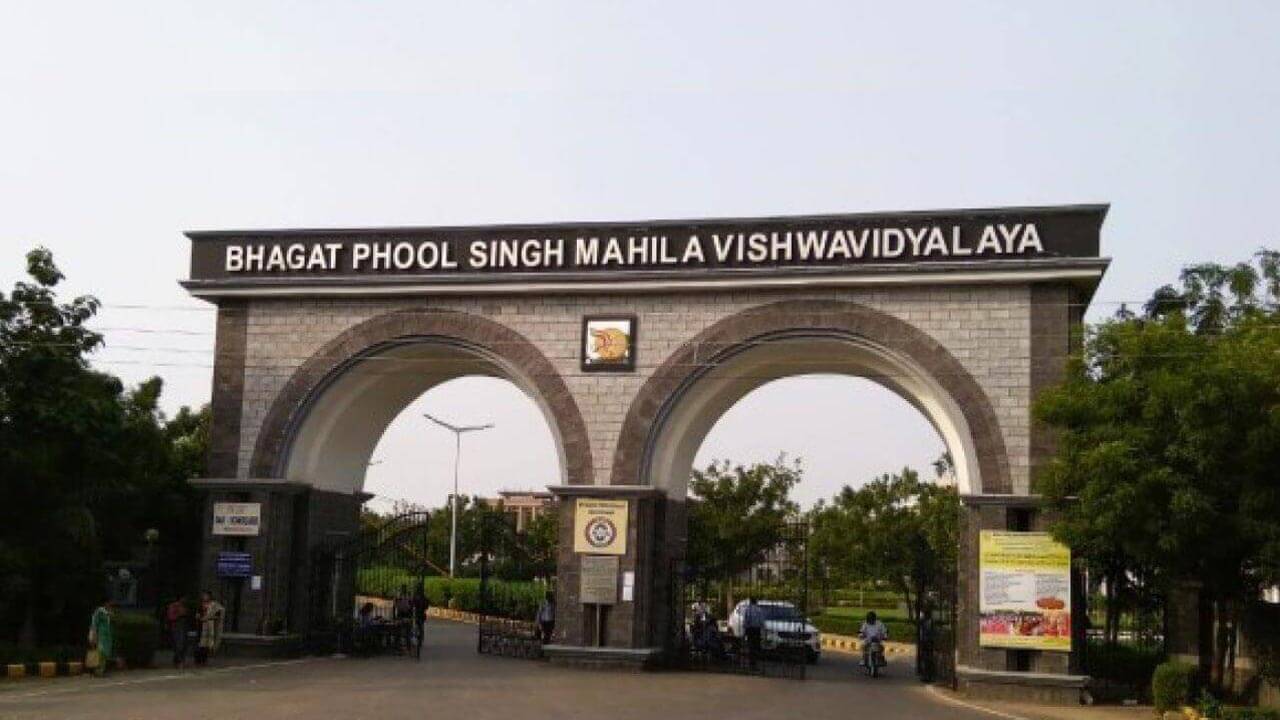
Introduction about Ph.D. From Dr. Babasaheb Ambedkar Open University
Dr. Babasaheb Ambedkar Open University (BAOU), located in Gujarat, stands out as a pioneering institution committed to distance and open learning. Established with the objective of making higher education accessible to all, BAOU extends its educational ethos to doctoral programs, including Ph.D. offerings across diverse disciplines. The university embraces Dr. Babasaheb Ambedkar’s vision of social justice, empowerment, and inclusivity, ensuring that students from various socio-economic backgrounds can pursue advanced research without geographical or time-bound constraints.
Opting for a Ph.D. from BAOU means immersing yourself in a flexible yet rigorous academic environment designed to accommodate working professionals, remote learners, and scholars balancing personal commitments. Through an innovative blend of digital resources, study materials, and regular interactive sessions—often conducted online—BAOU provides the scaffolding required to undertake high-level research. Equally noteworthy is the university’s emphasis on academic integrity and ethical research practices, preparing doctoral candidates to contribute original insights to their chosen fields.
Guided by experienced faculty and supported by a wealth of scholarly materials, Ph.D. candidates at BAOU are encouraged to align their research projects with current global challenges, policy initiatives, and industry needs. This practical orientation enhances the real-world relevance of doctoral work, whether the research focuses on technological breakthroughs, socio-economic development, educational methodologies, or management innovations. Moreover, BAOU fosters an environment that values interdisciplinary dialogue, thereby enabling students to collaborate with peers across different fields, share ideas, and expand their academic horizons. In sum, pursuing a Ph.D. at Dr. Babasaheb Ambedkar Open University is a gateway to elevating your intellectual pursuits while contributing meaningfully to society at large.
Fee Structure for Ph.D. in Dr. Babasaheb Ambedkar Open University
| Tuition Fee Per Year | Registration Fee | Total Fee |
|---|---|---|
| INR 30,000 | INR 5,000 | INR 35,000 |
Please note that the fee structure is indicative and may be subject to changes based on university policies. Prospective candidates are advised to check the latest updates on the official BAOU website or through the admissions office for accurate fee details.
Admission Process For Ph.D. in Dr. Babasaheb Ambedkar Open University
Dr. Babasaheb Ambedkar Open University has a transparent and structured admission process for doctoral studies, ensuring that only motivated and capable scholars join its research community. While the exact criteria may vary across departments, the general admission steps include the following:
- Acquire the Ph.D. application form, available on the official BAOU website or at designated study centers.
- Submit relevant academic transcripts, usually from bachelor’s and master’s degrees, verifying you meet the eligibility requirements.
- Some departments may conduct an entrance exam or accept national-level test scores (such as UGC-NET), depending on your chosen discipline.
- Shortlisted candidates are invited for an interview or to present a preliminary research proposal.
- Final selection is based on a composite evaluation of academic credentials, test/interview performance, and the proposed research’s potential impact.
- Once selected, pay the necessary fees and complete registration within the stipulated timeframe to confirm your seat.
Candidates should stay informed about deadlines and departmental announcements to avoid missing any crucial steps in the admission cycle.
Ph.D. Subjects in Dr. Babasaheb Ambedkar Open University
| Discipline | Available Research Areas |
|---|---|
| Social Sciences | Sociology, Political Science, Economics, Rural Development |
| Humanities | English, Hindi, Gujarati, History, Philosophy |
| Management & Commerce | Business Administration, Finance, Marketing, Accounting |
| Education | Teacher Education, Curriculum Development, Educational Technology |
| Library & Information Science | Digital Libraries, Knowledge Management, Information Retrieval Systems |
| Computer Science (Selected Streams) | Software Engineering, Data Science, E-Governance |
The university regularly reviews and expands its research offerings, incorporating emerging fields and interdisciplinary domains to meet the evolving academic landscape.
Document Required For Ph.D. in Dr. Babasaheb Ambedkar Open University
To ensure a seamless admission process, prospective doctoral candidates should assemble all necessary documentation ahead of time. While departmental specifics can vary, the following are typically required:
- Completed Ph.D. application form (online or offline).
- Attested copies of academic qualifications (bachelor’s and master’s degrees).
- Proof of date of birth (government-issued documents such as Aadhaar, passport, or birth certificate).
- A well-articulated research proposal delineating aims, objectives, and proposed methodology.
- Letters of recommendation from academic or professional referees, generally two to three.
- Entrance exam scorecards (if mandated by the department or required at a national level).
- No Objection Certificate (NOC) for employed candidates.
- Passport-sized photographs as specified by university guidelines.
Dr. Babasaheb Ambedkar Open University Ph.D. Syllabus
| Year / Semester | Course Components |
|---|---|
| Year 1 | Core Research Modules: Research Methodology, Literature Review, Academic Writing Workshops & Seminars: Data Analysis Tools, Digital Resources Utilization, Ethical Research Field/Project Work: Planning Pilot Studies, Initial Data Collection (if relevant) |
| Year 2 | Specialized Papers: Discipline-Specific Electives, Case-Based Discussions Research Assignments: Ongoing Data Collection, Intermediate Findings Presentation Peer Review Sessions: Collaborative Feedback, Drafting of Preliminary Chapters/Articles |
| Year 3 | Thesis Development: Final Data Analysis, Thesis Chapter Drafting, Incorporating Feedback Publications & Conferences: Submitting Papers to Journals, Presenting at Seminars Final Assessment: Thesis Submission, Viva Voce, External Evaluation |
Exact coursework may vary across departments, reflecting disciplinary nuances and advancements in research methodologies.
Dr. Babasaheb Ambedkar Open University Research Methodology
- Combining online learning modules with occasional in-person workshops or seminars.
- In-depth training in both qualitative and quantitative research frameworks.
- Usage of statistical and analytical software like SPSS, R, or Python for empirical data handling.
- Ethical guidelines and plagiarism checks to maintain high standards of academic integrity.
- Regular mentor-mentee interactions for refining research questions and frameworks.
- Case studies and real-world application approaches to bridge theory with practice.
- Workshops on research paper writing, grant proposal drafting, and publication best practices.
Dr. Babasaheb Ambedkar Open University Highlights
| Highlight | Information |
|---|---|
| Establishment & Vision | Founded to provide inclusive distance education in line with Dr. B.R. Ambedkar’s principles of social justice. |
| Academic Format | Flexible learning structure catering to working professionals, remote learners, and diverse socio-economic groups. |
| Infrastructure | Online learning portals, digital libraries, regional study centers for periodic engagements. |
| Faculties & Disciplines | Social Sciences, Humanities, Education, Management & Commerce, Library Science, and selected technology fields. |
| Faculty Expertise | Dedicated mentors, experienced academicians, and guest lecturers from various industries and research organizations. |
| Collaboration & Networking | Tie-ups with national and international organizations for joint research, conferences, and workshops. |
| Evaluation System | Combination of continuous assessments, project-based submissions, and final viva voce for Ph.D. candidates. |
| Student Services | Study materials, helpline, academic counseling, and online support for seamless learning experiences. |
How To Apply For Ph.D. in Dr. Babasaheb Ambedkar Open University
- Visit the official BAOU website to download or access the Ph.D. application form online.
- Confirm eligibility criteria, such as relevant master’s degree and minimum required marks.
- Fill out the application form accurately, attaching all required academic and personal documents.
- Draft a well-formulated research proposal, highlighting your research objectives and proposed methodology.
- Pay the application fee using the prescribed online or offline payment methods.
- Check if the department demands an entrance exam or national-level test scores (UGC-NET, etc.).
- Submit the completed application before the given deadline to avoid delays.
- Wait for the shortlisting results; if selected, attend the interview or research proposal presentation.
- Upon receiving an offer, finalize admission by paying the required fees and completing all formalities.
- Begin your Ph.D. journey with the assigned faculty mentor and follow the academic schedule shared by BAOU.
Courses After Ph.D. in Dr. Babasaheb Ambedkar Open University
- Post-Doctoral Research Programs for deeper specialization.
- Professional Certifications in leadership, data analytics, or educational management.
- Faculty Development Courses if aiming for a long-term academic career.
- Advanced Diplomas in interdisciplinary fields like Intellectual Property Rights or Environmental Studies.
- Short-term Industry-Integrated Programs bridging research findings and practical applications.
Dr. Babasaheb Ambedkar Open University Scholarship
Dr. Babasaheb Ambedkar Open University is dedicated to democratizing higher education through flexible learning modes and financial support for deserving candidates. To fulfill this mission, BAOU offers multiple scholarships that cater to a variety of needs. Whether you exhibit exceptional academic merit or come from an economically constrained background, the university aims to reduce financial barriers and nurture your scholarly potential. These funding opportunities extend to working professionals seeking to upgrade their credentials, individuals pursuing socially impactful research, and students from underrepresented communities. By forging partnerships with government schemes, charitable organizations, and private sector stakeholders, BAOU further expands its scholarship ecosystem, ensuring a diverse and inclusive academic environment. Through these targeted scholarships, doctoral students can focus on rigorous research, contributing original findings and thought leadership in their respective fields without the added burden of undue financial stress.
- Merit-Based Scholarships for students with outstanding academic records.
- Need-Based Financial Assistance designed for economically disadvantaged candidates.
- Project-Specific Fellowships encouraging innovation in priority research areas.
- Government-Funded Grants aligned with national educational initiatives and social welfare objectives.
Dr. Babasaheb Ambedkar Open University FAQ's Regarding Ph.D.
- What are the basic eligibility criteria for Ph.D. admission?
You generally need a Master’s degree in a relevant field with the minimum qualifying marks set by BAOU. Some subjects may have additional requisites like entrance exams or specific GPAs.
- Is distance learning feasible for a Ph.D.?
Yes. BAOU’s flexible distance education model caters to professionals and remote learners, integrating online tools, digital resources, and limited contact sessions for effective research guidance.
- Does BAOU accept national-level exam scores?
Yes. Depending on the department and subject, BAOU may accept recognized national-level test scores such as UGC-NET or SET, potentially exempting you from a separate university entrance exam.
- Is there any provision for part-time Ph.D.?
BAOU’s open learning format inherently accommodates part-time researchers. Official policies vary by department, so confirm availability and specific guidelines within your chosen field of study.
- How long does a Ph.D. usually take at BAOU?
Ph.D. programs commonly span three to five years, depending on research complexity, timely data collection, and successful completion of all academic milestones.
- What is the role of a research proposal during admissions?
The research proposal demonstrates your readiness, identifies your study’s scope, and clarifies how you plan to conduct your investigation—playing a significant role in selection decisions.
- Can international students apply for BAOU’s Ph.D. programs?
Yes. However, international applicants must meet eligibility norms and secure valid student visas, alongside adhering to other regulations imposed by the Indian government and BAOU.
- Are there any mandatory publication requirements before thesis submission?
Many departments encourage at least one publication in a peer-reviewed journal to validate your research findings, though the exact requirement may differ by discipline.
- Does BAOU offer on-campus accommodations?
As an open university focusing on distance learning, BAOU typically doesn’t provide extensive hostel facilities. Students often rely on private accommodations or their local residences.
- What are the career opportunities after completing a Ph.D. from BAOU?
Graduates can pursue careers in academia, research institutes, corporate R&D, government policy-making, NGOs, or become independent consultants or entrepreneurs, leveraging their doctoral expertise.