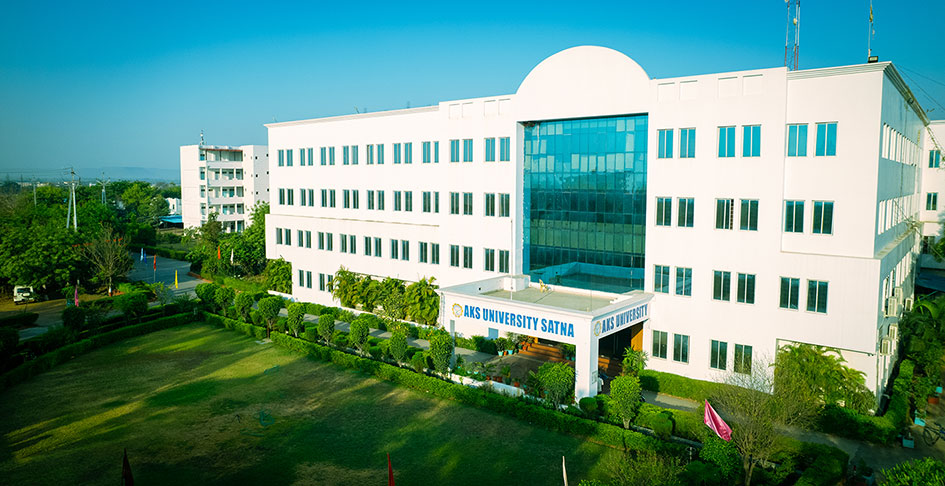
Introduction about Ph.D. in Environmental Science at A.K.S. University
The Ph.D. in Environmental Science at A.K.S. University is designed for forward‑thinking professionals who aspire to lead transformative research in sustainability, climate change mitigation, and natural resource management. This doctoral program blends rigorous classroom instruction with cutting‑edge fieldwork, empowering candidates to become innovators, policy influencers, and thought leaders in the global environmental arena. Whether you are a seasoned researcher, a senior environmental consultant, or a passionate scientist, the journey at A.K.S. University will sharpen your analytical acumen, broaden your interdisciplinary perspective, and open doors to impactful career opportunities.
Eligibility Criteria for Ph.D. in Environmental Science at A.K.S. University
Prospective scholars must satisfy the following minimum requirements:
- A Master's degree (M.Sc., M.Tech., MA, or equivalent) in Environmental Science, Ecology, Geography, Chemistry, Biology, or a closely related discipline with a minimum aggregate of 55 % (or CGPA 6.0 on a 10‑point scale).
- For candidates holding a B.Tech. / B.Sc. with a minimum of 60 %, the university may consider direct admission provided they have demonstrated research competence through publications or a strong research proposal.
- Qualifying national or university‑level entrance examination score (see next section).
- Proficiency in English (minimum IELTS 6.0 or TOEFL 80) for candidates whose prior education was not in English.
Entrance Exam for Ph.D. in Environmental Science at A.K.S. University
A.K.S. University conducts a two‑stage entrance assessment:
- Written Test: 100‑mark objective/short‑answer paper covering core environmental concepts, research methodology, statistics, and analytical reasoning.
- Interview & Research Proposal Presentation: Candidates present a concise 10‑minute research proposal, followed by a viva‑voce to evaluate depth of knowledge, originality, and feasibility.
Preparation resources such as Research Paper Writing Services and Research Data Analysis Services can help refine your proposal and boost confidence for the interview.
Fee Structure for Ph.D. in Environmental Science at A.K.S. University
| Component | Annual Fee (INR) |
|---|---|
| Tuition & Lecture Fees | 85,000 |
| Laboratory & Fieldwork Charges | 30,000 |
| Library & Digital Resource Access | 10,000 |
| Administrative & Examination Fees | 5,000 |
| Total (per year) | 130,000 |
Students may be eligible for merit‑based scholarships, research assistantships, or industry‑sponsored fellowships that can offset up to 50 % of the total fee.
Admission Process for Ph.D. in Environmental Science at A.K.S. University
- Complete the online application form on the university’s portal.
- Upload scanned copies of academic transcripts, degree certificates, English proficiency scores, and a detailed research proposal.
- Pay the non‑refundable application fee (INR 2,500).
- Schedule the written entrance exam and submit the required documents before the deadline.
- Participate in the interview and proposal presentation.
- Await the admission decision (typically communicated within 4 weeks of the interview).
- Upon acceptance, finalize enrollment by paying the first year’s tuition and submitting a signed declaration.
For personalized guidance, the university’s admission support team collaborates with external experts offering PhD Admission Assistance and PhD Topic Selection and Proposal Assistance.
Ph.D. Subjects and Specializations in Environmental Science at A.K.S. University
Students can tailor their doctoral research across several cutting‑edge specializations:
- Climate Change Modelling & Impact Assessment
- Renewable Energy Systems & Sustainable Technologies
- Water Resources Management & Hydro‑Ecology
- Environmental Toxicology & Public Health
- Urban Planning, Green Infrastructure, and Smart Cities
- Conservation Biology & Biodiversity Restoration
- Environmental Policy, Law, and Governance
Research Areas in Environmental Science at A.K.S. University
Faculty‑led research clusters focus on high‑impact domains that align with national and global sustainability goals:
- Carbon Sequestration & Emission Reduction: Field experiments, remote sensing, and life‑cycle analysis of carbon capture technologies.
- Climate Resilience & Adaptation Strategies: Socio‑economic vulnerability assessments and community‑based adaptation frameworks.
- Integrated Water‑Energy‑Food Nexus: Optimizing resource allocation in arid and semi‑arid regions.
- Environmental Toxicology: Assessing the impact of microplastics, heavy metals, and emerging contaminants on ecosystems.
- Policy & Governance: Evaluating the effectiveness of international climate accords and national regulatory mechanisms.
Documents Required for Ph.D. in Environmental Science at A.K.S. University
| Document | Format |
|---|---|
| Application Form (online) | PDF/HTML |
| Academic Transcripts & Degree Certificates | Scanned PDFs (authentic) |
| English Proficiency Certificate (IELTS/TOEFL) | Official PDF |
| Research Proposal (max 3000 words) | Word/PDF |
| Curriculum Vitae (updated) | |
| Two Academic Reference Letters | PDF (signed) |
| Entrance Exam Scorecard (if applicable) | PDF/Scanned copy |
A.K.S. University Ph.D. Syllabus for Environmental Science
The doctoral syllabus is structured into three core phases:
- Phase I – Foundation Modules (Year 1): Advanced Statistics, Research Methodology, GIS & Remote Sensing, Environmental Law, and Ethics.
- Phase II – Specialized Coursework (Year 2): Choose from electives aligned with your specialization (e.g., Climate Modelling, Water Resources Engineering, Toxicology). Each elective includes project work and seminars.
- Phase III – Dissertation Research (Year 3‑5): Original research under a faculty supervisor, culminating in a peer‑reviewed thesis and defense.
A.K.S. University Research Methodology for Ph.D. in Environmental Science
Students are trained in a blend of quantitative, qualitative, and mixed‑methods approaches:
- Statistical analysis using R, SPSS, and Python.
- Geospatial analysis with ArcGIS, QGIS, and Google Earth Engine.
- Laboratory techniques for pollutant detection (GC‑MS, HPLC).
- Field survey design, sampling protocols, and community‑based participatory research.
- Scientific writing and peer‑review processes—supported by Editing and Proofreading Services and Research Publication Support.
Highlights of Ph.D. in Environmental Science at A.K.S. University
| Feature | Benefit |
|---|---|
| Interdisciplinary Faculty | Mentorship from experts in ecology, engineering, policy, and law. |
| State‑of‑the‑Art Labs & Field Stations | Hands‑on experience with cutting‑edge instrumentation. |
| Industry Collaborations | Internships, funded projects, and networking with leading environmental firms. |
| International Exchange Programs | Opportunities to conduct joint research at partner universities abroad. |
| Scholarships & Fellowships | Financial support covering tuition, stipends, and research expenses. |
How To Apply for Ph.D. in Environmental Science at A.K.S. University
Follow these step‑by‑step instructions to submit a successful application:
- Visit the official Complete Guide to PhD Admission & Research Services page for the latest deadlines.
- Create an account on the university’s admission portal and fill in personal and academic details.
- Upload all required documents (see “Documents Required” table).
- Draft a compelling research proposal; consider using Thesis and Dissertation Writing Services to polish your narrative.
- Pay the application fee and schedule your entrance exam.
- Prepare for the interview; practice presenting your proposal with the help of Questionnaire Design and Development tools for mock Q&A sessions.
- Submit the final application and monitor status through the portal.
Career Scope and Job Opportunities After Ph.D. in Environmental Science from A.K.S. University
Graduates enjoy a broad spectrum of high‑impact roles, such as:
- Senior Research Scientist – Government labs (CSIR, ISRO, MoEFCC)
- Environmental Consultant – Multinational corporations (Shell, Unilever, Tata Projects)
- Policy Analyst / Advisor – International NGOs (WWF, IUCN) and UN agencies.
- University Professor / Academic Leader – Teaching and supervising future researchers.
- Chief Sustainability Officer – Corporate sustainability & ESG reporting.
- Entrepreneur – Founding eco‑tech startups focused on clean technologies.
Enhanced employability is further supported by the university’s dedicated Patent Filing and Support Services, enabling scholars to protect and commercialize innovative solutions.
Scholarship for Ph.D. in Environmental Science at A.K.S. University
A.K.S. University offers several merit‑based and need‑based scholarships, including:
- University Merit Scholarship: Up to 50 % tuition waiver for top 10 % rankers in the entrance exam.
- Research Fellowship: Stipend of INR 25,000 per month for students securing external grants.
- Industry‑Sponsored Fellowship: Partner companies fund project‑specific expenses and provide internship allowances.
- Government Schemes: UGC‑NGP, AICTE‑PG scholarships for eligible candidates.
Applications for scholarships are integrated into the admission portal; candidates must upload supporting evidence (e.g., previous publications, project proposals).
FAQs Regarding Ph.D. in Environmental Science at A.K.S. University
- Q1: What is the minimum duration to complete the Ph.D.?
- A: The program is typically 3‑5 years, depending on research progress and publication requirements.
- Q2: Can I pursue the Ph.D. part‑time while working?
- A: Yes, A.K.S. University offers a flexible part‑time mode with evening seminars and online coursework.
- Q3: Is there a requirement for publishing research papers before submission of the thesis?
- A: Candidates must have at least two papers published in peer‑reviewed journals or presented at recognized conferences.
- Q4: Are there opportunities for international collaborations?
- A: The university maintains MoUs with several overseas institutions, enabling joint projects, exchange visits, and co‑supervision.
- Q5: How does the university support dissertation writing?
- A: Dedicated writing workshops, access to Thesis and Dissertation Writing Services, and one‑on‑one mentorship ensure a high‑quality thesis.