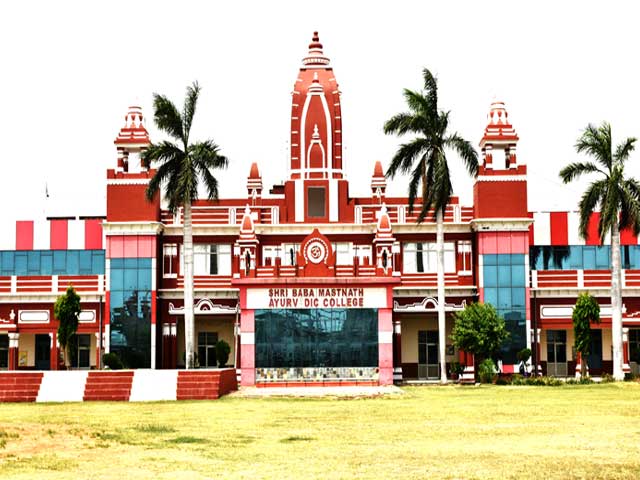
Introduction about Ph.D. in Library & Information Science at Baba Mastnath University
The Doctoral programme in Library & Information Science (LIS) at Baba Mastnath University is designed for seasoned professionals who aspire to lead research, policy making and innovation in the information ecosystem. This interdisciplinary Ph.D. blends rigorous theoretical foundations with cutting‑edge practice, empowering scholars to shape the future of libraries, digital archives, knowledge management, and information services worldwide. Whether you aim to develop advanced analytics for collection development, pioneer data‑driven user experience models, or influence national information policies, this programme provides the scholarly platform and mentorship needed to turn vision into impact.
Eligibility Criteria for Ph.D. in Library & Information Science at Baba Mastnath University
- Master’s degree (M.Sc., M.A., or equivalent) in Library Science, Information Science, Documentation, or a closely related discipline with a minimum of 55% marks (or 5.5 CGPA on a 10‑point scale).
- Candidates holding a Master’s degree in any discipline may also apply provided they have at least 2 years of professional experience in a library, information centre, or related research environment.
- Qualified national-level tests such as UGC‑NET (Library & Information Science) or CSIR‑NET are preferred but not mandatory.
- Non‑resident Indian (NRI) and foreign candidates must satisfy the University’s English proficiency requirement (IELTS ≥ 6.0 or TOEFL ≥ 80).
Entrance Exam for Ph.D. in Library & Information Science at Baba Mastnath University
The university conducts a structured entrance examination to assess research aptitude, subject knowledge, and analytical ability. The exam comprises three sections:
- Research Aptitude – 30 marks (essay, hypothesis formulation, literature review basics).
- Core LIS Knowledge – 40 marks (cataloguing, digital libraries, information retrieval, statistics).
- General English & Reasoning – 30 marks.
Applicants who have cleared UGC‑NET or CSIR‑NET can request a waiver of the entrance test by submitting the official scorecard.
Fee Structure for Ph.D. in Library & Information Science at Baba Mastnath University
| Fee Component | Amount (INR) |
|---|---|
| Application Processing Fee | 2,500 |
| Entrance Examination Fee | 5,000 |
| Annual Tuition & Lab Charges (3 years) | 1,20,000 |
| Research & Publication Grant (optional) | 30,000 |
| Library & Resource Access Fee | 10,000 |
| Total Estimated Cost | 1,67,500 |
Scholarships, fellowships and industry‑sponsored research grants can significantly reduce the payable amount. Detailed financial aid information is available on the university’s official portal.
Admission Process for Ph.D. in Library & Information Science at Baba Mastnath University
- Online application submission through the university’s Ph.D. Admissions Portal.
- Upload scanned copies of academic transcripts, degree certificates, identity proof, and a research proposal (max 1500 words).
- Pay the non‑refundable application fee.
- Appear for the entrance examination (or submit UGC‑NET/CSIR‑NET score for waiver).
- Interview with the Departmental Selection Committee – focused on research interests, methodology awareness, and career goals.
- Final admission letter issued after verification of all documents and payment of the first-year tuition fee.
Ph.D. Subjects and Specializations in Library & Information Science at Baba Mastnath University
- Digital Libraries and E‑Resources Management
- Information Retrieval and Knowledge Discovery
- Library Management Systems & Automation
- Archival Science and Preservation
- Data Curation, Big Data Analytics in LIS
- Information Policy, Ethics, and Legal Frameworks
- Human‑Computer Interaction for Information Services
Research Areas in Library & Information Science at Baba Mastnath University
Faculty members actively supervise research in the following high‑impact domains:
- Artificial Intelligence applications for catalogue enrichment and recommender systems.
- Open Access publishing models and scholarly communication.
- Preservation of cultural heritage through digitisation and metadata standards.
- Social media mining for community information behaviour analysis.
- User‑centric design of virtual libraries and mobile information portals.
- Information literacy frameworks for diverse learner populations.
Documents Required for Ph.D. in Library & Information Science at Baba Mastnath University
| Document | Format |
|---|---|
| Completed Application Form (online) | |
| Mark sheets & Degree Certificates (M.Sc./M.A.) | Scanned PDF (color) |
| UGC‑NET/CSIR‑NET Score Card (if applicable) | |
| Research Proposal (max 1500 words) | DOCX or PDF |
| Curriculum Vitae (academic & professional) | |
| English proficiency certificate (IELTS/TOEFL) – for NRI/foreign candidates | |
| Passport size photograph | JPEG (300 dpi) |
Baba Mastnath University Ph.D. Syllabus for Library & Information Science
The doctoral syllabus is structured into three phases: Core Foundations, Research Methodology, and Dissertation Development.
- Core Foundations (Year 1):
- Advanced Information Retrieval
- Digital Library Architecture
- Metadata Standards & Ontologies
- Statistical Methods for Librarianship
- Research Methodology (Year 2):
- Quantitative & Qualitative Research Design
- Survey Instruments & Questionnaire Development Questionnaire Design and Development
- Data Analysis using SPSS, R, and Python
- Ethics & Intellectual Property in LIS
- Dissertation Development (Year 3):
- Thesis Writing Workshops Thesis and Dissertation Writing Services
- Peer‑reviewed Publication Strategies
- Conference Presentation & Networking
- Defense and Viva‑voce
Baba Mastnath University Research Methodology for Ph.D. in Library & Information Science
Students are trained in a blend of traditional and emerging methodologies:
- Systematic Literature Review – critical appraisal of existing LIS literature.
- Mixed‑Methods Research – integrating surveys, interviews, and usage analytics.
- Experimental Design – testing new cataloguing algorithms or user interfaces.
- Big Data Analytics – employing Hadoop and Spark for large‑scale information patterns.
- Action Research – collaborative projects with libraries and information centres.
For specialized data handling, candidates may avail of Research Data Analysis Services and Research Paper Writing Services offered by our partner network.
Highlights of Ph.D. in Library & Information Science at Baba Mastnath University
| Feature | Benefit |
|---|---|
| Fully online & hybrid delivery | Flexibility for working professionals across India and abroad. |
| Dedicated research labs & digital repositories | Immediate access to premium datasets and archival material. |
| Industry‑linked projects & internships | Real‑world exposure and potential employment pipelines. |
| Financial aid & merit‑based scholarships | Reduced tuition burden for high‑achieving scholars. |
| Publication support & editorial assistance | Accelerated indexing in Scopus, Web of Science, and DOAJ. |
How To Apply for Ph.D. in Library & Information Science at Baba Mastnath University
- Visit the official PhD Admission Assistance page and create a new user account.
- Complete the online application form and upload the required documents (see the Documents table above).
- Pay the application fee via the secure gateway.
- Schedule your entrance test or submit a valid UGC‑NET/CSIR‑NET result for exemption.
- Prepare your research proposal; you may consult PhD Topic Selection and Proposal Assistance for guidance.
- After successful interview, accept the admission offer and remit the first-year tuition payment.
Career Scope and Job Opportunities After Ph.D. in Library & Information Science from Baba Mastnath University
Graduates emerge as thought leaders ready to occupy senior positions such as:
- Chief Librarian / Director of National Libraries
- Head of Digital Archives & Knowledge Management
- Research Fellow / Senior Scientist in Information Science labs
- Policy Analyst for Government Information Agencies
- University Professor & Academic Programme Designer
- Consultant for Library Automation Vendors and EdTech firms
- Entrepreneur – start‑ups focusing on AI‑driven information services.
According to recent industry surveys, the average salary range for Ph.D. holders in LIS across India is INR 10–18 Lakhs per annum, with higher packages available for international appointments and consultancy roles.
Scholarship for Ph.D. in Library & Information Science at Baba Mastnath University
The university awards several merit‑based scholarships, including:
- Academic Excellence Scholarship – 50% tuition waiver for candidates with >75% in their master’s degree.
- Research Fellowship – INR 30,000 per month for projects approved by the Research Committee.
- Government Sponsored Schemes – UGC‑JRF, CSIR‑NET fellowships are fully recognized.
- Corporate Sponsored Grants – Partner libraries and information firms fund niche research themes.
Applicants are encouraged to explore the Research Publication Support and Patent Filing and Support Services to further augment their academic portfolio.
FAQs Regarding Ph.D. in Library & Information Science at Baba Mastnath University
- 1. Can I pursue the Ph.D. part‑time while working?
- Yes. The university offers a flexible hybrid mode that allows professionals to attend weekend webinars and submit assignments online.
- 2. Is there a minimum age limit?
- No specific age restriction, but candidates should meet the academic and professional criteria outlined above.
- 3. How long does it take to complete the doctorate?
- The standard duration is 3 years for full‑time candidates; part‑time candidates may extend up to 5 years with prior approval.
- 4. What support is available for publishing my research?
- Students receive editorial assistance, conference funding, and access to the university’s open‑access journal platform. Additional help can be sourced through our Editing and Proofreading Services.
- 5. Are international collaborations encouraged?
- Absolutely. The department maintains MoUs with several overseas universities, facilitating joint research projects and student exchange programmes.




