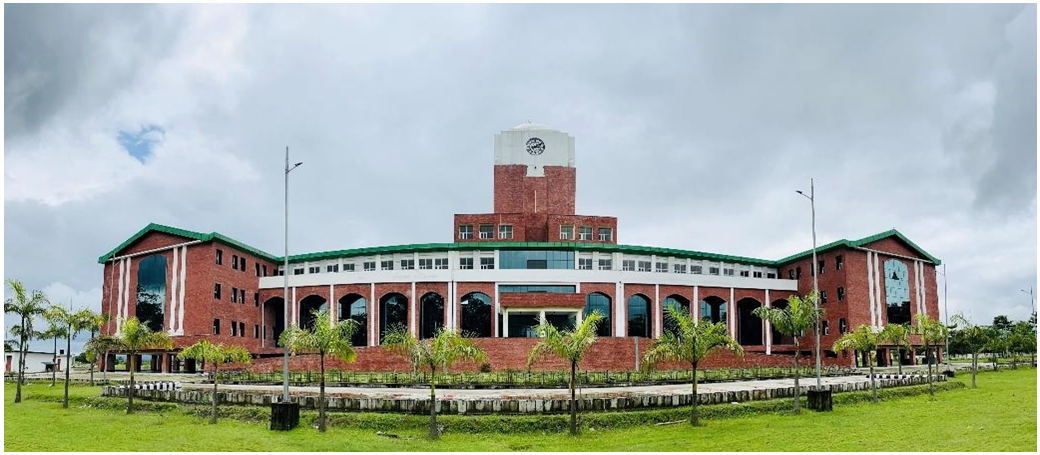
Ph.D. in Agricultural Physics from Indian Agricultural Research Institute
Introduction about Ph.D. in Agricultural Physics at Indian Agricultural Research Institute
The Indian Agricultural Research Institute (IARI) stands as a beacon of excellence in agricultural sciences. A Ph.D. in Agricultural Physics at IARI equips professionals with cutting‑edge knowledge of physical principles applied to crop production, soil science, and post‑harvest technology. This doctoral program nurtures innovators who can bridge the gap between fundamental physics and sustainable agriculture, fostering research that drives national food security and climate‑resilient farming.
Eligibility Criteria for Ph.D. in Agricultural Physics at Indian Agricultural Research Institute
- Master’s degree (M.Sc./M.S.) in Physics, Agricultural Engineering, or a related discipline with a minimum of 55% aggregate.
- Cleared IARI Ph.D. entrance test or national level examinations (e.g., UGC‑NET, CSIR‑NET).
- Proficiency in English (minimum TOEFL/IELTS score for overseas candidates).
- Strong academic record and research aptitude demonstrated through publications or project work.
Entrance Exam for Ph.D. in Agricultural Physics at Indian Agricultural Research Institute
The entrance assessment comprises:
- Written Test: Objective and descriptive questions covering advanced physics, agronomy, and research methodology.
- Interview: Evaluation of research interests, analytical skills, and alignment with IARI’s research priorities.
- Qualifying Exams: Candidates with UGC‑NET or CSIR‑NET scores are exempted from the written component.
Fee Structure for Ph.D. in Agricultural Physics at Indian Agricultural Research Institute
| Component | Annual Fee (INR) |
|---|---|
| Tuition & Laboratory Charges | 45,000 |
| Library & Resource Access | 7,500 |
| Student Welfare & Activities | 5,000 |
| Annual Examination Fee | 3,000 |
| Total Approximate Cost | 60,500 |
Note: Scholarships, fellowships, and research grants can substantially reduce the financial burden.
Admission Process for Ph.D. in Agricultural Physics at Indian Agricultural Research Institute
- Online application submission through the IARI portal.
- Upload scanned copies of academic transcripts, degree certificates, and research proposal.
- Payment of application fee (INR 2,000).
- Eligibility verification by the Admissions Committee.
- Scheduling of written test and/or interview.
- Final selection based on merit, test scores, and interview performance.
- Issuance of admission letter and enrollment in the doctoral program.
Ph.D. Subjects and Specializations in Agricultural Physics at Indian Agricultural Research Institute
- Remote Sensing and Precision Agriculture
- Soil Physical Properties and Water Dynamics
- Post‑Harvest Physiology and Food Processing Physics
- Radiation Physics in Pest Management
- Thermal Imaging for Crop Stress Detection
Research Areas in Agricultural Physics at Indian Agricultural Research Institute
Students can delve into interdisciplinary projects such as:
- Modeling climate impact on crop phenology using physics‑based algorithms.
- Developing low‑cost sensors for soil moisture and nutrient monitoring.
- Exploring photonic technologies for seed germination enhancement.
- Utilizing nuclear techniques for trace element analysis in fertilizers.
- Designing energy‑efficient drying systems for cereals and horticultural produce.
Documents Required for Ph.D. in Agricultural Physics at Indian Agricultural Research Institute
| Document | Details |
|---|---|
| Academic Transcripts | Mark sheets of all semesters (M.Sc./M.S.) |
| Degree Certificate | Original and attested copy |
| Entrance Exam Scorecard | UGC‑NET/CSIR‑NET or IARI test |
| Research Proposal | 2‑3 pages outlining objectives and methodology |
| Identity Proof | Aadhar / Passport |
| Photographs | Recent passport‑size (2 pcs.) |
Indian Agricultural Research Institute Ph.D. Syllabus for Agricultural Physics
The syllabus is structured into three phases:
- Core Coursework (Year 1): Advanced Thermodynamics, Soil Physics, Remote Sensing, Statistical Methods for Agricultural Research.
- Elective Modules (Year 2): Radiative Transfer in Crops, Computational Modeling, Energy Balance in Post‑Harvest Systems.
- Thesis Research (Year 3‑4): Original investigation, data collection, analysis, and dissertation defense.
How To Apply for Ph.D. in Agricultural Physics at Indian Agricultural Research Institute
Follow these steps to submit a successful application:
- Visit the official IARI admissions portal.
- Create an account and fill in personal and academic details.
- Upload the required documents (refer to the Documents Required table).
- Enter a concise research proposal aligned with IARI’s ongoing projects.
- Pay the non‑refundable application fee.
- Submit the application before the deadline (typically early May).
- Monitor email for interview call and further instructions.
Career Scope and Job Opportunities After Ph.D. in Agricultural Physics from Indian Agricultural Research Institute
Graduates are highly sought after for roles such as:
- Senior Research Scientist – Agricultural Research Service (ARS)
- Principal Investigator – National Institute of Food Technology Entrepreneurship & Management (NIFTEM)
- Data Scientist – Agri‑Tech startups focusing on AI‑driven precision farming
- Consultant – International organizations (FAO, World Bank) on climate‑smart agriculture
- Professor / Lecturer – Universities and agricultural colleges
- Policy Analyst – Government ministries dealing with agriculture and environment
Scholarship for Ph.D. in Agricultural Physics at Indian Agricultural Research Institute
IARI offers multiple financial aids, including:
- ICAR Fellowship: Full tuition waiver and monthly stipend of INR 31,000.
- University Grants Commission (UGC) JRF: Research grant and stipend.
- External Fellowships: Fulbright, Commonwealth, and Intra‑University research grants.
Applicants are encouraged to explore Thesis and Dissertation Writing Services for guidance on crafting compelling proposals that improve scholarship eligibility.
FAQs Regarding Ph.D. in Agricultural Physics at Indian Agricultural Research Institute
- Q: What is the minimum duration of the Ph.D. program?
- A: The standard period is four years, with a possible extension of one year based on research progress.
- Q: Can working professionals enroll part‑time?
- A: IARI primarily offers full‑time enrollment; however, exceptional cases may be considered under a flexible research arrangement.
- Q: Is there a requirement for publications before admission?
- A: Prior publications are not mandatory but strengthen the application.
- Q: How are research topics assigned?
- A: Candidates propose topics; faculty mentors review and align them with departmental priorities.
- Q: Are there collaborations with industry?
- A: Yes, IARI maintains partnerships with agri‑tech firms and government agencies for joint research projects.
For additional support with research data analysis, consider Research Data Analysis Services. Need assistance writing research papers? Explore Research Paper Writing Services. To design surveys for field studies, check out Questionnaire Design and Development.




