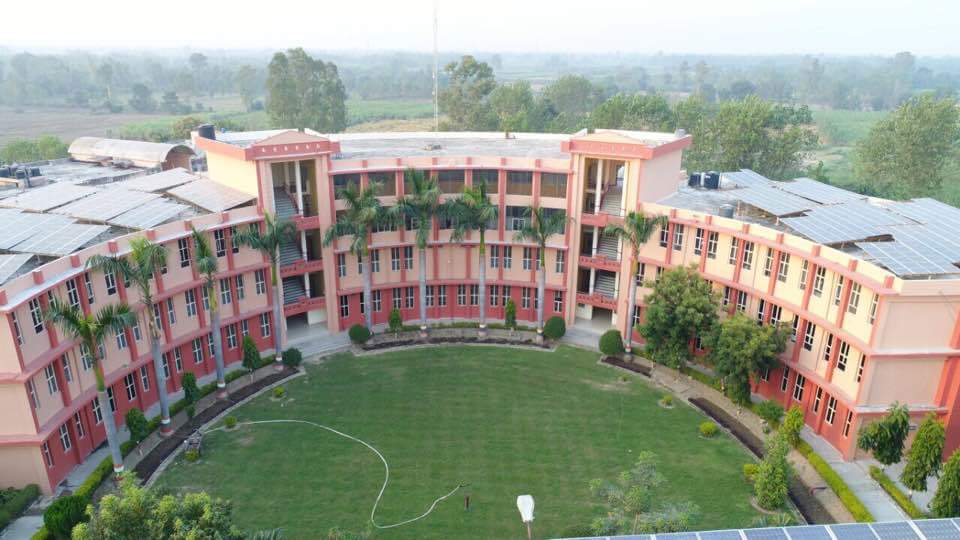
Ph.D. in Agriculture Engineering from Shobhit University: Eligibility, Entrance Exam, Fee Structure, Admission Process, Subjects, Research Areas, Syllabus, Scholarship & Career Scope
Embarking on a doctoral journey in Agriculture Engineering at Shobhit University opens the gateway to pioneering research, cutting‑edge technology, and transformative impact on global food security. Designed for seasoned professionals and visionary scholars, this program blends rigorous academic training with real‑world problem solving, empowering you to become a leader in agri‑tech innovation.
Ph.D Admission 2026-2027 & Writing Support Services by Shiksha Research
Eligibility Criteria for Ph.D. in Agriculture Engineering at Shobhit University
Prospective candidates must meet the following academic and professional benchmarks:
- A Master’s degree (M.Tech, M.Sc, or equivalent) in Agriculture Engineering, Agricultural Sciences, Mechanical Engineering, Civil Engineering, or a closely related field with a minimum aggregate of 55% (or 5.5 CGPA).
- For candidates holding a Bachelor’s degree (B.Tech/B.E.) directly, a minimum of 65% is required, supplemented by a valid national-level entrance test score.
- Valid GATE/NET/CSIR score (subject‑wise) is preferred but not mandatory; the university conducts its own qualifying test.
- Demonstrated research aptitude through publications, conference presentations, or relevant industry experience.
Entrance Exam for Ph.D. in Agriculture Engineering at Shobhit University
The university’s entrance examination evaluates analytical thinking, domain knowledge, and research potential. The test comprises:
- Section A – General Aptitude: Logical reasoning, quantitative ability, and English language proficiency (30 marks).
- Section B – Core Subject: Advanced topics in irrigation engineering, soil‑water dynamics, post‑harvest technology, and agri‑machinery (70 marks).
- A Personal Interview (PI) and a short Research Proposal Presentation to assess alignment with faculty interests.
Candidates who have secured GATE/NET scores may be exempted from Section B, provided their score meets the university’s cut‑off.
Fee Structure for Ph.D. in Agriculture Engineering at Shobhit University
Financial transparency is a hallmark of Shobhit University. The fee schedule below outlines the annual cost components for the doctoral program:
| Fee Component | Annual Cost (INR) | Notes |
|---|---|---|
| Tuition Fee | ₹ 95,000 | Applicable for the first two years; subsequent years based on project funding. |
| Laboratory & Resource Charges | ₹ 20,000 | Covers usage of specialized equipment and software licences. |
| Library & E‑Resources Subscription | ₹ 5,000 | Access to national and international journals. |
| Examination & Evaluation Fee | ₹ 8,000 | Includes internal assessment and final viva‑voce. |
| Miscellaneous (Student Services, Activity Fee) | ₹ 12,000 | Student welfare, seminars, and workshops. |
| Total (Approx.) | ₹ 1,40,000 |
Scholarships, fellowships, and research grants can substantially offset these costs. Details are provided in the “Scholarship” section.
Admission Process for Ph.D. in Agriculture Engineering at Shobhit University
The admission journey is structured to ensure merit‑based selection while providing clear milestones for applicants:
- Online Application: Fill the web‑based form, upload academic transcripts, a concise research proposal (max 1500 words), and two letters of recommendation.
- Application Fee Payment: A non‑refundable fee of ₹ 2,000 is payable via net banking or debit/credit card.
- Entrance Examination: Eligible candidates are invited to appear for the written test (or exempted based on GATE/NET scores).
- Interview & Proposal Defense: Shortlisted aspirants present their research ideas before the department panel.
- Final Admission Offer: Successful candidates receive a formal admission letter with a provisional enrollment number.
- Enrollment & Fee Submission: Complete the enrollment process within 15 days of the offer and remit the first‑year tuition fee.
Ph.D. Subjects and Specializations in Agriculture Engineering at Shobhit University
The doctoral program offers a spectrum of specializations that reflect emerging trends in the agri‑technology landscape:
- Irrigation & Water Management
- Soil & Crop Engineering
- Post‑Harvest Technology & Food Processing
- Precision Agriculture & Remote Sensing
- Renewable Energy Systems for Agriculture
- Farm Machinery Design & Automation
- Agri‑Environmental Engineering
Research Areas in Agriculture Engineering at Shobhit University
Faculty members are actively engaged in high‑impact research across diverse domains. Prospective Ph.D. scholars can align with one or more of the following research themes:
- Smart irrigation systems using IoT and AI
- Development of low‑cost soil moisture sensors
- Optimization of drip‑irrigation networks for water‑scarce regions
- Engineering of bio‑based packaging for post‑harvest preservation
- Design of autonomous farm robots for seeding and weeding
- Assessment of climate‑resilient agricultural infrastructure
- Integration of solar‑powered water pumps in remote farms
Documents Required for Ph.D. in Agriculture Engineering at Shobhit University
All documents must be submitted in PDF format. A concise table outlines the mandatory paperwork:
| Document | Details | Format |
|---|---|---|
| Academic Transcripts | Certified copies of Master’s (or Bachelor’s) degree and mark sheets | PDF (Scanned) |
| Entrance Test Scorecard | GATE/NET/CSIR or Shobhit University Entrance Exam result | |
| Research Proposal | Title, objectives, methodology, expected outcomes (max 1500 words) | |
| Letters of Recommendation | Two letters from academicians or industry professionals | |
| Curriculum Vitae (CV) | Professional experience, publications, patents, projects | |
| Proof of Identity | Aadhar Card, Passport, or Driving License |
Shobhit University Ph.D. Syllabus for Agriculture Engineering
The curriculum is modular, combining coursework, seminars, and research milestones over a three‑year period:
- Year 1 – Foundation: Advanced Soil Mechanics, Water Resources Engineering, Research Methodology, Statistics for Engineers.
- Year 2 – Specialization: Electives aligned with chosen research area, Laboratory Techniques, Data Analytics in Agriculture.
- Year 3 – Dissertation: Execution of research project, publication of at least two peer‑reviewed papers, thesis writing, and viva‑voce.
Students are encouraged to attend national and international conferences, contributing to the global body of knowledge.
How To Apply for Ph.D. in Agriculture Engineering at Shobhit University
Follow these step‑by‑step instructions to submit a successful application:
- Visit the official Shobhit University admissions portal.
- Register using a valid email address and create a secure password.
- Complete the personal information section and upload all required PDFs.
- Pay the non‑refundable application fee through the integrated payment gateway.
- Submit the application and note the generated application ID for future reference.
- Check email regularly for entrance exam invitations, interview schedules, and admission updates.
Career Scope and Job Opportunities After Ph.D. in Agriculture Engineering from Shobhit University
A doctorate in Agriculture Engineering equips you for high‑impact roles across academia, industry, and government. Typical career trajectories include:
- Assistant/Associate Professor or Research Scientist in premier universities and research institutes.
- Lead R&D Engineer or Innovation Manager in agri‑tech startups, seed companies, and equipment manufacturers.
- Policy Analyst or Consultant for ministries of agriculture, water resources, and sustainable development.
- Senior Project Manager for large‑scale irrigation and water‑conservation projects funded by national and international agencies.
- Entrepreneurial ventures




