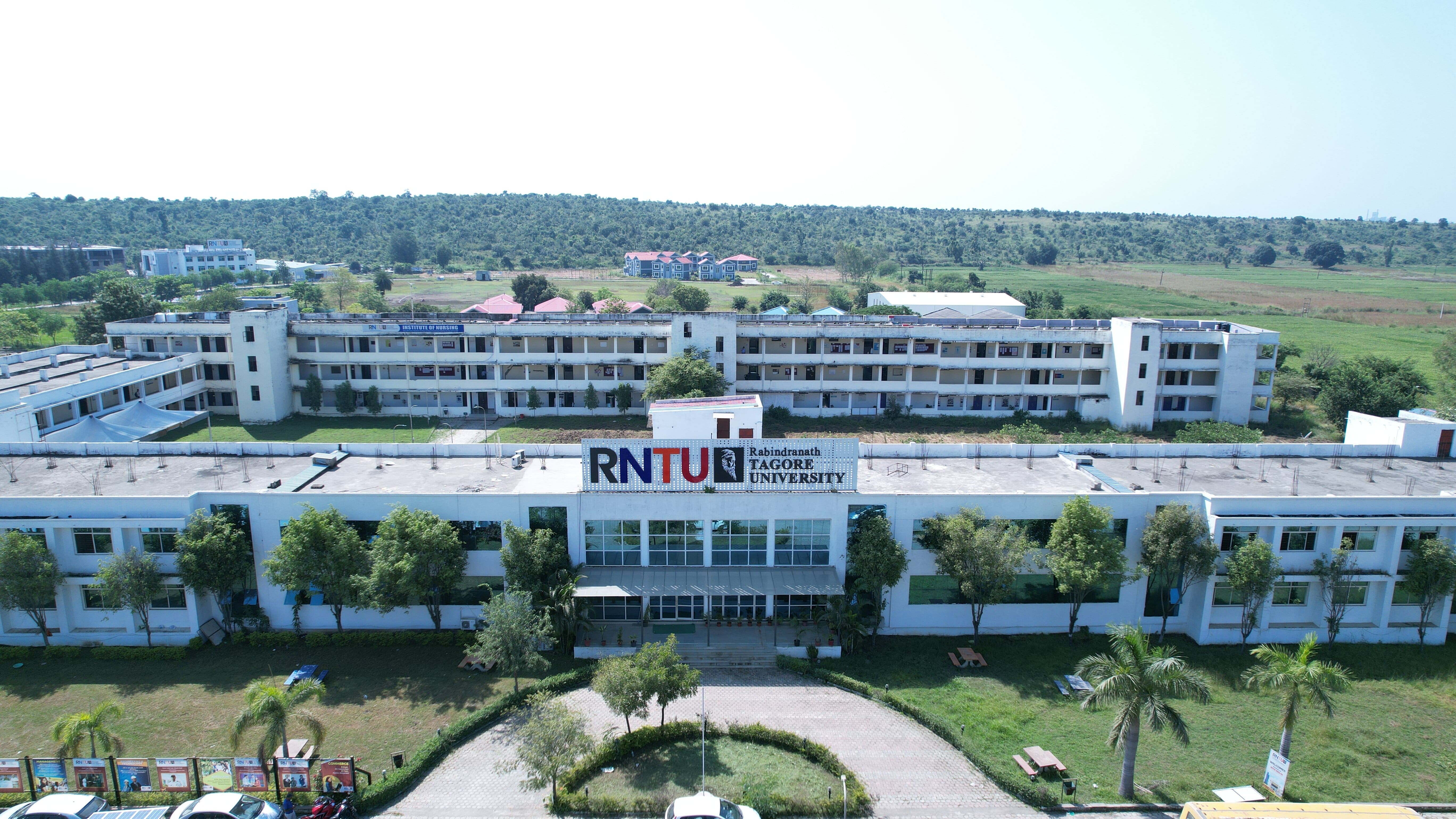
Introduction about Ph.D. in Agriculture at Rabindranath Tagore University
In an era where global food security and sustainable agrarian practices are the cornerstones of human survival, the pursuit of advanced research in agriculture has never been more vital. Rabindranath Tagore University (RNTU), a premier institution located in Bhopal, Madhya Pradesh, recognizes this imperative. The Ph.D. in Agriculture at Rabindranath Tagore University is designed for visionary professionals and scholars who aspire to lead the next green revolution. This doctoral program is not merely an academic milestone; it is a transformative journey that empowers researchers to tackle complex challenges such as climate change, soil degradation, and food scarcity. By integrating traditional wisdom with cutting-edge technological advancements, RNTU fosters an environment where innovation thrives and scholarly excellence translates into real-world impact.
Choosing to pursue a doctorate here means aligning yourself with a legacy of academic rigor and social responsibility. The university provides a holistic ecosystem for high-level intellectual inquiry, encouraging candidates to push the boundaries of conventional farming and biological resource management. Whether your interest lies in crop physiology, soil biotechnology, or agricultural economics, the Ph.D. program serves as a launchpad for careers that don?t just observe the world but actively aim to nourish it.
Ph.D Admission 2026-2027 & Writing Support Services by Shiksha Research
Eligibility Criteria for Ph.D. in Agriculture at Rabindranath Tagore University
To embark on this prestigious research journey, candidates must meet specific academic benchmarks. The Ph.D. in Agriculture program at RNTU is tailored for professionals who have already demonstrated a strong foundation in their respective fields. The primary eligibility criteria include:
- Educational Background: Applicants must hold a Master?s Degree (M.Sc. Agriculture or relevant discipline) from a recognized university.
- Minimum Percentage: A minimum of 55% marks in aggregate or an equivalent Grade Point Average (GPA) is mandatory for general category applicants.
- Relaxation: A relaxation of 5% is provided to candidates belonging to SC/ST/OBC (non-creamy layer) and differently-abled categories, in accordance with UGC guidelines.
- Experience: While not mandatory, professional experience in agricultural research, farming enterprises, or government agricultural departments is highly valued and can significantly bolster a candidate's profile during the interview stage.
Entrance Exam for Ph.D. in Agriculture at Rabindranath Tagore University
The gateway to the Ph.D. program at RNTU is the University?s Common Entrance Test (CET). This examination is designed to assess the research aptitude and domain-specific knowledge of the candidates. The entrance exam typically comprises two phases:
- Phase 1: Written Test: The curriculum for the entrance test is divided into Research Methodology and Subject-Specific topics (Agriculture). Candidates must demonstrate a clear understanding of experimental design, statistical tools, and core agricultural concepts.
- Phase 2: Personal Interview (PI): Candidates who clear the written test are invited for a comprehensive interview. During this process, the Departmental Research Committee evaluates the candidate?s research proposal, their technical proficiency, and their overall suitability for the doctoral program.
Furthermore, candidates who have already qualified for national-level examinations such as UGC-NET, JRF, ICAR-NET, or SET are often exempted from the written test, though they must still participate in the interview process to finalize their admission.
Fee Structure for Ph.D. in Agriculture at Rabindranath Tagore University
Investing in a Ph.D. is an investment in your future leadership role within the global food system. Rabindranath Tagore University maintains a transparent and competitive fee structure to ensure that high-quality research is accessible to meritorious scholars. Below is an indicative breakdown of the fee components:
| Component | Approximate Fee (INR) | Frequency |
|---|---|---|
| Registration Fee | ? 5,000 - ? 10,000 | One-time |
| Tuition Fee | ? 40,000 - ? 60,000 | Per Semester |
| Coursework Fee | ? 15,000 | One-time |
| Examination Fee | ? 3,000 - ? 5,000 | Per Cycle |
| Thesis Submission Fee | ? 15,000 - ? 20,000 | At the time of submission |
Note: The fee structure is subject to change based on university regulations and specific research requirements. Candidates are advised to confirm the latest schedules with the RNTU finance department.
Admission Process for Ph.D. in Agriculture at Rabindranath Tagore University
The admission process is meticulously structured to identify scholars with the potential to contribute meaningfully to agricultural science. Following these steps ensures a smooth application experience:
- Online Registration: Visit the official RNTU portal and register for the Ph.D. entrance examination.
- Application Submission: Fill out the detailed application form, providing your academic history, professional experience, and area of research interest.
- Entrance Examination: Sit for the RNTU Common Entrance Test.
- Interview & Proposal Presentation: Shortlisted candidates appear before the research committee. This is where you defend your research vision.
- Provisional Admission: Successful candidates are granted provisional admission based on their cumulative performance in the test and interview.
- Coursework Commencement: Upon payment of the initial fees, scholars begin their mandatory six-month coursework period.
Ph.D. Subjects and Specializations in Agriculture at Rabindranath Tagore University
Diversity in research allows for specialized problem-solving. RNTU offers a wide array of specializations, allowing professionals to narrow their focus to the most critical sectors of the industry:
- Agronomy: Focusing on crop production and soil management.
- Horticulture: Exploring the cultivation of fruits, vegetables, and ornamental plants with an emphasis on post-harvest technology.
- Soil Science and Agricultural Chemistry: Investigating soil fertility, nutrient management, and pesticide chemistry.
- Plant Pathology: Studying plant diseases and developing sustainable resistance strategies.
- Agricultural Economics & Extension: Analyzing market trends, farm management, and the dissemination of technology to rural communities.
- Genetics and Plant Breeding: For those interested in developing high-yielding, climate-resilient crop varieties.
Research Areas in Agriculture at Rabindranath Tagore University
The research landscape at Rabindranath Tagore University is vast and interdisciplinary. The institution encourages scholars to explore niche areas that have high socio-economic value. Current research thrusts include organic farming techniques, precision agriculture using IoT, and bio-fortification of staple crops.
Developing a robust research design is critical at this stage. Many scholars utilize professional Questionnaire Design and Development to ensure their field data collection is accurate and scientifically valid. The university emphasizes evidence-based research that can be published in high-impact journals and presented at international forums.
Documents Required for Ph.D. in Agriculture at Rabindranath Tagore University
To avoid delays in the admission process, candidates should keep the following documentation ready:
- High School (10th) and Higher Secondary (12th) Marksheets.
- Undergraduate (B.Sc. Agriculture) degree and transcripts.
- Postgraduate (M.Sc. Agriculture) degree and transcripts.
- Valid ID Proof (Aadhar Card/Voter ID/Passport).
- Passport size photographs.
- Category Certificate (if applicable).
- Experience Certificate (for working professionals).
- Preliminary Research Proposal (Synopsis).
- NOC (No Objection Certificate) from the current employer (for part-time Ph.D. applicants).
Rabindranath Tagore University Ph.D. Syllabus for Agriculture
The first phase of the Ph.D. program is dedicated to rigorous coursework. This stage is designed to sharpen the candidate's analytical skills and prepare them for long-term independent research. The syllabus generally covers:
- Research Methodology: Covering the ethics of research, qualitative and quantitative methods, and thesis writing structures. This is where many scholars realize the value of expert Research Data Analysis Services to interpret complex biological data.
- Computer Applications in Agriculture: Use of software like SPSS, SAS, or R for data modeling.
- Advance Agriculture Science: Deep dives into contemporary issues like GMOs, hydroponics, and sustainable resource management.
- Review of Literature: A comprehensive survey of existing research in the candidate?s chosen specialization.
How To Apply for Ph.D. in Agriculture at Rabindranath Tagore University
Ready to take the leap? The application process is primarily digital. Follow these guidelines:
- Browse to the RNTU official website and navigate to the 'Research' or 'Admissions' tab.
- Click on the 'Ph.D. Application' link and register with a valid email and phone number.
- Fill the form with precision. Ensure that your research interest matches the faculty expertise available at RNTU.
- Upload scanned copies of all required documents in the prescribed format.
- Pay the application fee through the integrated payment gateway (Credit Card/Debit Card/Net Banking).
- Download and print the application confirmation for future reference during the entrance exam.
Career Scope and Job Opportunities After Ph.D. in Agriculture from Rabindranath Tagore University
A Ph.D. is the ultimate credential in the world of agricultural science, opening doors to high-level strategic roles. Professionals who complete their doctorate from RNTU find themselves in high demand across various sectors:
Academic Leadership: Become a Professor or Dean in world-renowned agricultural universities. Mentoring the next generation of agronomists is a rewarding and prestigious career path.
Research & Development (R&D): Leading agricultural scientists in seed companies, fertilizer industries, and biotechnology firms. Successful publication of your findings via Research Paper Writing Services during your Ph.D. can significantly enhance your visibility to these corporate recruiters.
Government Organizations: High-ranking roles in ICAR, IARI, and state-level agricultural departments where you can influence policy and regional development.
International Consultancy: Working with organizations like the FAO (Food and Agriculture Organization), World Bank, or CGIAR to solve global hunger issues.
Completing a complex thesis is a monumental task. To ensure your final submission is of international standards, engaging with Thesis and Dissertation Writing Services can provide the structural and grammatical polish required for a world-class doctoral document.
Scholarship for Ph.D. in Agriculture at Rabindranath Tagore University
RNTU believes that financial constraints should never stand in the way of innovation. The university offers various forms of financial support:
- Merit-based Scholarships: Awarded to top-ranking candidates in the entrance test.
- Research Assistantships: Scholars may be selected to work on ongoing university projects, providing them with a monthly stipend.
- External Funding: The university assists students in applying for government fellowships such as RGNF, MANF, and ICAR fellowships.
- Institutional Fellowships: Full-time research scholars may be eligible for RNTU's internal research grants based on the impact potential of their work.
FAQs Regarding Ph.D. in Agriculture at Rabindranath Tagore University
Q1: Can I pursue a Ph.D. in Agriculture while working?
Yes, RNTU offers flexibility for working professionals, provided they can attend the mandatory coursework and obtain an NOC from their employer.
Q2: How long does it take to complete the Ph.D. program?
The minimum duration is three years (including coursework), and the maximum is usually six years.
Q3: Is the Ph.D. degree from RNTU globally recognized?
Absolutely. RNTU is recognized by the UGC, and its Ph.D. degrees are valid for jobs and further research opportunities worldwide.
Q4: Do I need a research proposal at the time of application?
Yes, a preliminary research synopsis is required during the interview stage to demonstrate your clarity of thought and the feasibility of your research topic.
Q5: What support does RNTU provide for patenting my research?
RNTU has a dedicated IPR Cell that assists scholars in filing patents and protecting their intellectual property generated during their doctoral research.




