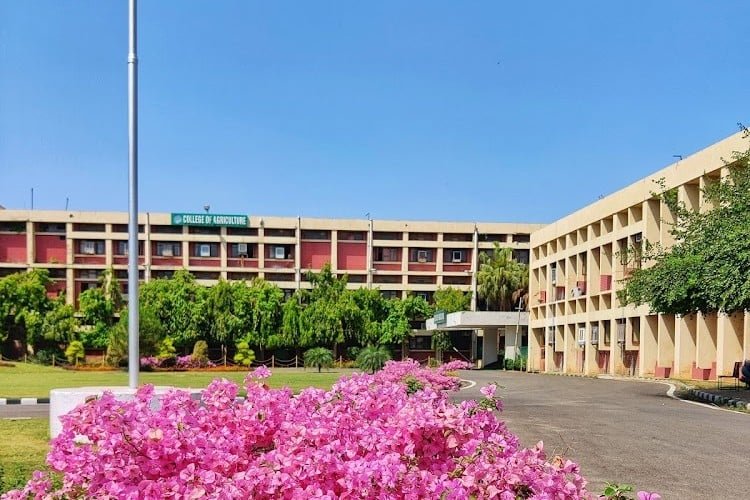
Introduction about Ph.D. in Agrometeorology at Punjab Agricultural University
In an era where global food security is increasingly threatened by erratic climate patterns, the study of Agrometeorology has emerged as a cornerstone for sustainable development. A Ph.D. in Agrometeorology at Punjab Agricultural University (PAU) offers a transformative journey for professionals aspiring to bridge the gap between atmospheric sciences and agricultural productivity. Located in Ludhiana, PAU stands as a beacon of agricultural excellence, having played a pivotal role in India?s Green Revolution. This doctoral program is designed to cultivate experts who can decipher the complex interactions between weather variables and crop systems, ensuring that farming remains resilient in the face of climate change.
The program is not merely an academic exercise; it is a call to action for visionary researchers. By pursuing a Doctorate at PAU, scholars gain access to world-class observatories, cutting-edge climate models, and a legacy of research that has shaped national policy. Whether your interest lies in micro-climatology, crop-weather modeling, or remote sensing applications, PAU provides the intellectual ecosystem necessary to thrive. This Ph.D. journey empowers you to contribute to precision agriculture, helping farmers optimize resources and mitigate risks associated with natural disasters.
Ph.D Admission 2026-2027 & Writing Support Services by Shiksha Research
Eligibility Criteria for Ph.D. in Agrometeorology at Punjab Agricultural University
Securing a seat in the Ph.D. program at such a prestigious institution requires a robust academic foundation. The eligibility criteria are designed to ensure that candidates possess the quantitative and analytical skills necessary for high-level atmospheric research.
- Educational Qualification: Candidates must hold a Master?s degree (M.Sc.) in Agrometeorology, Agricultural Physics, or a closely related discipline from a recognized agricultural university.
- Minimum Grade Point Average (OGPA): A minimum OGPA of 7.00/10.00 or 70% marks (or equivalent) at the Master?s level is typically required. For reserved categories, a relaxation is provided as per university and state government norms.
- Foundation: A strong background in Mathematics, Physics, and Plant Physiology at the undergraduate level is highly advantageous, as the curriculum involves complex statistical and physical modeling.
- Professional Requirements: Working professionals applying for the program must provide an 'Extraordinary Leave' clearance or a 'No Objection Certificate' from their current employers to ensure they can commit to the full-time residency requirement.
Entrance Exam for Ph.D. in Agrometeorology at Punjab Agricultural University
Admission to the Ph.D. program is highly competitive and is primarily based on the PAU PhD Entrance Test (MET). This examination is designed to test the candidate's depth of knowledge in Agrometeorology and their aptitude for scientific research.
The entrance exam generally comprises two parts: a general section focusing on research methodology and quantitative aptitude, and a specialized section dedicated to Agrometeorology core concepts. Topics often include solar radiation, thermodynamics, moisture dynamics, and bioclimatology. Scoring well in this exam is crucial, as it carries significant weight in the final selection process. For those feeling overwhelmed by the application intricacies, seeking professional PhD Admission Assistance can provide the necessary edge to navigate these competitive requirements successfully.
Fee Structure for Ph.D. in Agrometeorology at Punjab Agricultural University
Understanding the financial commitment is essential for long-term planning. PAU offers a subsidized fee structure compared to private institutions, maintaining its commitment to accessible higher education.
| Fee Component | Approximate Amount (Per Semester) | Remarks |
|---|---|---|
| Admission/Tuition Fee | INR 25,000 - 35,000 | Varies based on domicile status |
| Registration & Examination Fee | INR 5,000 - 8,000 | Paid annually/semesterly |
| Hostel & Electricity Charges | INR 10,000 - 15,000 | Optional for local residents |
| Laboratory & Library Fund | INR 7,000 | One-time/Annual components included |
| Total Estimated Annual Fee | INR 80,000 - 1,10,000 | Excludes personal expenses |
Admission Process for Ph.D. in Agrometeorology at Punjab Agricultural University
The admission process at PAU is transparent and merit-driven. It follows a structured path from application to final registration:
- Notification: PAU releases official notifications for Ph.D. admissions, usually in the mid-year (June/July) or end-of-year (November/December) cycles.
- Application Submission: Candidates must apply through the PAU online portal, ensuring all academic credentials are uploaded accurately.
- Entrance Test: Eligible candidates appear for the Ph.D. MET. Results are typically published on the university's official website.
- Interview/Viva-Voce: Shortlisted candidates are called for an interview with the Departmental Research Committee. This is where your research vision is tested.
- Document Verification & Counseling: Finalists are invited for document verification and seat allotment based on their combined score from the entrance test and interview.
Ph.D. Subjects and Specializations in Agrometeorology at Punjab Agricultural University
The curriculum is a blend of theoretical rigor and practical application. As a doctoral scholar, you will delve into advanced subjects that prepare you for the complexities of modern agriculture. Core subjects often include:
- Advanced Agricultural Meteorology: Intensive study of the atmospheric boundary layer and its impact on crops.
- Hydrometeorology: Focusing on the water cycle, irrigation scheduling, and drought management.
- Micrometeorology: Understanding the energy exchange between the soil, plants, and the atmosphere.
- Climate Change and Agriculture: Studying long-term shifts in weather patterns and adaptation strategies.
- Crop Simulation Modeling: Utilizing software to predict yield based on variable weather inputs.
To ensure your thesis meets international standards, many students utilize Editing and Proofreading Services to refine their technical documentation and academic writing.
Research Areas in Agrometeorology at Punjab Agricultural University
Research at PAU is focused on solving real-world challenges. Doctoral candidates have the opportunity to engage in high-impact studies. Key research areas include:
- Impact Assessment of Climate Change: Modeling future scenarios for staple crops like wheat and rice in the Indo-Gangetic plains.
- Weather-Based Crop Insurance: Developing indices to help protect farmers against climate risks.
- Remote Sensing & GIS: Utilizing satellite data for crop acreage estimation and health monitoring.
- Carbon Sequestration: Measuring the flux of greenhouse gases in different cropping systems.
- Precision Farming: Developing sensors and weather-based decision support systems.
Selecting a unique and viable topic is the first step toward a successful degree. Experts providing PhD Topic Selection and Proposal Assistance can help you align your interests with current global agriculture trends. Furthermore, as your research yields results, protecting your intellectual property becomes paramount through Patent Filing and Support Services.
Documents Required for Ph.D. in Agrometeorology at Punjab Agricultural University
Maintaining a comprehensive dossier is vital for a smooth admission process. Ensure you have the following documents ready:
- High School (10th) and Higher Secondary (12th) Marksheets.
- Undergraduate (B.Sc. Agriculture) Degree and Transcripts.
- Postgraduate (M.Sc. Agrometeorology) Degree and Transcripts.
- Entrance Test Admit Card and Scorecard.
- Character Certificate from the last attended institution.
- Category Certificate (if applicable).
- Migration Certificate.
- A detailed Research Proposal/SOP.
- Passport-sized photographs and valid Identity Proof (Aadhaar/Passport).
Punjab Agricultural University Ph.D. Syllabus for Agrometeorology
The syllabus is meticulously structured to cover the breadth and depth of atmospheric and soil sciences. The first year typically focuses on coursework, followed by intense research:
- Coursework (Year 1): Includes subjects like Statistical Methods for Agrometeorology, Fundamentals of Atmospheric Science, Radiation Physics, and Instrumentation Techniques.
- Seminars: Scholars must present regular seminars on current scientific literature and their own preliminary research findings.
- Thesis Research (Year 2 onwards): The focus shifts to data collection, field experiments at PAU?s research farms, and high-level data analysis using R, Python, or specialized meteorological software.
During the final stages of your degree, achieving high-impact dissemination is critical. Leveraging Research Publication Support can help you get your findings published in reputable journals like 'Agricultural and Forest Meteorology' or 'Theoretical and Applied Climatology'.
How To Apply for Ph.D. in Agrometeorology at Punjab Agricultural University
The application process is exclusively online. Follow these steps to ensure a successful submission:
- Visit the Official Website: Navigate to the PAU admissions portal (pau.edu).
- Register: Create a user profile with an active email ID and phone number.
- Fill out the Form: Enter personal, academic, and professional details. Ensure the "Department of Agricultural Meteorology" is selected.
- Upload Documents: Scan and upload the required documents in the specified format/size.
- Payment: Pay the application fee through the integrated payment gateway (Net banking/Credit Card/Debit Card).
- Print Confirmation: Save a copy of the submitted application and fee receipt for future reference.
Career Scope and Job Opportunities After Ph.D. in Agrometeorology from Punjab Agricultural University
A Doctorate from PAU opens doors to prestigious career pathways globally. As the world focuses on climate resilience, your expertise will be in high demand.
- Academic Roles: Professors and Scientists in Agricultural Universities and ICAR (Indian Council of Agricultural Research) institutes.
- Meteorology Departments: Senior roles in the India Meteorological Department (IMD) or State Climate Commissions.
- International Organizations: Research opportunities with the World Meteorological Organization (WMO), FAO, and CGIAR centers like IRRI or CIMMYT.
- Ag-Tech Industry: Climate consultants for private firms focusing on precision farming, satellite imagery, and crop insurance (e.g., Bayer, Syngenta, or specialized startups).
- Government Policy: Advisors for atmospheric environmental planning and disaster management authorities.
For those who have reached the pinnacle of their professional career through significant contributions to the field, exploring Honorary Doctorate Programs might be a way to gain further recognition for lifelong achievements.
Scholarship for Ph.D. in Agrometeorology at Punjab Agricultural University
PAU and the Indian government provide various financial aids to support doctoral researchers:
- PAU Graduate Assistantship: Monthly stipends provided to meritorious students in exchange for teaching or research assistance.
- ICAR Senior Research Fellowship (SRF): Awarded based on the National Eligibility Test (NET-AICE) performance.
- CSIR/UGC JRF: For those who have cleared the national level Junior Research Fellowship exams.
- DST-INSPIRE: Available for toppers of university examinations.
- Project Fellowships: Many students are funded through ongoing research projects sponsored by agencies like NABARD, ISRO, or International Climate Funds.
FAQs Regarding Ph.D. in Agrometeorology at Punjab Agricultural University
Q1: Is PAU's Ph.D. program recognized internationally?
Yes, PAU is globally recognized for its contribution to agricultural science, and its alumni hold positions in the world's leading research institutions.
Q2: Can I apply for the Ph.D. after an M.Sc. in Physics?
Generally, preference is given to M.Sc. Agrometeorology or Agricultural Physics graduates. However, if your research interests align and you meet the credit hour requirements, you might be eligible after a bridge program.
Q3: How long does it take to complete the Ph.D.?
The minimum duration is three years (six semesters), with a maximum limit that usually extends to six years depending on the research progress.
Q4: Are there opportunities for international exchange during the Ph.D.?
Yes, PAU has collaborations with several international universities (e.g., in the USA, Canada, and Australia), often allowing students to conduct part of their research abroad under specific fellowship programs.
Q5: What is the focus of the PAU MET exam?
The exam focuses heavily on core agricultural sciences plus specialized questions on weather instruments, solar radiation, climate classifications, and basic atmospheric physics.




