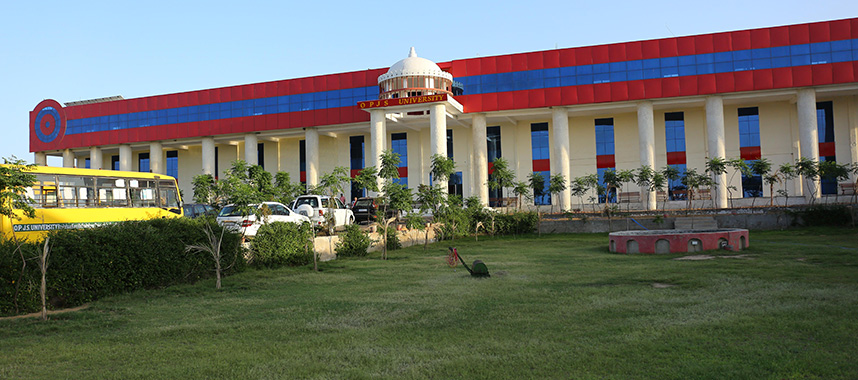
Ph.D. in Agronomy from OPJS University: Eligibility, Entrance Exam, Fee Structure, Admission Process, Subjects, Research Areas, Syllabus, Scholarship & Career Scope
Introduction about Ph.D. in Agronomy at OPJS University
Pursuing a Doctorate in Agronomy at OPJS University opens the gateway to cutting‑edge research in sustainable agriculture, plant genetics, and soil science. The program is meticulously designed for professionals who aspire to shape the future of food security, climate‑resilient farming, and agri‑technology innovation. With a vibrant campus, world‑class faculty, and industry collaborations, OPJS University empowers scholars to transform agronomic challenges into breakthrough solutions.
Eligibility Criteria for Ph.D. in Agronomy at OPJS University
Candidates must possess a Master’s degree (M.Sc., M.Tech., or equivalent) in Agronomy, Plant Science, Soil Science, Agricultural Engineering, or a closely related discipline with a minimum of 55% marks (or CGPA 6.0/10). Professionals holding a Ph.D. in a related field may apply for a direct research registration, subject to faculty approval. Applicants should also demonstrate proficiency in English, either through a valid IELTS/TOEFL score or prior academic exposure.
- Valid Master’s degree with 55% or higher.
- Research aptitude proven through publications or project work.
- Minimum age of 21 years at the time of admission.
- Clearance of any pending dues or disciplinary actions from previous institutions.
Entrance Exam for Ph.D. in Agronomy at OPJS University
OPJS University conducts the OPJS Ph.D. Entrance Test (OPET), a comprehensive assessment evaluating subject knowledge, analytical skills, and research potential. The exam comprises three sections:
- Core Agronomy – Plant physiology, crop genetics, soil fertility.
- Research Methodology – Statistical tools, experimental design, data interpretation.
- General Aptitude & English – Logical reasoning, quantitative ability, comprehension.
Candidates who have secured a valid national level qualification (e.g., UGC NET, CSIR JRF) are exempted from OPET and can directly apply for the interview round.
Fee Structure for Ph.D. in Agronomy at OPJS University
| Category | Annual Fee (INR) | Additional Charges |
|---|---|---|
| General Category | 45,000 | Lab & Field Work: 5,000 |
| OBC Category | 38,000 | Lab & Field Work: 5,000 |
| SC/ST/PwD | 30,000 | Lab & Field Work: 5,000 |
| International Students | 80,000 | Lab & Field Work: 7,500 |
The fee covers tuition, access to university libraries, online journals, and basic laboratory consumables. Advanced research equipment and field trips may incur separate charges, which are disclosed during the admission interview.
Admission Process for Ph.D. in Agronomy at OPJS University
The admission journey is streamlined into five clear steps:
- Online Application Submission via the university portal.
- Upload of academic documents, research proposal, and PhD Admission Assistance (optional).
- Entrance examination (or NET/JRF exemption).
- Personal interview and presentation of research plan.
- Final admission offer and fee payment.
Prospective scholars are encouraged to seek guidance from the university’s admissions counsellors to ensure a smooth process.
Ph.D. Subjects and Specializations in Agronomy at OPJS University
OPJS University offers a wide spectrum of specializations that enable candidates to tailor their research to emerging agronomic challenges:
- Crop Genetics and Molecular Breeding
- Soil Health Management and Nutrient Dynamics
- Integrated Pest Management
- Precision Agriculture and Remote Sensing
- Climate‑Smart Agriculture
- Post‑Harvest Technology and Food Processing
- Organic Farming Systems
Research Areas in Agronomy at OPJS University
The university’s research ecosystem is anchored on interdisciplinary collaboration. Key research domains include:
- Genomic approaches for drought‑tolerant crops.
- Biofertilizers and sustainable soil amendments.
- Smart irrigation and IoT‑enabled farm management.
- Carbon sequestration through agroforestry.
- Plant‑microbe interactions for disease resistance.
- Data‑driven agronomic decision support systems.
Faculty members actively publish in high‑impact journals, and doctoral candidates receive mentorship to contribute to these cutting‑edge projects. For comprehensive support in publishing, explore our Research Publication Support.
Documents Required for Ph.D. in Agronomy at OPJS University
| Document | Details |
|---|---|
| Application Form | Completed online with payment receipt. |
| Academic Transcripts | Mark sheets of Bachelor's and Master's degrees. |
| Proof of Qualification | Degree certificates (original & notarized copies). |
| Research Proposal | 500–800 word proposal outlining objectives & methodology. |
| Curriculum Vitae | Professional CV with publications, projects, and work experience. |
| English Proficiency | IELTS/TOEFL scores or university‑issued English language certificate. |
| Recommendation Letters | Two academic references from supervisors. |
| Affidavit | Declaration of no pending disciplinary actions. |
OPJS University Ph.D. Syllabus for Agronomy
The Ph.D. syllabus is structured into two phases: Coursework and Research. Coursework (Year 1) comprises mandatory and elective modules:
- Advanced Plant Physiology
- Statistical Methods for Agricultural Research
- Soil Chemistry and Microbiology
- Crop Modelling and Simulation
- Research Ethics and Intellectual Property Rights
- Electives (choose two): Precision Farming, Organic Agriculture, Post‑Harvest Technology, Climate Change Adaptation.
The research phase involves proposal development, field/lab experimentation, data analysis, and thesis writing. Candidates are encouraged to align their research with the university’s strategic focus areas. For assistance with topic formulation, consult our PhD Topic Selection and Proposal Assistance.
How To Apply for Ph.D. in Agronomy at OPJS University
Applying is straightforward:
- Visit the official OPJS University Ph.D. Agronomy portal.
- Create an account and fill in personal and academic details.
- Upload scanned copies of all required documents.
- Pay the non‑refundable application fee (INR 2,500).
- Submit the application and note the generated reference number.
- Monitor email for entrance exam schedule or interview invitation.
Applicants may also avail Editing and Proofreading Services to polish their research proposals and CVs before submission.
Career Scope and Job Opportunities After Ph.D. in Agronomy from OPJS University
A doctorate in Agronomy equips graduates with expertise highly sought after by academia, industry, and government agencies. Potential career paths include:
- Assistant/Associate Professor or Research Scientist at premier universities.
- Senior Agronomist or Crop Consultant in multinational agribusiness firms.
- Lead Scientist in agricultural research institutes (ICAR, ICRISAT, CSIR).
- Policy Analyst focusing on food security and sustainable agriculture.
- Entrepreneur launching agri‑technology start‑ups.
- International development specialist with NGOs and UN agencies.
The strong industry linkages of OPJS University ensure that graduates enjoy a high placement rate, with many securing funded research projects and patent collaborations.
Scholarship for Ph.D. in Agronomy at OPJS University
OPJS University offers merit‑based and need‑based scholarships ranging from 25% to full tuition waiver. Notable schemes include:
- OPJS Merit Scholarship – For candidates with >75% in Master’s.
- Research Excellence Grant – For students with published papers.
- Industry Sponsored Fellowship – Partnership with leading agri‑companies.
- Government Schemes – UGC–CSIR JRF, AICTE Research Fellowships.
Scholarship applicants are required to submit a separate application form along with proof of eligibility. For those seeking additional financial aid, our <a href




