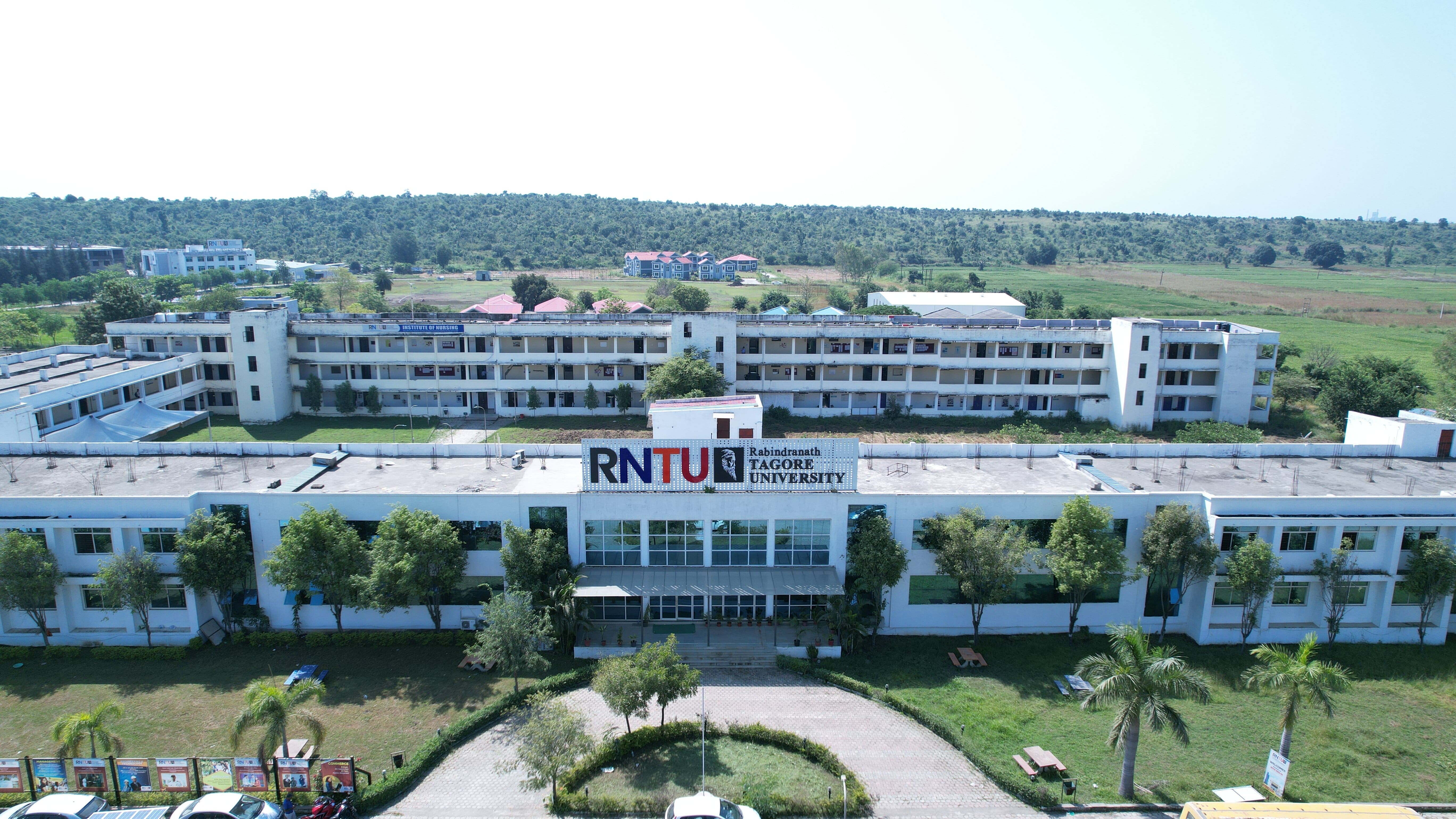
Ph.D. in Agronomy from Rabindranath Tagore University: Eligibility, Admission, Fee, Syllabus & Career
Introduction about Ph.D. in Agronomy at Rabindranath Tagore University
Rabindranath Tagore University (RTU) has earned a reputation as a hub for cutting‑edge agricultural science, and the Ph.D. in Agronomy program stands at the forefront of this legacy. Designed for professionals who aspire to become thought leaders in sustainable crop production, soil health, and agro‑ecosystem management, the doctorate blends rigorous coursework with intensive research mentorship. Whether you are a seasoned agronomist, a research scientist, or a policy analyst, RTU’s doctoral pathway equips you with the analytical tools and scientific credibility required to drive innovation in the global food system.
Eligibility Criteria for Ph.D. in Agronomy at Rabindranath Tagore University
Prospective candidates must meet the following minimum requirements:
- Academic Qualification: A Master’s degree (M.Sc., M.Tech., or equivalent) in Agronomy, Agriculture, Plant Science, Soil Science, or a closely related discipline with a minimum aggregate of 55%.
- Research Aptitude: Demonstrated interest in agricultural research through publications, conference presentations, or relevant industry experience.
- Language Proficiency: English proficiency (IELTS 6.0 or TOEFL 80) for candidates whose prior education was not in English.
- Age Limit: No upper age restriction, though candidates should be prepared for the rigors of doctoral research.
Entrance Exam for Ph.D. in Agronomy at Rabindranath Tagore University
RTU conducts a comprehensive entrance assessment to evaluate candidates’ research potential. The exam comprises three sections:
- Research Proposal Presentation (30 minutes): Candidates submit a 1500‑word proposal outlining the problem statement, objectives, methodology, and expected outcomes.
- Subject Knowledge Test (60 minutes): Multiple‑choice and short‑answer questions covering crop physiology, soil fertility, pest management, and statistical analysis.
- Interview (20 minutes): A panel of senior faculty assesses motivation, critical thinking, and alignment with RTU’s research themes.
Successful candidates receive a formal offer letter outlining the next steps.
Fee Structure for Ph.D. in Agronomy at Rabindranath Tagore University
| Fee Component | Annual Cost (INR) | Notes |
|---|---|---|
| Tuition & Laboratory Charges | 1,20,000 | Includes access to research farms and advanced instrumentation. |
| Library & Digital Resources | 10,000 | Unlimited access to journals, e‑books, and datasets. |
| Student Services & Campus Facilities | 5,000 | Health services, counseling, and extracurricular activities. |
| Annual Examination & Evaluation | 7,500 | Covering internal assessments and thesis defense logistics. |
| Total Approximate Fee per Year | 1,42,500 |
RTU offers fee waivers and merit‑based scholarships for exemplary candidates (see “Scholarship” section).
Admission Process for Ph.D. in Agronomy at Rabindranath Tagore University
The admission journey follows a streamlined five‑step workflow:
- Online Application: Submit the digital application form with academic transcripts, CV, and research proposal.
- Document Verification: The admissions office validates all uploaded certificates and conducts a background check.
- Entrance Examination: Attend the scheduled assessment (virtual or on‑campus) and present the research proposal.
- Interview & Selection: Successful candidates are invited for a faculty interview.
- Final Offer & Enrollment: Receive the admission letter, pay the initial fee, and register for the orientation program.
Ph.D. Subjects and Specializations in Agronomy at Rabindranath Tagore University
RTU’s doctoral program allows students to tailor their research within the following high‑impact specializations:
- Crop Genetics & Improvement
- Soil Ecology and Nutrient Management
- Precision Agriculture and Remote Sensing
- Organic & Sustainable Farming Systems
- Climate‑Resilient Agronomy
- Post‑Harvest Technology and Value Addition
Research Areas in Agronomy at Rabindranath Tagore University
Faculty mentors lead nationally funded projects across these thematic corridors:
- Water‑Use Efficiency in Semi‑Arid Crops
- Biofertilizer Development for Smallholder Farmers
- Genomic Selection for Drought Tolerance
- Integrated Pest Management using AI‑driven scouting
- Carbon Sequestration in Agro‑forestry Systems
- Farm‑to‑Table Supply Chain Optimization
Documents Required for Ph.D. in Agronomy at Rabindranath Tagore University
| Document | Format | Remarks |
|---|---|---|
| Academic Transcripts (M.Sc./M.Tech.) | PDF, Scanned Copy | Originals for verification later |
| Research Proposal (1500 words) | Word Document | Must include objectives, methodology, timeline |
| Curriculum Vitae (CV) | Highlight publications, projects, and professional experience | |
| Letter of Recommendation (2) | From academic supervisors or industry experts | |
| English Proficiency Certificate | IELTS/TOEFL score report | |
| Identity Proof (Aadhaar/Passport) | Valid government‑issued ID |
Rabindranath Tagore University Ph.D. Syllabus for Agronomy
The doctoral curriculum is divided into three phases:
- Core Seminars (Year 1): Advanced courses in Plant Physiology, Soil Chemistry, Research Methodology, and Statistics for Agronomy.
- Specialization Modules (Year 2‑3): Electives aligned with chosen research focus, e.g., “Remote Sensing for Precision Farming” or “Molecular Breeding Techniques.”
- Thesis Work (Year 3‑5): Original research, manuscript preparation, and defense. Candidates are expected to publish at least two peer‑reviewed articles.
How To Apply for Ph.D. in Agronomy at Rabindranath Tagore University
Follow these precise steps to submit a successful application:
- Visit the official RTU admissions portal and create a user account.
- Complete the online application form, ensuring every field is accurately filled.
- Upload the required documents (see “Documents Required” table).
- Pay the non‑refundable application fee of INR 2,500 via net banking or UPI.
- Schedule the entrance examination through the portal; a confirmation email will be sent.
- Prepare for the interview by reviewing your proposal and recent agronomy literature.
Career Scope and Job Opportunities After Ph.D. in Agronomy from Rabindranath Tagore University
A doctorate in Agronomy unlocks a spectrum of leadership roles:
- Academic Positions: Assistant Professor, Research Fellow, or Department Head at universities worldwide.
- Research Institutes: Senior Scientist at Indian Council of Agricultural Research (ICAR), CGIAR centers, or private R&D labs.
- Agribusiness Leadership: Chief Agronomist, Innovation Manager, or Sustainability Officer in multinational seed and agro‑chemical companies.
- Policy & Advisory: Agricultural policy analyst for government ministries, NGOs, or international development agencies.
- Entrepreneurship: Founder of agri‑tech startups focusing on precision farming tools, bio‑fertilizers, or data analytics.
Scholarship for Ph.D. in Agronomy at Rabindranath Tagore University
RTU provides a range of financial assistance options:
- Merit‑Based Scholarship: Up to 50 % tuition waiver for candidates with a CGPA above 8.5/10.
- Research Assistantship: Stipend of INR 15,000 per month linked to funded projects.
- External Fellowships: Guidance and application support for the CSIR‑NET, UGC‑JRF, and Fulbright scholarships.
FAQs Regarding Ph.D. in Agronomy at Rabindranath Tagore University
- Q1: How long does it take to complete the Ph.D.?
- Typically 4‑5 years, depending on the research scope and publication requirements.
- Q2: Can working professionals enroll part‑time?
- Yes, RTU offers a flexible part‑time track with evening seminars and remote lab access.
- Q3: Is there any requirement for fieldwork?
- Extensive field trials are integral to most agronomy projects; the university provides dedicated research farms.
- Q4: What language support is available for non‑native English speakers?
- RTU’s Academic Language Centre offers writing workshops, editing assistance, and speaking labs.
- Q5: Are there opportunities for interdisciplinary collaboration?</dt




