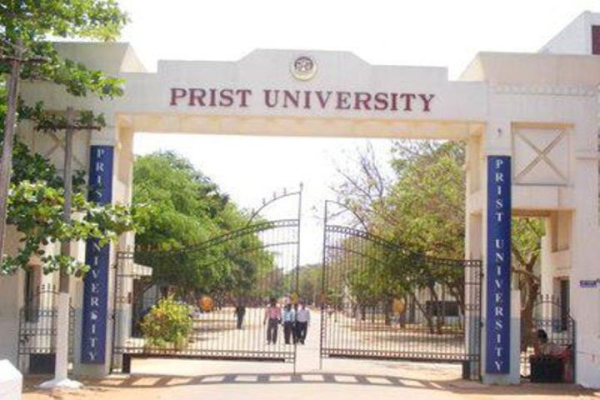
Ph.D. in Animal Genetics And Breeding from Ponnaiyan Ramajayam Institute of Science & Technology
The Ponnaiyan Ramajayam Institute of Science & Technology (PRIST) offers a cutting‑edge Ph.D. in Animal Genetics and Breeding designed for professionals who aspire to lead innovative research and drive sustainable livestock improvement. This doctoral program blends rigorous coursework, state‑of‑the‑art laboratory facilities, and mentorship from world‑class faculty, empowering scholars to translate genetic insights into real‑world breeding solutions.
Eligibility Criteria for Ph.D. in Animal Genetics and Breeding at Ponnaiyan Ramajayam Institute of Science & Technology
Prospective candidates must fulfill the following minimum requirements:
- A Master’s degree (M.Sc., M.V.Sc., or equivalent) with at least 55% aggregate marks in a relevant discipline such as Animal Science, Genetics, Biotechnology, or Veterinary Medicine.
- Valid GATE/NET/ICAR scores are highly preferred, though not mandatory.
- Demonstrated research aptitude through publications, conference presentations, or relevant project work.
- English language proficiency (minimum IELTS 6.0 or TOEFL 80) for international applicants.
Entrance Exam for Ph.D. in Animal Genetics and Breeding at Ponnaiyan Ramajayam Institute of Science & Technology
PRIST conducts a two‑stage entrance assessment:
- Written Test: 100 multiple‑choice questions covering genetics, molecular biology, animal physiology, and research methodology.
- Interview & Presentation: Shortlisted candidates present a research proposal and answer a panel of experts to evaluate analytical thinking and communication skills.
Preparation resources, past papers, and mock tests are available on the institute’s official portal.
Fee Structure for Ph.D. in Animal Genetics and Breeding at Ponnaiyan Ramajayam Institute of Science & Technology
| Category | Annual Fee (INR) | Additional Charges |
|---|---|---|
| General Category | 45,000 | Lab consumables – 8,000 |
| OBC/SC/ST | 38,000 | Lab consumables – 6,000 |
| International Students | 80,000 | Insurance & Visa – 12,000 |
Fees are payable in two installments at the start of each academic year. Scholarships and stipends can offset a significant portion of these costs.
Admission Process for Ph.D. in Animal Genetics and Breeding at Ponnaiyan Ramajayam Institute of Science & Technology
The streamlined admission workflow consists of the following steps:
- Online application submission through the PRIST portal.
- Upload of academic transcripts, research CV, and statement of purpose.
- Payment of the non‑refundable application fee (₹2,500).
- Entrance exam (written) scheduled on designated dates.
- Interview & research proposal presentation for qualified candidates.
- Final admission offer and enrollment formalities.
Applicants are encouraged to begin the process at least six months before the commencement of the semester to accommodate document verification and visa formalities.
Ph.D. Subjects and Specializations in Animal Genetics and Breeding at Ponnaiyan Ramajayam Institute of Science & Technology
While the core program focuses on Animal Genetics and Breeding, students can tailor their research across these interdisciplinary specializations:
- Molecular Genetics and Genomics
- Reproductive Biotechnology
- Quantitative Trait Loci (QTL) Mapping
- Animal Nutrition & Metabolic Genetics
- Conservation Genetics of Endangered Species
- Precision Breeding using CRISPR/Cas9
Research Areas in Animal Genetics and Breeding at Ponnaiyan Ramajayam Institute of Science & Technology
PRIST’s research laboratories are equipped for high‑throughput sequencing, phenotypic data analytics, and field trials. Current research thrusts include:
- Genomic selection for dairy and meat productivity.
- Genetic resistance to parasitic and viral diseases.
- Epigenetic regulation of growth and fertility.
- Sustainable breeding strategies for climate‑resilient livestock.
- Integration of AI‑driven phenomics in breeding programs.
Collaborations with national agricultural universities and international research consortia broaden the impact of each dissertation.
Documents Required for Ph.D. in Animal Genetics and Breeding at Ponnaiyan Ramajayam Institute of Science & Technology
| Document | Format | Notes |
|---|---|---|
| Completed Application Form | Upload on the portal | |
| Academic Transcripts (M.Sc./M.V.Sc.) | Scanned Image | Attested copies required |
| Research Proposal (2,000‑3,000 words) | Word Document | Must outline objectives, methodology, and expected outcomes |
| Curriculum Vitae | Include publications and project experience | |
| GATE/NET Scorecard (if applicable) | Optional but advantageous | |
| English Proficiency Certificate | For non‑native speakers only |
Ponnaiyan Ramajayam Institute of Science & Technology Ph.D. Syllabus for Animal Genetics and Breeding
The doctoral syllabus blends foundational coursework with research milestones:
- Year 1 – Core Modules: Advanced Animal Genetics, Statistical Genetics, Molecular Biology Techniques, Research Ethics.
- Year 2 – Electives & Lab Rotation: Genomics, Reproductive Biotechnology, Bioinformatics, Field Breeding Trials.
- Year 3‑4 – Dissertation Phase: Original research, conference presentations, manuscript preparation, and thesis defense.
Students are also required to attend at least two national/international conferences and submit one peer‑reviewed article before graduation.
How To Apply for Ph.D. in Animal Genetics and Breeding at Ponnaiyan Ramajayam Institute of Science & Technology
Follow these actionable steps to submit a successful application:
- Visit the official PRIST admissions page and click “Apply Now”.
- Create an account, fill in personal and academic details, and upload the required documents.
- Pay the application fee through the secure gateway.
- Schedule your entrance exam slot; keep the confirmation email handy.
- Prepare a concise research proposal—consider seeking PhD Topic Selection and Proposal Assistance for a competitive edge.
- Monitor your email for interview invitations and further instructions.
Career Scope and Job Opportunities After Ph.D. in Animal Genetics and Breeding from Ponnaiyan Ramajayam Institute of Science & Technology
Graduates emerge as experts equipped to occupy high‑impact roles, such as:
- Senior Research Scientist – Government Agricultural Research Institutes (ICAR, CSIR).
- Head of Breeding Program – Corporate livestock enterprises and dairy cooperatives.
- Professor/Assistant Professor – Universities and private colleges.
- Biotech Consultant – Genetic testing companies, NGOs, and policy think‑tanks.
- Entrepreneur – Start‑ups focused on precision breeding, genomics services, or farm management software.
The demand for genomics‑savvy professionals continues to rise, with salaries ranging from INR 8‑15 Lakhs for entry‑level research roles to INR 25 Lakhs+ for senior managerial positions.
Scholarship for Ph.D. in Animal Genetics and Breeding at Ponnaiyan Ramajayam Institute of Science & Technology
PRIST offers a suite of merit‑based and need‑based financial aids:
- Institute Fellowship: Full tuition waiver + monthly stipend of ₹15,000.
- ICAR Doctoral Fellowship: Covered tuition + research grant of ₹2,00,000 per year.
- National Scholarship for Women Scientists: Additional ₹5,000 monthly.
- Students can also apply for external grants such as the UGC‑NET fellowship or industry‑sponsored projects.
For assistance with scholarship applications, consider leveraging Editing and Proofreading Services to polish your statements of purpose and research abstracts.
FAQs Regarding Ph.D. in Animal Genetics and Breeding at Ponnaiyan Ramajayam Institute of Science & Technology
- What is the duration of the Ph.D. program?
- The typical completion time is 4‑5 years, depending on research progress and publication requirements.
- Can I pursue the Ph.D. part‑time while working?
- Yes, PRIST offers a part‑time track with flexible scheduling, though full‑time candidates generally complete faster.
- Is there industry collaboration for project funding?
- Extensive collaborations exist with leading dairy firms, biotech startups, and livestock NGOs, providing funded project opportunities.
- Do I receive any training in scientific writing?
- Yes, a dedicated workshop on manuscript preparation is part of the curriculum. Students often avail




