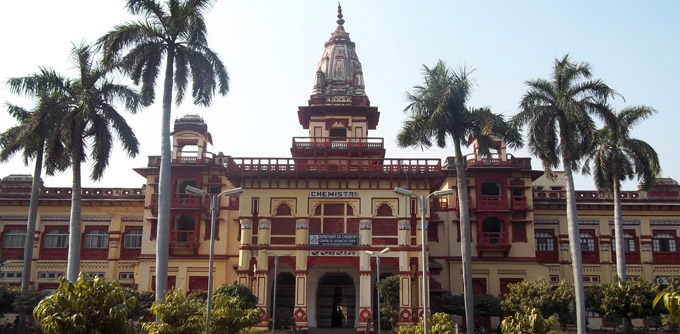
Ph.D. in Applied Art from Banaras Hindu University: Eligibility, Entrance Exam, Fee Structure, Admission Process, Subjects, Research Areas, Syllabus, Scholarship & Career Scope
Introduction about Ph.D. in Applied Art at Banaras Hindu University
The Ph.D. in Applied Art program at Banaras Hindu University (BHU) stands as a premier research avenue for creative professionals eager to merge artistic practice with scholarly inquiry. Designed for graduates with a strong background in fine arts, design, or related disciplines, this doctorate nurtures innovative thinking, critical analysis, and interdisciplinary collaboration. BHU's rich heritage, state‑of‑the‑art laboratories, and vibrant cultural campus provide an inspiring backdrop for scholars aiming to contribute original knowledge to the fields of visual communication, product design, digital media, and heritage conservation.
Eligibility Criteria for Ph.D. in Applied Art at Banaras Hindu University
- Master’s degree (M.A./M.F.A.) in Applied Art, Visual Communication, Design, or any allied discipline from a recognized university.
- Minimum aggregate of 55% (or CGPA equivalent) in the postgraduate program.
- Qualifying score in the BHU Ph.D. Entrance Examination or any National Level Test (UGC‑NET, CSIR‑NET, JRF) recognized by the University Grants Commission.
- For candidates holding a Ph.D. in a related field, direct admission may be considered based on research proposal and interview.
Entrance Exam for Ph.D. in Applied Art at Banaras Hindu University
The entrance assessment comprises two stages:
- Written Test: Objective and descriptive questions evaluating research methodology, art theory, and subject‑specific knowledge.
- Interview & Presentation: Candidates present a research proposal, discuss prior work, and answer panel queries.
Preparation resources such as previous year papers, standard texts on research methods, and portfolio reviews are strongly recommended.
Fee Structure for Ph.D. in Applied Art at Banaras Hindu University
| Fee Component | Amount (INR) | Notes |
|---|---|---|
| Application Fee (Online) | 1,500 | Non‑refundable |
| Annual Tuition & Laboratory Charges | 12,000 | Includes access to studios, digital labs, and library |
| Registration & Examination Fee (per annum) | 3,000 | Paid at the start of each academic year |
| Miscellaneous (Studio Materials, Software Licences) | 2,500 | Estimated per year |
| Total Approximate Cost (3‑Year Programme) | 45,000 | Subject to revision each academic session |
Admission Process for Ph.D. in Applied Art at Banaras Hindu University
- Complete the online application form on the BHU official portal.
- Upload scanned copies of academic certificates, mark sheets, passport‑size photograph, and detailed CV.
- Pay the application fee and submit the research proposal (maximum 1500 words).
- Await the merit list for the written test; shortlisted candidates are notified via email.
- Appear for the written examination followed by the interview.
- Successful candidates receive an admission offer letter and are required to enroll within 15 days.
Ph.D. Subjects and Specializations in Applied Art at Banaras Hindu University
Students may choose from a range of specializations aligned with contemporary industry and academic trends, including:
- Visual Communication & Graphic Design
- Product & Industrial Design
- Digital Media & Interaction Design
- Heritage & Conservation Studies
- Textile & Fashion Design
- Animation & Motion Graphics
Research Areas in Applied Art at Banaras Hindu University
Faculty‑guided research clusters encourage interdisciplinary exploration. Prominent research themes include:
- Design Thinking and Sustainable Product Development
- Artificial Intelligence in Creative Processes
- Preservation of Indigenous Art Forms
- Human‑Centered Interaction Design for Emerging Technologies
- Cross‑cultural Visual Storytelling
- Impact of Digital Media on Cultural Identity
Documents Required for Ph.D. in Applied Art at Banaras Hindu University
| Document | Format | Remarks |
|---|---|---|
| Filled Online Application Form | Submission through BHU portal only | |
| Academic Transcripts (10‑12, UG, PG) | Scanned Copies | Originals may be requested during verification |
| Research Proposal | Word Document (max 1500 words) | Must include objectives, methodology, and bibliography |
| Curriculum Vitae | Highlight publications, exhibitions, and projects | |
| Passport‑size Photograph | JPEG (200 KB) | White background |
| Proof of Qualifying Exam (if applicable) | UGC‑NET, CSIR‑NET, etc. |
Banaras Hindu University Ph.D. Syllabus for Applied Art
The syllabus is structured to build a strong theoretical foundation followed by intensive research practice:
- Year 1: Research Methodology, Art Theory & History, Advanced Studio Practice, Statistics for Artists.
- Year 2: Specialized Electives (chosen from the list of specializations), Seminar Presentation, Drafting of Chapter I & II.
- Year 3: Data Collection & Analysis, Thesis Writing, Publication of Research Papers, Final Defense.
How To Apply for Ph.D. in Applied Art at Banaras Hindu University
Follow these step‑by‑step instructions to submit a successful application:
- Visit the official BHU admissions portal and click on “Ph.D. Programs”.
- Select “Applied Art” from the list of disciplines.
- Register using a valid email address and set a secure password.
- Complete the personal information section and upload required documents.
- Enter your research proposal in the provided text box or upload as a file.
- Pay the INR 1,500 application fee through the integrated payment gateway.
- Submit the form and note the application reference number for future correspondence.
Career Scope and Job Opportunities After Ph.D. in Applied Art from Banaras Hindu University
Graduates emerge as thought leaders equipped for high‑impact roles such as:
- Senior Designer / Creative Director in multinational corporations.
- Research Fellow or Faculty Member at leading art & design institutions.
- Curator or Conservator in museums and cultural heritage organizations.
- Policy Advisor for government bodies on cultural and design initiatives.
- Entrepreneur launching innovative design studios or consultancy firms.
- Author of seminal publications and presenter at international conferences.
Scholarship for Ph.D. in Applied Art at Banaras Hindu University
BHU offers merit‑based scholarships and research grants to eligible candidates. Key schemes include:
- University Merit Scholarship: Full tuition waiver for top 10% rankers.
- UGC‑JRF Fellowship: Annual stipend of INR 31,000 plus contingency.
- Departmental Research Grant: Funding for material, software, and fieldwork expenses.
Applicants are encouraged to explore these options early, as funding decisions are tied to the admission timeline.
FAQs Regarding Ph.D. in Applied Art at Banaras Hindu University
- What is the minimum duration of the Ph.D. program?
- The minimum stipulated period is three years, extendable up to six years based on research progress.
- Can working professionals enroll part‑time?
- Yes, BHU offers a part‑time mode for candidates employed in relevant sectors, subject to supervisor approval.
- Is there a requirement for a portfolio?
- While not mandatory, a strong portfolio demonstrating creative competence significantly strengthens the application.
- How many subjects must I appear for in the entrance test?
- Candidates are examined in two papers: Paper I (General Research Aptitude) and Paper II (Specialized Applied Art).
- Are there any collaborative research opportunities with industry?
- Absolutely. The Department maintains active MoUs with design studios, cultural NGOs, and tech firms for joint projects.
For additional assistance with your research journey—whether it’s developing a robust proposal, analyzing data, or preparing a dissertation—consider professional services such as




