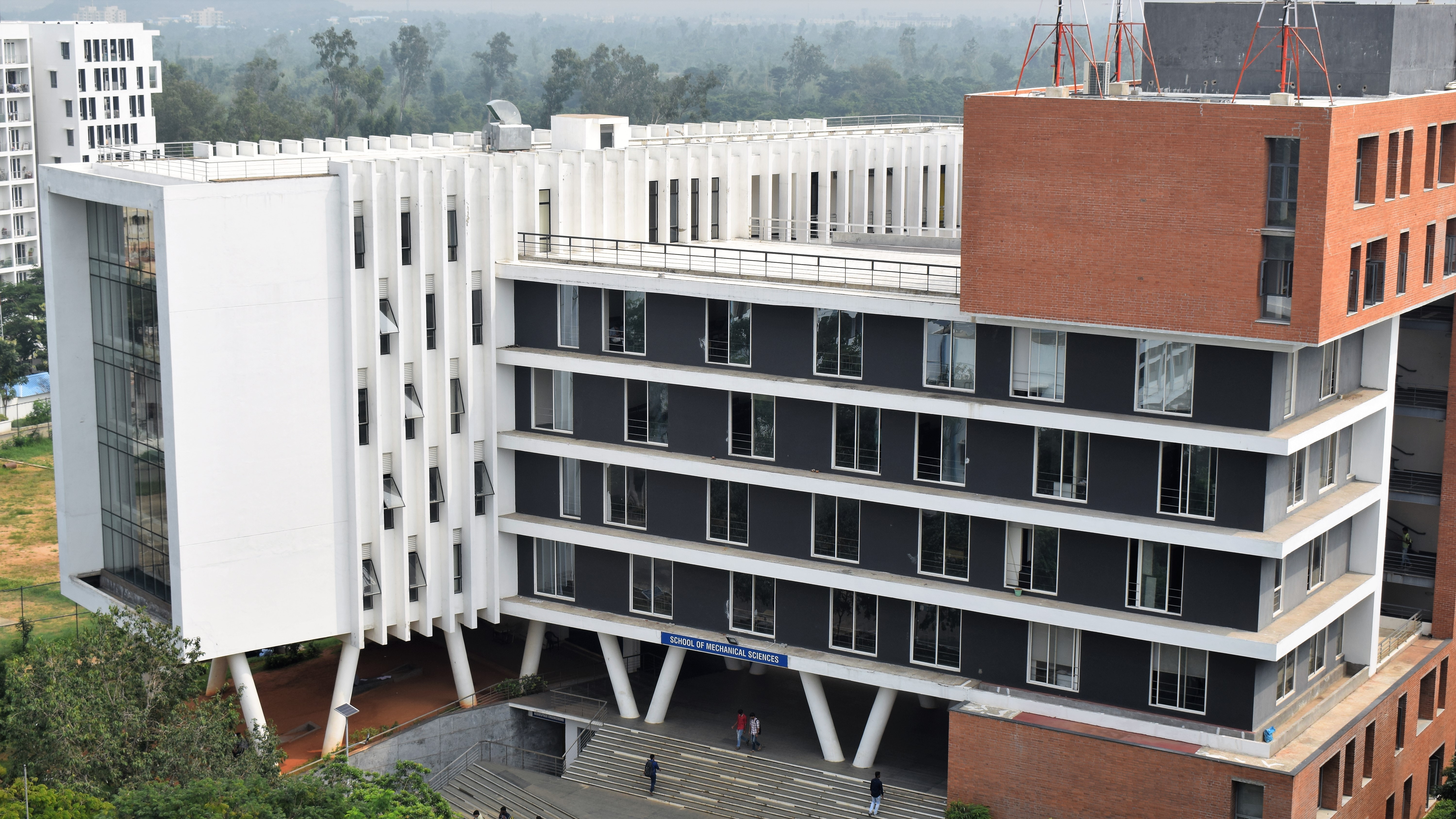
Ph.D. in Automobile Engineering at B.S. Abdur Rahman Crescent Institute of Science and Technology
The automotive sector in India is accelerating at an unprecedented pace, driven by innovations in electric mobility, autonomous driving, and sustainable manufacturing. A Doctor of Philosophy (Ph.D.) in Automobile Engineering from B.S. Abdur Rahman Crescent Institute of Science and Technology positions you at the forefront of this transformation, equipping you with cutting‑edge research skills and industry‑relevant expertise. Whether you aim to lead R&D projects, become a faculty member, or influence policy, this doctoral programme offers a robust platform for professional growth and societal impact.
Eligibility Criteria for Ph.D. in Automobile Engineering at B.S. Abdur Rahman Crescent Institute of Science and Technology
- Master’s degree (M.E., M.Tech., M.Sc.) in Automobile Engineering or a closely related discipline with a minimum of 55% aggregate (or equivalent CGPA).
- Valid GATE score in Mechanical Engineering, Automotive Engineering, or a related subject (score of 400+ is preferred).
- For candidates holding a Bachelor’s degree (B.E./B.Tech.) in Automobile Engineering, a minimum of 65% aggregate and a valid GATE score are mandatory.
- Indian nationals as well as foreign candidates meeting the academic standards are eligible.
- Professional experience of at least two years in the automotive industry can be considered as a supplementary qualification.
Entrance Exam for Ph.D. in Automobile Engineering at B.S. Abdur Rahman Crescent Institute of Science and Technology
The institute conducts its own entrance examination, supplemented by national-level scores such as GATE. The entrance test evaluates:
- Fundamental concepts of thermodynamics, fluid mechanics, and vehicle dynamics.
- Research aptitude through objective and descriptive sections.
- English proficiency and analytical reasoning.
Candidates shortlisted from the entrance exam are invited for a personal interview and a presentation of a research proposal.
Fee Structure for Ph.D. in Automobile Engineering at B.S. Abdur Rahman Crescent Institute of Science and Technology
| Category | Annual Fee (INR) | Notes |
|---|---|---|
| General Category (Self‑Financed) | 85,000 | Includes tuition, library, and lab access. |
| SC/ST/PWD (Government Sponsored) | 45,000 | Reduced fee as per government norms. |
| Industry Sponsored Scholars | 0 | Full waiver for candidates backed by recognized automotive firms. |
| Additional Charges (Laboratory, Publication, etc.) | 10,000–15,000 | Varies with research equipment usage. |
Admission Process for Ph.D. in Automobile Engineering at B.S. Abdur Rahman Crescent Institute of Science and Technology
- Online Application: Submit the digital application form via the institute’s portal.
- Upload Documents: Attach scanned copies of academic transcripts, GATE scorecard, and identity proof.
- Entrance Examination: Appear for the institute’s entrance test or submit a valid GATE score.
- Interview & Proposal Review: Shortlisted candidates present their research proposal to a faculty panel.
- Final Offer: Admission letter is issued to successful candidates, followed by fee payment.
Ph.D. Subjects and Specializations in Automobile Engineering at B.S. Abdur Rahman Crescent Institute of Science and Technology
The doctoral programme offers flexible specializations, allowing candidates to align their research with emerging industry trends:
- Electric Vehicle Powertrain Design
- Advanced Driver Assistance Systems (ADAS)
- Lightweight Materials and Structural Optimization
- Automotive Emissions Control and Sustainable Fuels
- Vehicle Dynamics and Control
- Hybrid Power Systems and Energy Management
- Manufacturing Automation and Industry 4.0 in Automotive Production
Research Areas in Automobile Engineering at B.S. Abdur Rahman Crescent Institute of Science and Technology
Faculty members are actively engaged in high‑impact research projects funded by national agencies and automotive giants. Key research clusters include:
- Battery Management Systems for EVs
- Artificial Intelligence for Autonomous Navigation
- Carbon‑Fiber Reinforced Polymers for Chassis
- Noise, Vibration, and Harshness (NVH) Reduction Techniques
- Smart Manufacturing and Robotics Integration
- Policy Modeling for Sustainable Mobility
Students are encouraged to collaborate with industry partners and leverage the institute’s state‑of‑the‑art labs.
Documents Required for Ph.D. in Automobile Engineering at B.S. Abdur Rahman Crescent Institute of Science and Technology
| Document | Details |
|---|---|
| Academic Transcripts | Certified copies of all degree certificates (B.E./M.E.) |
| GATE Score Card | Valid for the current admission cycle |
| Research Proposal (2,500 words) | Outline of intended research, objectives, and methodology |
| Curriculum Vitae (CV) | Professional experience, publications, and patents (if any) |
| Letter of Recommendation (2) | From academic mentors or industry supervisors |
| Identity Proof | Aadhaar Card, Passport, or Driving License |
B.S. Abdur Rahman Crescent Institute Ph.D. Syllabus for Automobile Engineering
The syllabus is designed to build a solid foundation in research methodology followed by domain‑specific modules:
- Research Methodology & Academic Writing
- Advanced Vehicle Dynamics
- Powertrain Systems and Electrification
- Control Systems and Embedded Software
- Materials Engineering for Automotive Applications
- Data Analytics in Vehicle Testing
- Ethics, Patent Law, and Commercialization
Students also enroll in elective courses aligned with their specialization, ensuring a comprehensive academic experience.
How To Apply for Ph.D. in Automobile Engineering at B.S. Abdur Rahman Crescent Institute of Science and Technology
Follow these steps to submit a successful application:
- Visit the official admission portal and create a user account.
- Fill in personal, academic, and professional details accurately.
- Upload the required documents (refer to the Documents Required table).
- Pay the non‑refundable application fee (INR 2,500).
- Schedule the entrance exam date and download the admit card.
- Prepare a concise research proposal that reflects your interests and aligns with faculty expertise.
- Submit the completed form before the deadline; monitor your email for further communication.
Career Scope and Job Opportunities After Ph.D. in Automobile Engineering from B.S. Abdur Rahman Crescent Institute of Science and Technology
Graduates enjoy a broad spectrum of career pathways:
- R&D Leadership: Senior roles in automotive OEMs, EV start‑ups, and component manufacturers.
- Academic Positions: Assistant Professor or Lecturer in leading engineering colleges.
- Policy & Consultancy: Advisory roles with government bodies shaping sustainable mobility policies.
- Entrepreneurship: Founding tech‑driven automotive ventures leveraging patented research.
- Data Science & AI: Positions focused on predictive analytics for autonomous systems.
According to recent industry surveys, Ph.D. holders in automobile engineering earn an average salary increase of 30% over master’s graduates within three years of employment.
Scholarship for Ph.D. in Automobile Engineering at B.S. Abdur Rahman Crescent Institute of Science and Technology
The institute offers merit‑based and need‑based scholarships:
- Institute Merit Scholarship: Up to 50% fee waiver for candidates with a GATE percentile above 85.
- Industry Sponsored Fellowship: Full tuition waiver and stipend for research projects sponsored by automotive firms.
- Government Fellowships: Eligibility for AICTE and UGC NET fellowships.
Applicants are encouraged to explore additional funding through external bodies such as the Ministry of Education’s National Scholarship Scheme and private foundations supporting sustainable mobility research.
FAQs Regarding Ph.D. in Automobile Engineering at B.S. Abdur Rahman Crescent Institute of Science and Technology
- What is the minimum duration of the Ph.D. programme?
- The minimum tenure is three years, extendable up to six years based on research progress.
- Can I pursue the Ph.D. part‑time while working?
- Yes, the institute offers a part‑time mode for industry professionals, with a flexible schedule for coursework and lab access.
- Is there a provision for publishing my thesis in open‑access journals?




