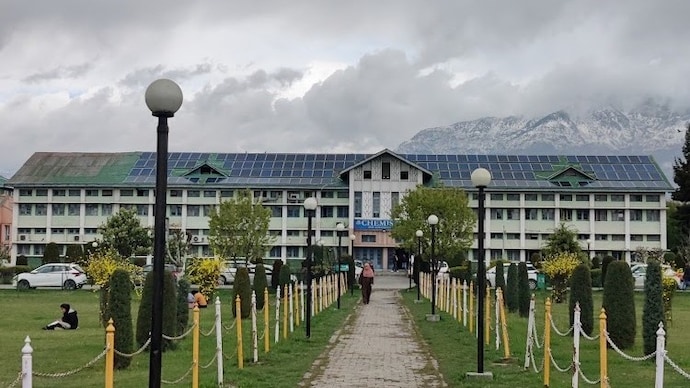
Ph.D. in Biochemistry at Kashmir University
Kashmir University has emerged as a beacon of research excellence in the northern region of India, offering a rigorous Ph.D. in Biochemistry that blends theoretical depth with hands‑on laboratory experience. Designed for ambitious professionals who aspire to become innovators in health, agriculture, and environmental sciences, the program equips scholars with cutting‑edge analytical skills, interdisciplinary collaborations, and a strong publication record. Whether you dream of leading a biotech startup, heading a research lab, or shaping policy through scientific insight, this doctoral pathway lays a solid foundation for a transformative career.
Ph.D Admission 2026-2027 & Writing Support Services by Shiksha Research
Eligibility Criteria for Ph.D. in Biochemistry at Kashmir University
- A Master’s degree (M.Sc., M.Pharma, M.Tech., or equivalent) with a minimum of 55% marks (or CGPA 6.0/10) in Biochemistry or a closely related discipline.
- Qualified in NET, GATE, or any other national eligibility test recognized by UGC/CSIR.
- For candidates without a qualifying test, a minimum of 60% marks in the Master’s program is required, followed by an interview and a written test conducted by the university.
- Age limit: No upper age restriction, though candidates above 30 years may be asked to provide additional research experience.
Entrance Exam for Ph.D. in Biochemistry at Kashmir University
The university conducts a two‑stage entrance process:
- Written Test: Objective & descriptive questions covering advanced biochemistry, molecular biology, enzymology, and analytical techniques. The test duration is 2 hours.
- Personal Interview: Assessment of research aptitude, previous project work, and alignment with faculty interests.
Candidates with a valid NET/GATE score are exempted from the written test but must appear for the interview. Preparation resources are available on the university’s official portal.
Fee Structure for Ph.D. in Biochemistry at Kashmir University
| Fee Component | Amount (INR) | Notes |
|---|---|---|
| Application / Registration Fee | 2,000 | One‑time, non‑refundable |
| Annual Tuition Fee | 12,000 | Payable at the start of each academic year |
| Laboratory & Consumables Charge | 4,000 | Estimated for the first year; may vary with project |
| Library & Resource Access | 1,500 | Includes digital journal subscriptions |
| Miscellaneous (Student Welfare, Sports, etc.) | 1,000 | Optional, varies per student |
| Total Approximate First‑Year Cost | 20,500 |
Admission Process for Ph.D. in Biochemistry at Kashmir University
- Visit the official Kashmir University Ph.D. admissions portal and create a candidate profile.
- Upload scanned copies of academic certificates, mark sheets, NET/GATE scorecard (if applicable), and a detailed curriculum vitae.
- Submit the online application fee and select preferred research supervisors from the faculty list.
- Schedule the written test (or confirm exemption) and attend the personal interview.
- Upon successful evaluation, receive the provisional admission letter and begin the registration process.
- Register for courses, obtain lab access, and start the orientation program.
Ph.D. Subjects and Specializations in Biochemistry at Kashmir University
The doctoral program offers a spectrum of specializations, enabling scholars to tailor their research focus:
- Molecular Enzymology & Kinetics
- Protein Engineering & Structural Biology
- Metabolomics & Systems Biology
- Plant Biochemistry & Crop Improvement
- Clinical Biochemistry & Diagnostic Biomarkers
- Environmental Biochemistry & Bioremediation
- Computational Biochemistry & Bioinformatics
Research Areas in Biochemistry at Kashmir University
Faculty members lead cutting‑edge projects in the following domains:
- Drug Discovery through Natural Product Screening
- Enzyme Mechanisms in Renewable Energy Production
- Genomic and Proteomic Profiling of Indigenous Medicinal Plants
- Metabolic Pathway Engineering for Sustainable Agriculture
- Biomarker Identification for Cancer and Cardiovascular Diseases
- Bioremediation of Heavy Metals in Himalayan Ecosystems
- AI‑Driven Modeling of Protein‑Ligand Interactions
Documents Required for Ph.D. in Biochemistry at Kashmir University
| Document | Format | Remarks |
|---|---|---|
| Academic Transcripts (B.Sc. & M.Sc.) | PDF, scanned copy | Must be attested by the issuing university |
| NET / GATE Score Card (if applicable) | Valid for the current admission cycle | |
| Curriculum Vitae (CV) | Include publications, projects, and work experience | |
| Research Proposal (2,000‑3,000 words) | DOCX or PDF | Outline objectives, methodology, and expected outcomes |
| Letter of Recommendation (2) | From academic supervisors or industry mentors | |
| Identity Proof (Aadhaar / Passport) | Government‑issued, recent |
Kashmir University Ph.D. Syllabus for Biochemistry
The structured syllabus comprises core coursework, laboratory rotations, and a dissertation component:
- Core Modules (Year 1)
- Advanced Biochemical Techniques
- Statistical Methods for Biological Research
- Scientific Writing and Ethics
- Computational Tools in Biochemistry
- Laboratory Rotations (Year 1‑2)
- Enzyme Kinetics Lab
- Proteomics & Mass Spectrometry
- Metabolomics Platform
- Elective Modules (Year 2‑3)
- Plant Biochemistry
- Clinical Diagnostics
- Environmental Biotechnology
- Dissertation Research (Year 3‑5)
- Original research, data collection, and analysis.
- Periodic progress reports and viva‑voce examinations.
- Thesis submission and defense.
How To Apply for Ph.D. in Biochemistry at Kashmir University
Follow these step‑by‑step instructions to submit a successful application:
- Prepare a concise Research Paper Writing Services sample to showcase your analytical capabilities.
- Draft a compelling research proposal highlighting a novel problem statement and methodology.
- Gather all required documents (as listed above) and ensure they are correctly formatted.
- Register on the university portal, fill in personal and academic details, and upload documents.
- Pay the registration fee via the secure online gateway.
- Schedule the written test (or submit NET/GATE exemption proof).
- Attend the interview, present your proposal, and demonstrate alignment with the faculty’s research interests.
- Upon acceptance, complete enrollment formalities and join the orientation program.
Career Scope and Job Opportunities After Ph.D. in Biochemistry from Kashmir University
Graduates enjoy a diverse range of high‑impact career paths:
- Academic Positions: Assistant Professor, Research Fellow, or Head of Department in universities and colleges.
- Industry Roles: R&D Scientist, Product Development Manager, Quality Control Analyst in pharmaceuticals, biotech firms, and food processing companies.
- Government & Public Sector: Research Scientist in CSIR labs, DRDO, ISRO, or environmental agencies.
- Healthcare & Clinical Laboratories: Clinical Biochemist, Diagnostic Consultant.
- Entrepreneurship: Founder of biotech startups focused on enzyme engineering, nutraceuticals, or bio‑informatics solutions.
- Consultancy & Policy Making: Scientific advisor for NGOs, policy institutes, or international health organizations.
According to recent placement data, the average starting salary for Ph.D. biochemists ranges from INR 8‑12 lakhs per annum, with rapid growth potential in research‑intensive sectors.
Scholarship for Ph.D. in Biochemistry at Kashmir University
The university, in collaboration with national bodies, offers several financial aids:
- UGC‑JRF Fellowship: Full tuition waiver and monthly stipend of INR 31,000.
- CSIR‑NET Fellowship: Similar benefits with additional research grant.
- State Government Scholarships: Tuition discount and living allowance for meritorious candidates from the Jammu & Kashmir region.
- External Grants: Opportunities to apply for funded projects through Research Data Analysis Services or industry‑partner collaborations.
Applicants are encouraged to explore the Thesis and Dissertation Writing Services for assistance in preparing a compelling scholarship statement.
FAQs Regarding Ph.D. in Biochemistry at Kashmir University
- 1. How long does it take to complete the Ph.D. program?
- Typically




