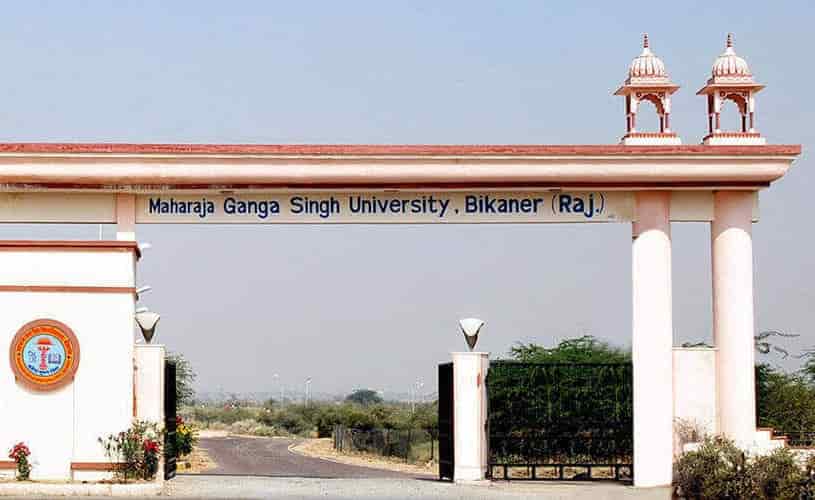
Introduction about Ph.D. in Biochemistry at Maharaja Ganga Singh University
Embarking on a Ph.D. in Biochemistry at Maharaja Ganga Singh University (MGSU), Bikaner, is more than just an academic pursuit; it is a profound journey into the molecular foundations of life itself. In an era where biological breakthroughs are reshaping medicine, agriculture, and environmental science, MGSU stands as a beacon for aspiring researchers. The university provides a robust platform for scholars to explore the intricate chemical processes within and relating to living organisms. By integrating chemistry with biology, this program empowers professionals to decode the mysteries of cellular functions, genetic expressions, and metabolic pathways.
Choosing MGSU for your doctoral studies means joining a community of visionary scientists dedicated to innovation and discovery. Whether you are aiming to pioneer new drug delivery systems or solve complex nutritional challenges, the Ph.D. program here offers a perfect blend of theoretical depth and advanced laboratory training. It inspires professionals to push the boundaries of current knowledge, fostering a mindset of curiosity and resilience that is essential for high-impact scientific research. As you step into this prestigious institution, you are not just earning a degree; you are preparing to lead the next wave of biotechnological evolution.
Ph.D Admission 2026-2027 & Writing Support Services by Shiksha Research
Eligibility Criteria for Ph.D. in Biochemistry at Maharaja Ganga Singh University
To maintain high standards of research excellence, Maharaja Ganga Singh University has established specific eligibility criteria for professionals seeking admission to the Ph.D. in Biochemistry program. Success in this field requires a solid foundation in biological sciences and a keen interest in molecular mechanisms.
- Academic Qualification: Candidates must possess a Master?s degree (M.Sc.) in Biochemistry, Biotechnology, Life Sciences, or a closely related discipline from a university recognized by the UGC.
- Minimum Marks: A minimum of 55% aggregate marks (or an equivalent grade in a point scale) is mandatory for general category candidates. Consistent academic performance throughout the undergraduate and postgraduate years is highly regarded.
- Relaxation: In accordance with government regulations and UGC guidelines, a relaxation of 5% marks (from 55% to 50%) is provided for candidates belonging to SC, ST, OBC (non-creamy layer), and PwD categories.
- Final Year Students: Professionals appearing for their final semester exams may apply, provided they produce their results during the time of the final admission interview.
Entrance Exam for Ph.D. in Biochemistry at Maharaja Ganga Singh University
The gateway to conducting high-level research at MGSU is the Research Entrance Test (RET). This exam is meticulously designed to evaluate both the candidate's subject-specific knowledge and their aptitude for scientific inquiry. The entrance exam ensures that only the most dedicated and capable minds enter the research ecosystem.
The RET generally consists of two parts: Research Methodology and Biochemistry Core Subjects. Mastering topics like thermodynamics, enzymatic kinetics, and molecular genetics is crucial for success. For professionals who are currently working, obtaining professional PhD Admission Assistance can be a strategic move to manage preparation alongside career responsibilities.
Candidates who have already cleared national-level examinations such as UGC-NET, CSIR-NET (JRF), SLET, or GATE are often exempted from the written university entrance exam, though they must still appear for the personal interview. This exemption honors the rigorous standards these scholars have already met at a national level.
Fee Structure for Ph.D. in Biochemistry at Maharaja Ganga Singh University
Understanding the financial commitment is essential for long-term research planning. MGSU offers a competitive and transparent fee structure designed to support sustainable research without undue financial burden.
| Fee Component | Estimated Amount (INR) | Frequency |
|---|---|---|
| Application Fee | ?2,500 - ?3,000 | One-time |
| Course Work Fee | ?15,000 - ?20,000 | One-time |
| Registration Fee | ?10,000 - ?12,000 | One-time |
| Annual Tuition Fee | ?20,000 - ?30,000 | Per Year |
| Thesis Submission Fee | ?15,000 - ?20,000 | Upon Completion |
Note: The fees mentioned above are indicative and subject to change based on university notifications. Candidates are advised to check the official prospectus for the current academic session.
Admission Process for Ph.D. in Biochemistry at Maharaja Ganga Singh University
The admission journey is a multi-step process aimed at identifying individuals with a true passion for discovery. It begins with an official notification, usually released on the university website, inviting applications for the Research Entrance Test (RET).
- Online Application: Applicants must register and submit their details, along with the necessary documentation, via the MGSU admission portal.
- Entrance Examination: Candidates sit for the RET, showcasing their analytical and subject-specific prowess.
- Interview/Viva-Voce: Shortlisted candidates (those who cleared RET or are exempt) are called for an interview. This is a critical stage where you discuss your research interests with the Departmental Research Committee.
- Proposal Submission: At this stage, experts often recommend seeking PhD Topic Selection and Proposal Assistance to ensure your research plan is feasible, innovative, and aligned with university expertise.
- Final Merit List: Admission is granted based on a combined score of the entrance test (or NET score) and the interview performance.
Ph.D. Subjects and Specializations in Biochemistry at Maharaja Ganga Singh University
Specialization allows a researcher to become a subject matter expert in a niche area of biochemistry. At MGSU, the curriculum and research focus are diverse, offering scholars the freedom to explore various branches of the discipline.
- Clinical Biochemistry: Focusing on the biochemical changes occurring during diseases and the development of diagnostic tools.
- Enzymology: Exploring the catalytic properties of proteins and their applications in industrial biotechnology.
- Plant Biochemistry: Investigating the molecular mechanisms of stress tolerance and nutritional enhancement in crops.
- Molecular Biology & Genetics: Diving deep into DNA replication, repair, and gene expression control.
- Structural Biochemistry: Using advanced imaging and computational models to understand the 3D structure of macromolecules.
Research Areas in Biochemistry at Maharaja Ganga Singh University
The university encourages interdisciplinary research that addresses contemporary global challenges. The Research Areas are designed to be both innovative and socially relevant.
Faculty members at MGSU are actively engaged in projects involving Bioinformatics, Toxicology, and Nutraceuticals. To ensure the findings from these research areas reach the global scientific community, scholars are encouraged to utilize Research Publication Support to publish in high-impact, peer-reviewed journals. Furthermore, if your research leads to a unique innovation or discovery, navigating the legal complexities through Patent Filing and Support Services can protect your intellectual property.
Documents Required for Ph.D. in Biochemistry at Maharaja Ganga Singh University
A seamless admission process requires meticulous documentation. Professionals should have the following documents ready in both digital and physical formats:
- High School and Higher Secondary Certificates (10th & 12th).
- Bachelor's and Master's Degree Marksheets and Certificates.
- Transfer Certificate (TC) and Migration Certificate.
- Valid Scorecard of NET/JRF/GATE/SLET (if applicable).
- A detailed Research Proposal (Synopsis).
- No Objection Certificate (NOC) from the current employer for working professionals.
- Category Certificate (SC/ST/OBC/PwD) if seeking relaxation.
- Passport-sized photographs and valid ID proof (Aadhar/Voter ID).
Maharaja Ganga Singh University Ph.D. Syllabus for Biochemistry
The Ph.D. journey starts with a mandatory six-month Course Work period. This phase is designed to equip the scholar with the necessary tools for independent inquiry and data interpretation.
The syllabus for this period typically includes:
- Research Methodology: Techniques in data collection, biostatistics, computer applications in research, and ethics in science.
- Advanced Biochemistry: Deep dive into bio-energetics, signal transduction, and advanced metabolic regulation.
- Laboratory Techniques: Hands-on experience with HPLC, Electrophoresis, Spectrophotometry, and PCR.
Writing a dissertation requires precision; therefore, utilizing Editing and Proofreading Services is highly recommended before the final submission to ensure the highest linguistic and academic quality.
How To Apply for Ph.D. in Biochemistry at Maharaja Ganga Singh University
Follow these steps to begin your application at MGSU:
- Visit the official MGSU website (mgsubikaner.ac.in).
- Navigate to the 'Admission' or 'Research' section to find the latest Ph.D. notification.
- Register your email and phone number to create a login ID.
- Fill out the application form with accurate personal and academic details.
- Upload the scanned copies of required documents in the specified format/size.
- Pay the application fee via the integrated online payment gateway.
- Download and print the completed application form and fee receipt for future reference.
Career Scope and Job Opportunities After Ph.D. in Biochemistry from Maharaja Ganga Singh University
A Ph.D. in Biochemistry opens doors to elite career paths. Professionals find themselves at the forefront of innovation in both public and private sectors. Career opportunities include:
- Principal Scientist: Leading R&D wings in pharmaceutical and biotechnology companies.
- Professor/Academician: Shaping the minds of future scientists in reputed universities.
- Biomedical Researcher: Working in government labs like ICMR, CSIR, or DRDO.
- Quality Control Manager: Overseeing production standards in food and drug industries.
For those who have attained significant professional milestones but lack a formal doctorate, exploring Honorary Doctorate Programs can also be a prestigious way to acknowledge lifetime achievements in the field of science and social impact.
Scholarship for Ph.D. in Biochemistry at Maharaja Ganga Singh University
MGSU and the Indian government offer several financial aids to ensure that financial constraints do not hinder scientific progress. Scholarships such as the Junior Research Fellowship (JRF) through CSIR or UGC provide a substantial monthly stipend to successful candidates. Additionally, various state-level fellowships and university-specific merit scholarships are available for deserving candidates, particularly those from marginalized backgrounds.
FAQs Regarding Ph.D. in Biochemistry at Maharaja Ganga Singh University
1. Can I pursue a Ph.D. in Biochemistry while working?
Yes, MGSU allows professionals to pursue a Ph.D., provided they obtain a No Objection Certificate (NOC) from their employer and complete the mandatory course work.
2. How long does it take to complete the Ph.D. program?
The minimum duration is three years, including course work, and the maximum is usually six years.
3. Is there an entrance exam for Ph.D. at MGSU?
Yes, the university conducts the Research Entrance Test (RET). However, NET/JRF qualified candidates are typically exempted from the written exam.
4. Does the university provide hostel facilities for research scholars?
Yes, MGSU provides hostel accommodations on a priority basis for students coming from outside Bikaner.




