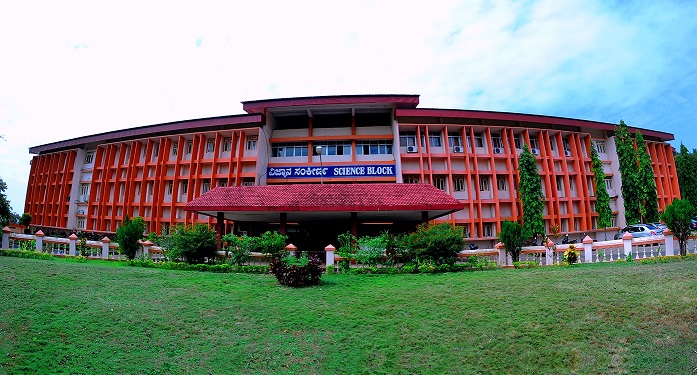
Ph.D. in Biochemistry from Mangalore University: Eligibility, Entrance Exam, Fee Structure, Admission Process, Subjects, Research Areas, Syllabus, Scholarship & Career Scope
Introduction about Ph.D. in Biochemistry at Mangalore University
Mangalore University offers a rigorous Ph.D. in Biochemistry designed for aspiring researchers, academicians, and industry professionals. The program blends advanced coursework with cutting?edge laboratory research, enabling candidates to contribute to fields such as enzymology, molecular genetics, protein engineering, and metabolic regulation. With world?class facilities, experienced faculty, and strong collaborations with biotech companies, the university creates an environment that nurtures scientific innovation and leadership.
Ph.D Admission 2026-2027 & Writing Support Services by Shiksha Research
Eligibility Criteria for Ph.D. in Biochemistry at Mangalore University
- Master?s degree (M.Sc.) in Biochemistry, Biotechnology, Molecular Biology, or a closely related discipline with a minimum of 55% aggregate (or equivalent CGPA).
- Qualified in a national level entrance test (e.g., UGC NET, GATE, CSIR?UGC NET) or university?conducted Ph.D. entrance exam.
- For candidates with a B.E./B.Tech in Biotechnology, a minimum of 60% is required.
- Research proposal aligned with the university?s ongoing projects or an area of interest approved by the department.
- English language proficiency (if the medium of prior education was not English) ? TOEFL/IELTS scores as per university norms.
Entrance Exam for Ph.D. in Biochemistry at Mangalore University
The university conducts its own entrance examination that evaluates candidates on:
- Subject Knowledge: Biochemistry fundamentals, molecular biology, enzymology, and analytical techniques.
- Research Aptitude: Ability to formulate hypotheses, design experiments, and interpret data.
- General Aptitude: Logical reasoning, quantitative skills, and English proficiency.
Candidates who have cleared UGC NET, CSIR?UGC NET, or GATE are exempted from the written test but must appear for an interview. Detailed syllabus and previous year question papers are available on the university?s official portal.
Fee Structure for Ph.D. in Biochemistry at Mangalore University
| Component | Annual Cost (INR) | Notes |
|---|---|---|
| Tuition & Laboratory Fees | 30,000 | Includes access to core facilities and consumables. |
| Registration & Examination Charges | 8,000 | One?time fee at admission. |
| Library & Digital Resources | 4,000 | Unlimited access to journals, e?books, and databases. |
| Miscellaneous (Workshops, Seminars) | 3,000 | Optional, varies per event. |
| Total (Approx.) | 45,000 | Subject to annual revision. |
Admission Process for Ph.D. in Biochemistry at Mangalore University
- Online Application: Submit the application form through the university?s admissions portal along with scanned copies of academic certificates.
- Document Verification: Appear at the designated campus for verification of originals.
- Entrance Examination: Write the university?conducted test or present a valid national level score.
- Interview & Proposal Evaluation: Present research proposal to the department?s faculty panel.
- Admission Offer: Receive the admission letter and complete fee payment within the stipulated deadline.
- Enrollment: Register for courses, obtain lab space, and commence research under a supervisor.
Ph.D. Subjects and Specializations in Biochemistry at Mangalore University
- Enzyme Kinetics and Mechanism
- Protein Structure?Function Relationship
- Metabolic Engineering
- Clinical Biochemistry & Biomarkers
- Plant Biochemistry & Phytochemistry
- Computational Biochemistry & Bioinformatics
- Nanobiotechnology
Research Areas in Biochemistry at Mangalore University
The university?s research ecosystem encourages interdisciplinary projects. Current focus areas include:
- Drug discovery using natural products and synthetic compounds.
- Systems biology approaches to understand disease pathways.
- Industrial enzyme production for sustainable processes.
- Proteomics and metabolomics for personalized medicine.
- Environmental biochemistry ? bioremediation of heavy metals.
Documents Required for Ph.D. in Biochemistry at Mangalore University
| Document | Requirement |
|---|---|
| Academic Transcripts (M.Sc. / equivalent) | Original & photocopy with attestation |
| Entrance Exam Scorecard (UGC NET, GATE, etc.) | If applicable |
| Research Proposal (2,000?3,000 words) | Signed by prospective supervisor |
| Letter of Recommendation (2) | From academicians or industry professionals |
| Identity Proof (Aadhaar / Passport) | Verified copy |
| Curriculum Vitae | Highlighting research experience and publications |
Mangalore University Ph.D. Syllabus for Biochemistry
The syllabus is divided into three phases:
- Coursework (Year 1): Advanced Biochemical Techniques, Molecular Biology, Bioinformatics, Statistical Methods for Biological Data, and Research Ethics.
- Comprehensive Examination (End of Year 1): Written and oral tests covering core subjects.
- Dissertation Phase (Years 2?4): Original research, periodic progress reports, publications in peer?reviewed journals, and final thesis defense.
How To Apply for Ph.D. in Biochemistry at Mangalore University
Follow these step?by?step instructions:
- Visit the official Mangalore University admissions portal and create a user account.
- Fill in the application form, selecting ?Ph.D. ? Biochemistry? as the program.
- Upload scanned copies of required documents (transcripts, ID, CV, proposal, etc.).
- Pay the non?refundable application fee via net banking or UPI.
- Submit the application and note the confirmation number for future reference.
- Prepare for the entrance exam or arrange for the submission of a valid national level test score.
- Attend the interview as per the schedule communicated by the department.
- Upon selection, complete the fee payment and enrollment process.
Career Scope and Job Opportunities After Ph.D. in Biochemistry from Mangalore University
A Ph.D. in Biochemistry opens doors to diverse career pathways:
- Academic Positions: Lecturer, Assistant Professor, or Research Fellow in universities and colleges.
- Research Scientist: Roles in government labs (CSIR, ICMR), private R&D centers, and biotech firms.
- Pharmaceutical Industry: Drug development, toxicology, and clinical research.
- Biotech Entrepreneurship: Start?ups focused on enzyme production, diagnostics, or nutraceuticals.
- Regulatory Affairs & Quality Assurance: Positions in agencies like CDSCO and WHO.
- Science Communication & Technical Writing: Leveraging expertise for journals, grants, and patents.
According to recent placement data, Ph.D. graduates command an average salary ranging from INR 8?Lakhs to INR 20?Lakhs per annum, depending on specialization and sector.
Scholarship for Ph.D. in Biochemistry at Mangalore University
Mangalore University, in collaboration with the UGC and various government agencies, offers several financial assistance schemes:
- UGC Junior Research Fellowship (JRF): Up to INR 31,000 per month for two years.
- University Merit Scholarship: INR 10,000 per semester for students with first?class merit.
- External Grants: Projects funded by DBT, DST, and CSIR that provide stipend and research allowances.
- Industry Sponsored Fellowships: Partnerships with biotech companies offering stipends and hands?on training.
Eligibility for scholarships typically requires a minimum of 60% in the master?s degree and a valid entrance exam score.
FAQs Regarding Ph.D. in Biochemistry at Mangalore University
- What is the minimum duration of the Ph.D. program?
- The program is designed for a minimum of three years, extendable up to five years based on research progress.
- Can a candidate pursue the Ph.D. part?time while working?
- Yes, the university offers a part?time mode for professionals with a minimum of six years of relevant industry experience.
- Is there a provision for foreign students?
- International candidates are welcome; they must meet the same academic criteria and obtain an appropriate visa.
- How many publications are required for thesis submission?
- At least two papers in peer?reviewed international journals are recommended, though the exact number may vary by supervisor.
- Are there any collaborations with overseas institutions?
- Yes, Mangalore University has MoUs with several foreign universities for joint research, faculty exchange, and co?supervision.
Related Services
Thesis and Dissertation Writing Services
Research Data Analysis Services
Research Paper Writing Services
Questionnaire Design and Development




