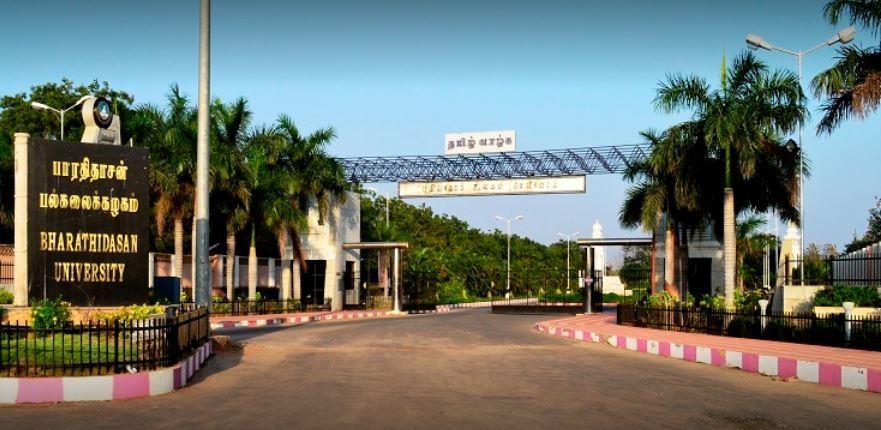
Introduction about Ph.D. in Biotechnology at Bharathidasan University
Embarking on a Ph.D. in Biotechnology at Bharathidasan University (BDU) is not merely an academic pursuit; it is a transformative journey into the very blueprint of life. As one of India?s premier institutions located in the cultural heart of Tiruchirappalli, Tamil Nadu, Bharathidasan University has established itself as a beacon of scientific excellence and innovation. For professionals looking to bridge the gap between theoretical knowledge and real-world application, this doctoral program offers a rigorous intellectual environment. The Department of Biotechnology at BDU is renowned for its state-of-the-art infrastructure and a faculty body comprised of globally recognized scientists. By choosing this path, you are not just earning a degree; you are becoming an architect of future biological solutions, ranging from food security to life-saving therapeutics. To ensure your scholarly output meets the highest academic standards, many researchers often leverage professional Research Paper Writing Services to articulate their findings to the global scientific community effectively.
Ph.D Admission 2026-2027 & Writing Support Services by Shiksha Research
Eligibility Criteria for Ph.D. in Biotechnology at Bharathidasan University
To join the ranks of elite researchers at Bharathidasan University, candidates must fulfill specific academic prerequisites designed to ensure they possess the fundamental knowledge required for high-level investigation. The inspiration to innovate begins with a solid foundation. The eligibility criteria are as follows:
- Educational Qualification: Candidates must hold a Master?s degree (M.Sc. or M.Tech) in Biotechnology, Microbiology, Biochemistry, Molecular Biology, Life Sciences, or a related field from a recognized university.
- Minimum Percentage: A minimum of 55% marks in the aggregate or an equivalent grade (B in the UGC 7-point scale) is mandatory. A relaxation of 5% is granted to SC/ST/OBC (non-creamy layer) and differently-abled candidates.
- Professional Experience: While not always mandatory, candidates with industrial or research experience are highly encouraged to apply, as their practical insights often enrich the departmental research culture.
- Final Year Students: Students appearing for their final semester examinations are usually eligible to apply, provided they meet the marks criteria at the time of admission.
Entrance Exam for Ph.D. in Biotechnology at Bharathidasan University
The gateway to a Ph.D. at Bharathidasan University is the University Entrance Examination, conducted twice a year (usually in February and August). This exam is meticulously designed to test the candidate?s research aptitude and core subject knowledge. The test typically consists of two parts: Research Methodology and Subject-Specific knowledge in Biotechnology. Aspiring researchers must demonstrate not only their memory of facts but also their analytical depth. It is important to note that candidates who have already cleared national-level examinations such as UGC-NET (including JRF), CSIR-NET, GATE, or ICMR/DBT fellowship exams are exempted from the university?s entrance test, acknowledging their demonstrated excellence at a national level.
Fee Structure for Ph.D. in Biotechnology at Bharathidasan University
Bharathidasan University remains committed to making high-quality research accessible. The fee structure is designed to be affordable while sustaining world-class laboratory facilities. Below is an approximate breakdown of the fee components for the Biotechnology doctoral program.
| Fee Component | Full-Time Candidates (Approx. INR) | Part-Time Candidates (Approx. INR) |
|---|---|---|
| Registration Fee (One-time) | ?3,000 - ?5,000 | ?5,000 - ?8,000 |
| Annual Tuition Fee | ?10,000 - ?15,000 | ?15,000 - ?20,000 |
| Laboratory/Library Fee (Annual) | ?5,000 | ?5,000 |
| Caution Deposit (Refundable) | ?3,000 | ?3,000 |
| Thesis Submission Fee | ?10,000 - ?15,000 | ?10,000 - ?15,000 |
Note: The fees mentioned above are subject to change based on university notifications and government regulations.
Admission Process for Ph.D. in Biotechnology at Bharathidasan University
The admission journey at BDU is transparent, merit-based, and highly competitive. It begins with the release of the official notification on the university website. Following the entrance exam, shortlisted candidates are invited for an interview or viva-voce. This interaction is crucial; it allows the departmental committee to assess the candidate's research vision and compatibility with available supervisors. During this phase, presenting a well-thought-out research proposal is vital. For candidates who require assistance in refining their academic proposals or structuring their preliminary ideas, seeking professional Thesis and Dissertation Writing Services can provide the necessary competitive edge. Once a supervisor is assigned and the proposal is approved by the Departmental Research Committee (DRC), the candidate officially registers for the program.
Ph.D. Subjects and Specializations in Biotechnology at Bharathidasan University
The Ph.D. program at BDU is vast, covering diverse niches of the biotechnological landscape. Students are encouraged to specialize in areas that resonate with global challenges. The primary specializations include:
- Plant Biotechnology: Focusing on crop improvement, tissue culture, and transgenic plants.
- Microbial Biotechnology: Exploring industrial fermentation, probiotics, and microbial enzymes.
- Animal Biotechnology: Researching cell lines, vaccine development, and genomics.
- Environmental Biotechnology: Addressing bioremediation, waste management, and sustainable energy.
- Medical Biotechnology: Investigating drug delivery, molecular diagnostics, and cancer biology.
- Bioinformatics: Utilizing computational tools for genomic and proteomic analysis.
Research Areas in Biotechnology at Bharathidasan University
Research at Bharathidasan University is not just about laboratory work; it?s about solving the mysteries of life. Current research thrust areas include Nanobiotechnology, Synthetic Biology, and Bio-energy. Scholars are involved in pioneering work on cyanobacteria, marine biotechnology, and pharmacognosy. High-impact research requires precision, especially when dealing with complex data sets. To maintain accuracy in their findings, many scholars utilize expert Research Data Analysis Services to ensure their statistical interpretations are robust and publication-ready.
Documents Required for Ph.D. in Biotechnology at Bharathidasan University
Maintaining a clean administrative record is the first step toward a successful PhD tenure. Aspiring candidates should keep the following folders ready:
- SSLC and HSC Mark sheets (as proof of age).
- UG and PG Degree Certificates and Consolidated Mark Sheets.
- Community Certificate (if applicable).
- Transfer Certificate (TC) and Migration Certificate.
- Entrance Exam Scorecard/Exemption Certificate (NET/SET/GATE).
- Proposed Research Synopsis (3-5 pages).
- No Objection Certificate (NOC) from the employer (for part-time candidates).
- Passport-sized photographs and Identity Proof (Aadhar/Voter ID).
Bharathidasan University Ph.D. Syllabus for Biotechnology
The Ph.D. coursework at BDU is structured to transition a student from a learner to an independent researcher. Typically, the syllabus consists of three to four papers:
- Research Methodology: Covering scientific writing, ethics, philosophy of science, and statistical methods.
- Advanced Biotechnology: Exploring the latest trends in gene editing, proteomics, and metabolic engineering.
- Elective/Core Paper: Specifically related to the candidate's area of research (e.g., Marine Biotech or Immunology).
- Special Interest Paper: Often involving a literature review of the chosen research problem.
In the methodology phase, mastering technical documentation is key. Many researchers find that Questionnaire Design and Development is a critical skill for those conducting surveys in clinical or social-biotechnology fields, ensuring the data collected is valid and reliable.
How To Apply for Ph.D. in Biotechnology at Bharathidasan University
Applying to Bharathidasan University is a streamlined online process. Candidates need to visit the official BDU portal during the admission window. After registering with an active email ID, the applicant fills out the personal and academic details, uploads the required documents, and pays the application fee through the online SBI Collect portal. It is essential to double-check the research supervisor?s list on the university website to ensure there is a vacancy in your desired area of interest before finalizing the application.
Career Scope and Job Opportunities After Ph.D. in Biotechnology from Bharathidasan University
A Ph.D. from a prestigious institution like BDU opens doors to a plethora of global opportunities. Graduates are highly sought after by multinational pharmaceutical companies, genomic research centers, and agricultural firms. Career roles include:
- Principal Scientist: Leading R&D wings in biotech firms.
- University Professor: Inspiring the next generation of scientists in academia.
- Post-Doctoral Fellow: Pursuing advanced research in international laboratories (USA, Europe, Singapore).
- Bio-Entrepreneur: Launching startups in diagnostic kits or green energy.
- Patent Attorney: Working at the intersection of biotechnology and law.
Scholarship for Ph.D. in Biotechnology at Bharathidasan University
To support its researchers, BDU offers various financial aids. The University Research Fellowship (URF) is awarded to meritorious students in each department. Furthermore, scholars are encouraged to apply for national fellowships like the Rajiv Gandhi National Fellowship (RGNF), Maulana Azad National Fellowship (MANF), and DST-INSPIRE. These scholarships provide a monthly stipend and a contingency grant, allowing researchers to focus entirely on their innovation without financial burdens.
FAQs Regarding Ph.D. in Biotechnology at Bharathidasan University
Q1: Can I pursue a Ph.D. in Biotechnology part-time while working?
Yes, Bharathidasan University offers a part-time Ph.D. program for working professionals, provided they can produce a No Objection Certificate (NOC) and meet the required contact hours with their supervisor.
Q2: Is hosteling available for Ph.D. scholars?
Yes, the university provides dedicated hostel facilities for research scholars with high-speed internet and proximity to the laboratories.
Q3: How long does it take to complete a Ph.D. at BDU?
The minimum duration for full-time candidates is 3 years, while for part-time candidates, it is 4 years. The maximum duration allowed is usually 6 years.
Q4: Does the university help in publishing research papers?
While the university provides the research environment and library access, the onus is on the scholar and supervisor. BDU strictly promotes ethical publishing in Scopus-indexed or Web of Science journals.




