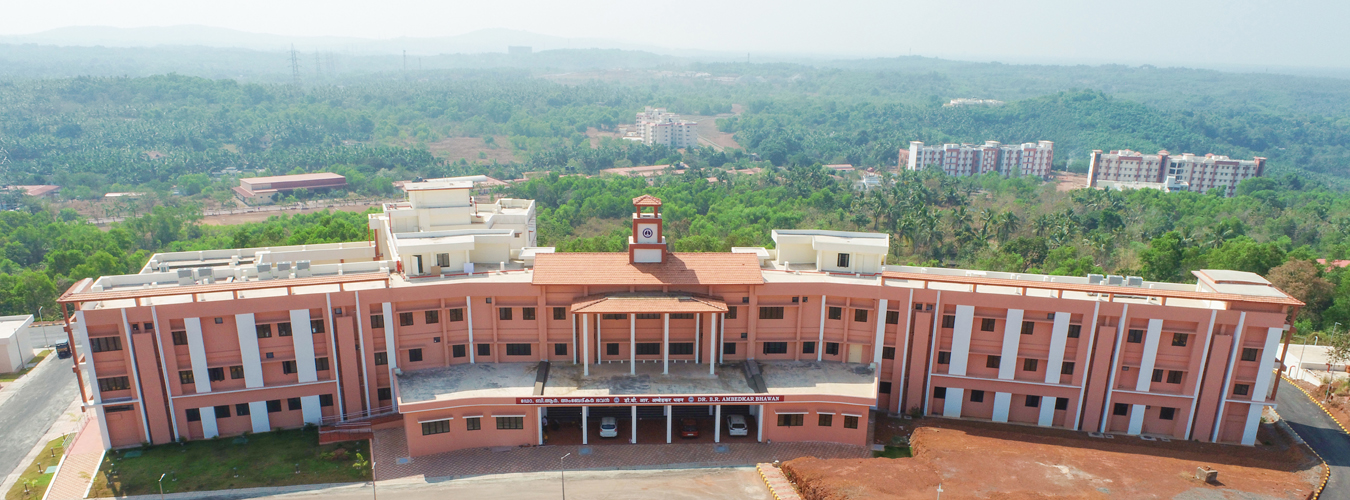
Introduction about Ph.D. in Biotechnology at Central University of Kerala
The Ph.D. in Biotechnology offered by Central University of Kerala stands as a beacon for aspiring researchers who wish to push the boundaries of life sciences. Nestled in the vibrant academic ecosystem of Kerala, this program integrates cutting?edge laboratory facilities with a robust curriculum designed to foster innovative thinking, interdisciplinary collaboration, and scientific excellence. Whether your passion lies in genetic engineering, bioinformatics, or industrial biotechnology, the university provides a nurturing environment that equips you with the expertise to become a leader in both academia and industry.
Eligibility Criteria for Ph.D. in Biotechnology at Central University of Kerala
Prospective candidates must satisfy the following minimum requirements:
- A Master's degree (M.Sc., M.Tech., M.Pharm.) in Biotechnology, Molecular Biology, Microbiology, Biochemistry, or a closely related discipline with at least 55% marks (or equivalent CGPA of 6.0/10). Candidates with a first division (or 60% in the final semester) may be considered even if they fall slightly below the stated percentage.
- Qualifying national or university?level entrance examinations such as UGC NET, CSIR?UGC NET, JRF, or the university?s own Ph.D. entrance test.
- For candidates holding a Ph.D. in a related field, direct registration may be granted based on research experience and publications.
- English proficiency: minimum TOEFL iBT 70 or IELTS 6.0 for international aspirants.
Entrance Exam for Ph.D. in Biotechnology at Central University of Kerala
The entrance examination assesses the candidate?s grasp of fundamental and advanced concepts in biotechnology. The typical structure includes:
- Written Test (120 minutes): 100 multiple?choice questions covering molecular genetics, bioprocess engineering, bioinformatics, and biotechnology ethics.
- Viva?Voce (30 minutes): A personal interview with a panel of faculty members to evaluate research aptitude, analytical skills, and motivation.
- Research Proposal Presentation: Candidates submit a brief research proposal (2?3 pages) that is discussed during the viva.
Candidates who have cleared UGC NET/JRF are exempted from the written test but must appear for the viva?voce and proposal defense.
Fee Structure for Ph.D. in Biotechnology at Central University of Kerala
The fee structure is designed to be affordable while covering essential academic resources. The following table outlines the current financial obligations for the academic year 2025?2026:
| Component | Annual Fee (INR) | Notes |
|---|---|---|
| Tuition & Examination Fees | 45,000 | Applicable to all full?time Ph.D. candidates. |
| Laboratory & Infrastructure Charge | 20,000 | Includes access to central labs, instrumentation, and consumables. |
| Library & Digital Resources | 5,000 | Access to e?journals, databases, and inter?library loan services. |
| Student Activity & Welfare Fund | 3,000 | Supports seminars, workshops, and cultural events. |
| Total Annual Fee | 73,000 | Fee may be revised annually by the university senate. |
Scholarships, fellowships, and research assistantships can offset a significant portion of these costs (see the Scholarship section below).
Admission Process for Ph.D. in Biotechnology at Central University of Kerala
The admission journey follows a transparent six?step procedure:
- Online Application: Submit the application form through the university portal, upload required documents, and pay the application fee (?1,500).
- Eligibility Verification: The admissions committee reviews academic credentials and entrance exam scores.
- Entrance Examination: Candidates either appear for the university test or submit their UGC NET/JRF scores.
- Interview & Proposal Review: Shortlisted applicants attend the viva?voce and discuss their research proposal.
- Admission Offer: Successful candidates receive an Offer Letter with details on registration and fee payment.
- Enrollment & Orientation: Enrolled students attend a mandatory orientation covering academic policies, research ethics, and lab safety.
Ph.D. Subjects and Specializations in Biotechnology at Central University of Kerala
The program offers a rich array of research specializations, allowing students to tailor their doctoral journey:
- Genetic Engineering & Synthetic Biology
- Bioprocess Technology & Fermentation Engineering
- Environmental Biotechnology & Bioremediation
- Marine Biotechnology & Aquaculture
- Bioinformatics & Computational Biology
- Pharmacogenomics & Personalized Medicine
- Industrial Enzyme Technology
Research Areas in Biotechnology at Central University of Kerala
Faculty members are actively engaged in multidisciplinary projects funded by agencies such as DBT, CSIR, and DST. Current research thrusts include:
- CRISPR?Cas9 mediated genome editing for crop improvement.
- Development of biodegradable polymers from marine algae.
- Microbial production of bio?fuels and high?value metabolites.
- Metagenomic analysis of coastal ecosystems for novel biocatalysts.
- Design of nanocarrier systems for targeted drug delivery.
- Systems biology approaches to understand disease pathways.
Documents Required for Ph.D. in Biotechnology at Central University of Kerala
A systematic collection of documents expedites the evaluation process. The table below outlines the mandatory paperwork:
| Document | Format | Remarks |
|---|---|---|
| Completed Application Form | PDF (online upload) | Signed electronically. |
| Academic Transcripts & Mark Sheets | PDF (scanned) | All semesters for Master's degree. |
| Certificate of Eligibility (UGC NET/JRF) | Only if applicable. | |
| Research Proposal (2?3 pages) | Must include objectives, methodology, and expected outcomes. | |
| Curriculum Vitae (CV) | Highlight publications, internships, and project experience. | |
| Proof of Identity (Aadhaar / Passport) | Government?issued photo ID. | |
| Photographs (2) | JPEG (3.5 cm x 4.5 cm) | Recent passport?size color photos. |
Central University of Kerala Ph.D. Syllabus for Biotechnology
The syllabus is structured into core modules, elective courses, and a research component. Core modules (required for all candidates) include:
- Advanced Molecular Biology and Genetics
- Biostatistics and Experimental Design
- Principles of Bio?Process Engineering
- Intellectual Property Rights & Bio?ethics
- Scientific Writing and Communication
Electives are chosen based on the chosen specialization, such as Marine Microbial Ecology, Computational Genomics, or Enzyme Kinetics and Engineering. The final year focuses entirely on thesis research, publication, and the defense.
How To Apply for Ph.D. in Biotechnology at Central University of Kerala
Follow these concise steps to submit a successful application:
- Visit the official university admissions portal and create a user account.
- Fill the online application form, ensuring all fields are accurately completed.
- Upload scanned copies of the required documents (see the Documents Required table).
- Pay the non?refundable application fee via net banking or credit card.
- Submit the application and note the generated application ID for future reference.
- Monitor the registered email for updates on eligibility verification, entrance exam schedule, and interview invitations.
Career Scope and Job Opportunities After Ph.D. in Biotechnology from Central University of Kerala
Graduates emerge as highly sought?after professionals equipped to lead scientific ventures. Common career pathways include:
- Academic Positions: Assistant Professor, Research Fellow, or Post?Doctoral Scientist in reputed universities and research institutes.
- Industry Roles: R&D Manager, Product Development Scientist




