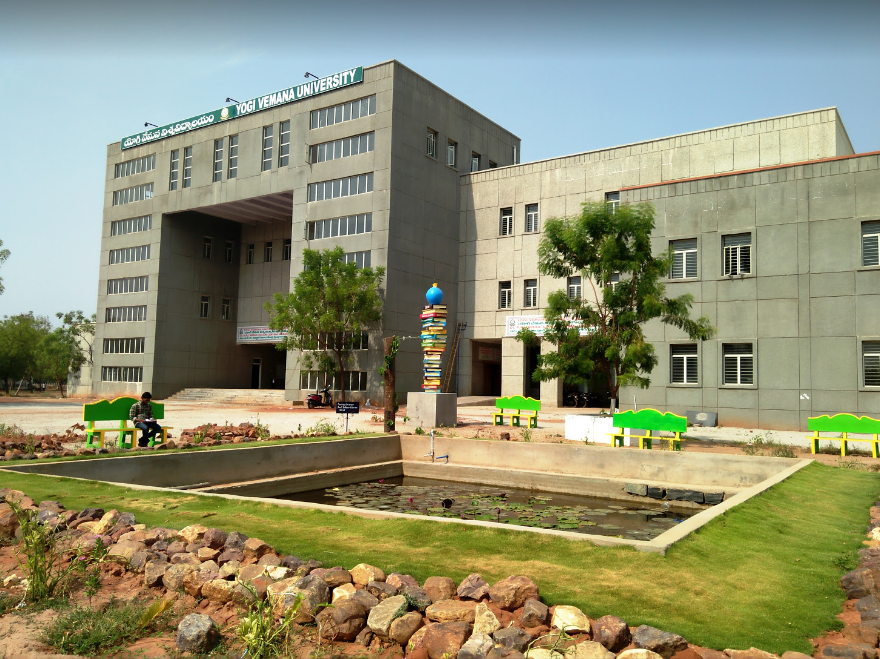
Introduction about Ph.D. in Biotechnology at Yogi Vemana University
Embarking on a journey toward academic excellence and groundbreaking innovation, the Ph.D. in Biotechnology at Yogi Vemana University (YVU) stands as a beacon for aspiring researchers and professionals. Nestled in the heart of Kadapa, Andhra Pradesh, this premier institution offers a rigorous and inspiring environment designed to push the boundaries of biological sciences. Biotechnology, being a multi-disciplinary field, integrates biological systems with modern technology to solve global challenges in health, agriculture, and the environment. At Yogi Vemana University, doctoral candidates are not just students; they are pioneers encouraged to explore the unknown, innovate sustainable solutions, and contribute significantly to the global scientific community. The university?s commitment to high-end infrastructure and expert mentorship ensures that every scholar is equipped to navigate the complexities of modern science.
Ph.D Admission 2026-2027 & Writing Support Services by Shiksha Research
The pursuit of a doctorate in this domain demands dedication, analytical rigor, and a passion for discovery. Professionals often seek this advanced degree to transition into high-level research roles, academic leadership, or industrial consultancy. With the rapid evolution of genetic engineering, bioinformatics, and molecular biology, the Ph.D. program at YVU provides the perfect platform to transform your vision into reality. Whether you are aiming to cure diseases or enhance food security, this program aligns your career trajectory with the frontiers of 21st-century innovation.
Eligibility Criteria for Ph.D. in Biotechnology at Yogi Vemana University
To maintain the highest standards of research integrity and academic excellence, Yogi Vemana University has established comprehensive eligibility criteria for the Ph.D. program in Biotechnology. Admission is reserved for those who demonstrate a strong foundation in biological sciences and a clear aptitude for research.
- Educational Qualification: Candidates must possess a Master?s degree (M.Sc./M.Tech) in Biotechnology, Molecular Biology, Biochemistry, Microbiology, or any other life science-related discipline from a recognized university.
- Minimum Percentage: A minimum of 55% aggregate marks (or an equivalent grade) is required in the qualifying postgraduate examination.
- Relaxation: A relaxation of 5% is typically granted to candidates belonging to SC/ST/OBC (non-creamy layer) and PwD categories, as per government regulations and university norms.
- Entrance Qualification: Preference is often given to candidates who have cleared national-level fellowships or exams such as CSIR-NET, UGC-NET, GATE, or ICMR.
Entrance Exam for Ph.D. in Biotechnology at Yogi Vemana University
The gateway to the doctoral program at YVU is primarily through a standardized entrance examination. For most universities in Andhra Pradesh, including Yogi Vemana University, admission is routed through the **APRCET (Andhra Pradesh Research Common Entrance Test)**. This exam is meticulously designed to evaluate the candidate's research aptitude and subject matter expertise.
The entrance exam typically consists of two parts:
- Part A: Focused on Research Methodology and General Aptitude, testing your ability to analyze data and formulate hypotheses.
- Part B: Focused on Advanced Biotechnology, covering topics such as Cell Biology, Genetic Engineering, Immunology, and Plant/Animal Biotech.
Candidates who have secured valid scores in NET/SLET or GATE may be exempt from the written test but must still participate in the interview process to present their research vision. Success in this exam signifies your readiness to manage complex projects, which is where Questionnaire Design and Development skills become vital for those working on human-centric or environmental data collection.
Fee Structure for Ph.D. in Biotechnology at Yogi Vemana University
Yogi Vemana University offers an affordable and transparent fee structure, ensuring that financial constraints do not hinder scientific progress for qualified candidates. Below is an approximate breakdown of the costs involved:
| Fee Component | Full-Time Candidates (Approx. Annual) | Part-Time Candidates (Approx. Annual) |
|---|---|---|
| Admission/Registration Fee | INR 5,000 | INR 7,500 |
| Tuition Fee | INR 10,000 - 15,000 | INR 15,000 - 20,000 |
| Laboratory/Consumables Fee | INR 8,000 | INR 8,000 |
| Library & Internet Charges | INR 2,000 | INR 2,000 |
| Thesis Submission/Evaluation | INR 10,000 (One-time) | INR 10,000 (One-time) |
Note: The fees mentioned above are subject to change based on university notifications and government policies. Students are encouraged to check the official university portal for the latest updates.
Admission Process for Ph.D. in Biotechnology at Yogi Vemana University
The admission process is a multi-step journey intended to identify the most dedicated and capable research minds. It begins with the official notification released by the university or through the APRCET notification.
- Online Application: Interested candidates must register and submit their applications through the official portal, ensuring all educational credentials are uploaded.
- Entrance Testing: Appear for the APRCET or equivalent qualifying exam.
- Shortlisting: Based on the entrance scores, a merit list is prepared of candidates eligible for the interview round.
- Research Proposal & Interview: Candidates must present their research ideas before a Departmental Research Committee (DRC). During this phase, professionals often seek Research Paper Writing Services to understand the current literature trends and refine their proposal.
- Final Selection: Selection is based on the combined performance in the entrance exam and the interview.
- Guide Allocation: Once selected, candidates are assigned a supervisor based on their research interest and the availability of seats under the faculty.
Ph.D. Subjects and Specializations in Biotechnology at Yogi Vemana University
The curriculum is designed to provide depth and breadth, ensuring that scholars are well-versed in both traditional and emerging aspects of biotechnology. Specializations allow students to narrow their focus to niche domains that align with their career goals. Some core areas include:
- Plant Biotechnology: Genetic modification for crop improvement and stress tolerance.
- Microbial Biotechnology: Utilizing microbes for industrial production and waste management.
- Molecular Immunology: Studying the immune system at a molecular level to develop vaccines.
- Bioinformatics: Computational analysis of biological data for drug discovery and genomics.
- Bioprocess Engineering: Scaling up biological processes for pharmaceutical and environmental applications.
Research Areas in Biotechnology at Yogi Vemana University
The research ecosystem at Yogi Vemana University is vibrant and multi-faceted. Scholars are encouraged to engage in high-impact research areas that contribute to societal well-being. Some of the prominent research themes include:
- Bio-remediation: Developing strategies to clean up contaminated soil and water using biological agents.
- Traditional Medicine & Phytochemistry: Validating the efficacy of medicinal plants using modern biotechnological tools.
- Cancer Biology: Investigating molecular markers for early detection and targeted therapy.
- Genomics and Proteomics: Understanding the functional aspects of genes and proteins in various organisms.
As research becomes more data-intensive, many scholars utilize Research Data Analysis Services to ensure their findings are statistically significant and ready for high-impact journals.
Documents Required for Ph.D. in Biotechnology at Yogi Vemana University
To ensure a smooth admission process, candidates should have the following documents ready for verification:
- Postgraduate Degree Certificate and Mark Sheets.
- Undergraduate Degree Certificate and Mark Sheets.
- Secondary School Certificate (SSC) for DOB proof.
- APRCET Rank Card and Hall Ticket (if applicable).
- No Objection Certificate (NOC) for working professionals.
- Category Certificate (SC/ST/OBC/EWS) if claiming reservation.
- Migration and Transfer Certificates.
- A detailed Research Proposal (SOP).
- Passport-sized photographs and Identity Proof (Aadhaar/Passport).
Yogi Vemana University Ph.D. Syllabus for Biotechnology
The Ph.D. journey starts with 'Coursework,' which is mandatory and usually spans the first 6 to 12 months. This phase bridges the gap between Master?s knowledge and independent research. The syllabus includes:
- Research Methodology: Philosophy of science, ethics in research, and advanced statistical methods.
- Advanced Biotechnological Techniques: Hands-on training in PCR, HPLC, Electrophoresis, and Imaging techniques.
- Review of Literature: Submitting a comprehensive review in the chosen niche. Scholars often benefit from Thesis and Dissertation Writing Services during this stage to structure their bibliographies and literature flow effectively.
- Seminar Presentations: Presenting current research papers and own experimental designs.
How To Apply for Ph.D. in Biotechnology at Yogi Vemana University
The application process is designed to be user-friendly. Follow these steps to begin your doctoral journey:
- Check Official Website: Regularly visit the Yogi Vemana University official website (yvu.edu.in) for notifications.
- Register for APRCET: Apply for the Andhra Pradesh Research Common Entrance Test when the window opens.
- Fee Payment: Pay the application fee online via credit/debit card or net banking.
- Final submission: Upload all scanned documents and submit the application form. Keep a printout for future reference.
- Contact Potential Supervisors: It is often helpful to reach out to faculty members whose research aligns with yours before the interview stage.
Career Scope and Job Opportunities After Ph.D. in Biotechnology from Yogi Vemana University
A Ph.D. from Yogi Vemana University opens doors to a plethora of elite career paths. Professionals with a doctorate in biotechnology are highly sought after in several sectors:
- Academia: Becoming a Professor or Scientist in national and international universities.
- R&D Sector: Leading research teams in pharmaceutical, agricultural, and beverage industries.
- Government Organizations: Working as a scientist in CSIR, ICAR, ICMR, or DBT labs.
- Biotechnology Entrepreneurship: Starting your own biotech firm focused on diagnostics, therapeutics, or eco-friendly products.
- Intellectual Property Rights (IPR): Becoming a Patent Attorney or Patent Specialist for biotech innovations.
- Environmental Consultancy: Advising firms on biological waste management and sustainable practices.
Scholarship for Ph.D. in Biotechnology at Yogi Vemana University
Financial support is a crucial component of the Ph.D. experience. Students at YVU have access to various funding opportunities:
- University Fellowship: Limited fellowships provided by YVU based on merit.
- National Fellowships: JRF/SRF positions via CSIR, UGC, DBT, and ICMR.
- State Government Scholarships: Post-matric scholarships and research grants for categorized candidates in Andhra Pradesh.
- Project Fellowships: Students can join ongoing research projects funded by agencies like SERB, DST, or BRNS as Project Associates and receive a monthly stipend.
FAQs Regarding Ph.D. in Biotechnology at Yogi Vemana University
Q1: Is Part-Time Ph.D. available at Yogi Vemana University?
A: Yes, part-time Ph.D. options are available primarily for faculty members working in recognized colleges and for working professionals, subject to specific university rules.
Q2: How long does it take to complete a Ph.D. in Biotechnology?
A: The minimum duration is 3 years, and the maximum is usually 6 years. Extension beyond this requires special permission.
Q3: Can I apply if I haven't cleared NET/GATE?
A: Yes, you can apply by taking the APRCET entrance exam conducted by the state government/university.
Q4: Does the university provide hostel facilities for research scholars?
A: Yes, Yogi Vemana University offers dedicated hostel accommodation for full-time research scholars within the campus.
Q5: What is the focus of the interview round?
A: The interview focuses on your clarity of the research problem, your understanding of basic biotechnology, and your motivation for pursuing a Ph.D.
Step into the world of revolutionary research at Yogi Vemana University and redefine the future of Biotechnology!




