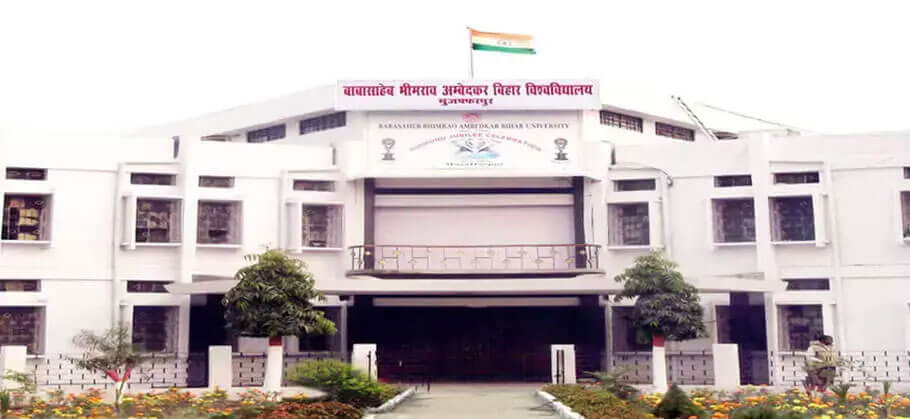
Introduction about Ph.D. in Botany at Babasaheb Bhimrao Ambedkar Bihar University
Embarking on a journey toward a Ph.D. in Botany at Babasaheb Bhimrao Ambedkar Bihar University (BRABU), Muzaffarpur, is a transformative step for any dedicated professional in the life sciences. As the world faces unprecedented environmental challenges and shifts toward sustainable bio-industrialization, the study of plant sciences has never been more critical. This doctoral program offers an inspiring environment where tradition meets innovation, allowing researchers to explore the intricate mechanisms of plant life, from molecular genetics to complex ecosystems. At BRABU, a Ph.D. is not just a degree; it is a commitment to advancing the frontiers of green science, ensuring food security, and contributing to the global understanding of biodiversity. The university provides a robust platform for scholars to engage in high-impact research that addresses both regional ecological needs and international scientific standards.
Ph.D Admission 2026-2027 & Writing Support Services by Shiksha Research
Eligibility Criteria for Ph.D. in Botany at Babasaheb Bhimrao Ambedkar Bihar University
To join the esteemed ranks of doctoral scholars at BRABU, candidates must satisfy specific academic prerequisites. The university demands a high standard of excellence to ensure that researchers are well-equipped for the rigors of high-level scientific inquiry. Primarily, applicants must hold a Master?s degree (M.Sc.) in Botany or an equivalent specialization in Life Sciences from a recognized university. A minimum of 55% aggregate marks is generally required for general category candidates, while a relaxation of 5% (bringing the requirement to 50%) is extended to candidates from SC/ST/OBC (non-creamy layer) and differently-abled categories.
Furthermore, professionals who have already cleared national-level examinations such as NET (JRF), GATE, or SET often find themselves at an advantage. The eligibility framework is designed to identify individuals with a strong theoretical foundation and a passion for plant research, ensuring that every candidate has the potential to contribute meaningfully to the academic community.
Entrance Exam for Ph.D. in Botany at Babasaheb Bhimrao Ambedkar Bihar University
Admission to the Ph.D. program is primarily governed by the Ph.D. Admission Test (PAT), conducted by Babasaheb Bhimrao Ambedkar Bihar University. This entrance examination is meticulously designed to evaluate a candidate?s aptitude for research and their depth of knowledge in Botany. The PAT typically consists of two papers: Paper I focuses on Research Qualitative Aptitude, including logical reasoning and data interpretation, while Paper II is subject-specific, covering the breadth of postgraduate Botany curricula.
Candidates who have secured a valid fellowship through UGC-NET, CSIR-NET, or similar national fellowships are often exempted from the written entrance test but must still participate in the interview process. Navigating this exam requires a strategic approach and a deep understanding of core biological principles, setting the stage for a successful academic career.
Fee Structure for Ph.D. in Botany at Babasaheb Bhimrao Ambedkar Bihar University
The fee structure at BRABU is designed to be accessible while maintaining the quality of research facilities. It includes various components such as admission fees, registration fees, tuition fees, and laboratory charges. Below is an approximate breakdown of the costs involved in the doctoral journey:
| Fee Component | Estimated Amount (General/OBC) | Estimated Amount (SC/ST) |
|---|---|---|
| Application & Entrance Test Fee | ?2,500 - ?3,000 | ?1,500 - ?2,000 |
| Admission & Coursework Fee | ?10,000 - ?15,000 | ?8,000 - ?10,000 |
| Annual Tuition Fee | ?5,000 - ?8,000 | ?3,000 - ?5,000 |
| Laboratory & Library Charges | ?4,000 Per Annum | ?2,000 Per Annum |
| Thesis Submission Fee | ?10,000 - ?12,000 | ?10,000 - ?12,000 |
Note: These figures are indicative and subject to university revisions. Students are advised to check the official notification for the current academic year.
Admission Process for Ph.D. in Botany at Babasaheb Bhimrao Ambedkar Bihar University
The admission process is a multi-step journey designed to filter the best talent for the university?s research departments. It begins with the release of the official PAT notification, followed by the submission of online applications. After the entrance examination, a merit list is prepared based on exam scores. Shortlisted candidates are then invited for a comprehensive interview or Viva-Voce.
During the interview, the Departmental Research Committee (DRC) assesses the candidate's research interest and expertise. Many professionals seek PhD Admission Assistance to navigate the administrative complexities and ensure their documentation aligns with university standards. Once selected, the candidate undergoes a mandatory six-month coursework program, focusing on research methodology and advanced botanical studies, which must be completed successfully before formal registration.
Ph.D. Subjects and Specializations in Botany at Babasaheb Bhimrao Ambedkar Bihar University
The Department of Botany at BRABU offers a wide array of specializations, allowing scholars to tailor their research to their specific interests and professional goals. These specializations are led by experienced faculty members who provide mentorship in cutting-edge areas of plant science. Some of the core subjects and elective specializations include:
- Plant Physiology and Biochemistry
- Cytogenetics and Plant Breeding
- Mycology and Plant Pathology
- Phycology and Microbiology
- Ethnobotany and Medicinal Plants
- Plant Biotechnology and Tissue Culture
- Ecology and Environmental Biology
- Plant Taxonomy and Systematics
Research Areas in Botany at Babasaheb Bhimrao Ambedkar Bihar University
Research at BRABU is characterized by its diversity and relevance to contemporary scientific problems. Scholars are encouraged to pursue unique inquiries that contribute to the global body of knowledge. Choosing a focus area is a critical step, and many students utilize PhD Topic Selection and Proposal Assistance to ensure their research is both viable and impactful.
Current research thrusts include the study of climate-resilient crop varieties, the pharmacological validation of local medicinal flora in Bihar, and the impact of pollutants on plant morphology. Other burgeoning areas include microbial biodiversity and the development of bio-fertilizers. By engaging in these areas, researchers help bridge the gap between theoretical science and practical application.
Documents Required for Ph.D. in Botany at Babasaheb Bhimrao Ambedkar Bihar University
To ensure a smooth admission process, candidates must prepare a comprehensive set of documents. Accuracy here is vital, as any discrepancy can lead to disqualification. The standard requirements include:
- Post-Graduation Marks Sheets and Degree Certificates
- Under-Graduation Marks Sheets and Degree Certificates
- PAT Scorecard or National Level Fellowship Certificate (if applicable)
- Category Certificate (SC/ST/OBC/EWS)
- No Objection Certificate (NOC) for working professionals
- Migration Certificate and Transfer Certificate
- Passport-sized photographs and Identity Proof (Aadhar/PAN)
- A well-drafted Research Proposal (Synopsis)
Babasaheb Bhimrao Ambedkar Bihar University Ph.D. Syllabus for Botany
The syllabus for the Ph.D. program is divided into two main phases: the Pre-Ph.D. Coursework and the subsequent research tenure. The coursework syllabus is designed to build a solid foundation for independent research. Key components include:
Paper I: Research Methodology - This includes modules on scientific writing, biostatistics, computer applications in research, and data analysis techniques. Scholars often find it beneficial to engage Editing and Proofreading Services at this stage to refine their reports and initial drafts.
Paper II: Advanced Botany - This deals with contemporary advancements in plant sciences, such as genomics, proteomics, and advanced instrumentation techniques like HPLC and Electron Microscopy. After completing the coursework, the syllabus transitions into the scholar's specific research area, culminating in the submission of a thesis.
How To Apply for Ph.D. in Botany at Babasaheb Bhimrao Ambedkar Bihar University
Applying for a Ph.D. at BRABU requires diligence and attention to deadlines. Here is a step-by-step guide for prospective applicants:
- Visit the official BRABU website and navigate to the 'Admission' or 'Ph.D.' section.
- Register your account using a valid email ID and mobile number.
- Fill out the PAT application form with accurate academic and personal details.
- Upload the scanned copies of required documents in the specified format.
- Pay the application fee through the integrated online payment gateway.
- Download and print the completed application form and payment receipt for future reference.
- Monitor the university portal for announcements regarding the entrance exam dates and admit card availability.
Career Scope and Job Opportunities After Ph.D. in Botany from Babasaheb Bhimrao Ambedkar Bihar University
The career trajectory for a Ph.D. holder in Botany is both prestigious and diverse. Graduates are not limited to traditional teaching roles; they are highly sought after in industries that drive the modern economy. Professionals can find rewarding careers as Research Scientists in CSIR or ICAR labs, Environmental Consultants, or Quality Control Managers in the pharmaceutical and food industries. For those interested in intellectual property, Patent Filing and Support Services offer a specialized career path where botanical expertise is vital for biological patents.
Moreover, the academic route leads to roles as Assistant Professors and Head of Departments in esteemed universities worldwide. High-quality research publications are the currency of academia, and utilizing Research Publication Support can help scholars get their work published in high-impact, peer-reviewed journals, significantly boosting their professional standing. For distinguished professionals with a lifetime of experience, exploring Honorary Doctorate Programs may also be a viable way to recognize significant contributions to the field of Botany.
Scholarship for Ph.D. in Botany at Babasaheb Bhimrao Ambedkar Bihar University
Financial support is a crucial component of the doctoral journey, allowing scholars to focus entirely on their research. Students at BRABU can access several scholarship opportunities:
- UGC-JRF/SRF: For those who have cleared the National Eligibility Test with a Junior Research Fellowship.
- RGNF (Rajiv Gandhi National Fellowship): Available for SC/ST students.
- State Government Scholarships: Bihar provides various stipends for meritorious and economically disadvantaged students.
- Institutional Fellowships: Occasional fellowships offered by the university or through specific research projects funded by external agencies like DST or DBT.
FAQs Regarding Ph.D. in Botany at Babasaheb Bhimrao Ambedkar Bihar University
Q1: What is the duration of the Ph.D. program at BRABU?
A: The minimum duration is three years, including coursework, and the maximum is usually six years.
Q2: Can I pursue a Ph.D. in Botany if my Master's is in Biotechnology?
A: Yes, if the university considers Biotechnology an allied field and you meet the eligibility criteria, you are eligible to apply.
Q3: Is the PAT mandatory for everyone?
A: No, candidates who have cleared UGC-NET/CSIR-NET/GATE are generally exempted from the PAT but must attend the interview.
Q4: Does BRABU provide assistance with research publications?
A: While the university guides the research, the onus of publication is on the scholar. Many students seek external experts to help maximize their impact.
Q5: What is the frequency of Ph.D. admissions at BRABU?
A: Admissions usually occur once a year, depending on the availability of seats and faculty guides.




