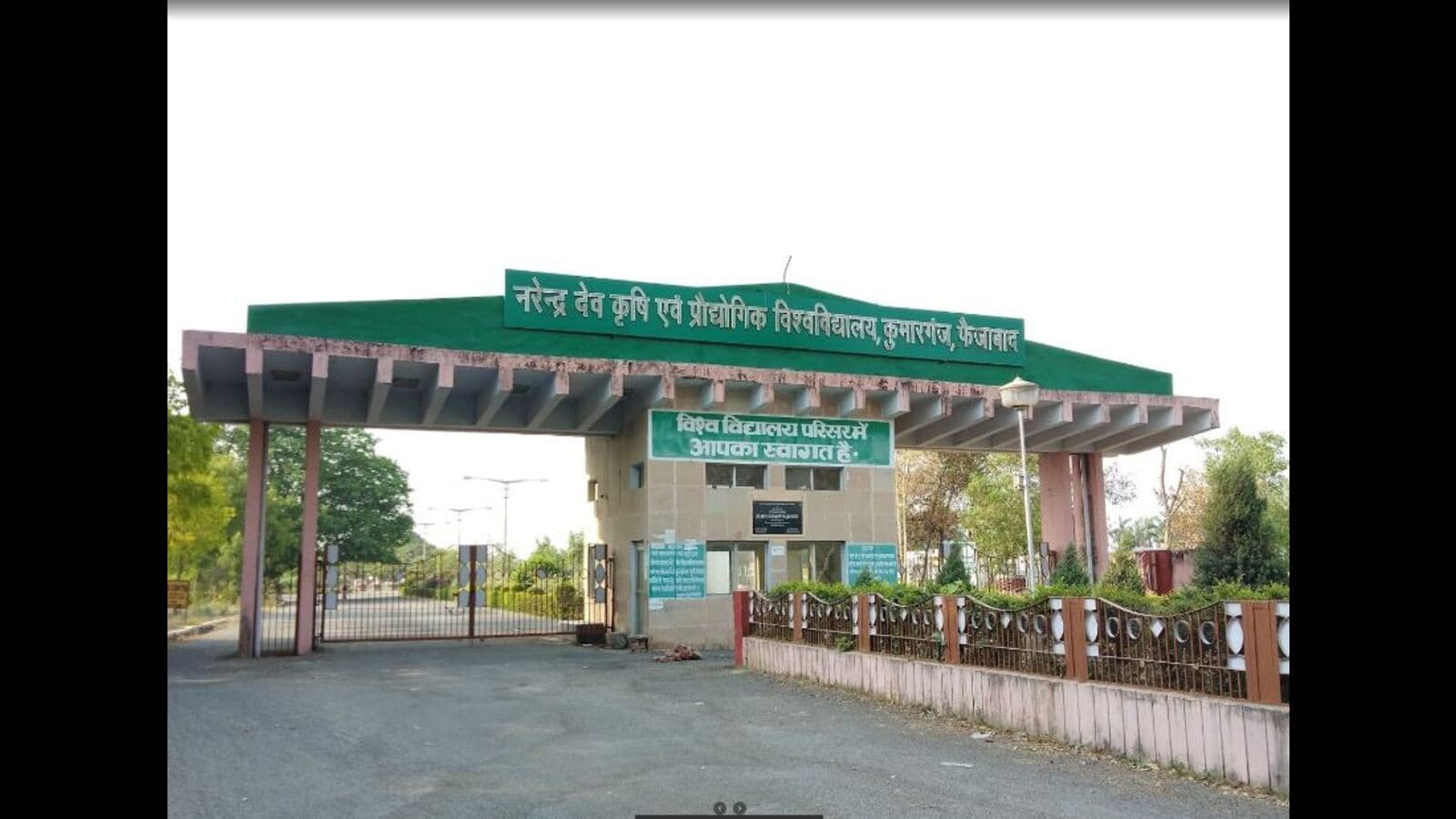
Ph.D. in Botany at Narendra Deo University
The Doctor of Philosophy (Ph.D.) in Botany at Narendra Deo University stands as a beacon for aspiring researchers who wish to delve deep into plant sciences, explore innovative agricultural solutions, and contribute to biodiversity conservation. With a curriculum that balances rigorous coursework, cutting‑edge research, and industry collaborations, the program nurtures scientific curiosity while fostering leadership in academia, government, and the private sector. Whether you aim to develop climate‑resilient crops, study plant genetics, or lead sustainable forestry projects, this Ph.D. pathway equips you with the expertise and credibility to make a transformative impact.
Eligibility Criteria for Ph.D. in Botany at Narendra Deo University
Prospective candidates must meet the following minimum requirements:
- Master’s degree (M.Sc. or M.Phil.) in Botany or a closely related discipline with a minimum aggregate of 55% (or equivalent CGPA of 6.0/10).
- Candidates holding a Bachelor’s degree with a minimum of 60% may be considered if they have qualified the National Eligibility Test (NET) or the UGC‑CSIR Fellowship exam.
- For international applicants, a recognized equivalent degree and proof of English proficiency (IELTS/TOEFL) are mandatory.
- Applicants must be under 35 years of age at the time of admission, with age relaxations applicable for reserved categories as per Indian government norms.
Entrance Exam for Ph.D. in Botany at Narendra Deo University
The university conducts a comprehensive entrance examination that evaluates both theoretical knowledge and research aptitude. The exam comprises:
- Written Test (100 marks): Multiple‑choice and short‑answer questions covering Plant Physiology, Taxonomy, Genetics, Ecology, and Biochemistry.
- Research Proposal Presentation (20 marks): Candidates submit a 1,000‑word research proposal and defend it before a panel of subject experts.
- Interview (30 marks): A personal interview to assess motivation, analytical skills, and alignment with faculty research interests.
Qualified NET/UGC‑CSIR candidates may be exempted from the written test but must appear for the interview and proposal presentation.
Fee Structure for Ph.D. in Botany at Narendra Deo University
| Component | Annual Fee (INR) | Notes |
|---|---|---|
| Tuition & Lab Charges | 45,000 | Includes access to greenhouse, molecular labs, and field stations. |
| Research Materials & Consumables | 30,000 | Estimation based on average project requirements. |
| Library & Digital Resources | 8,000 | Unlimited access to e‑journals, databases, and herbarium collections. |
| Administrative & Examination Fees | 12,000 | Includes registration, evaluation, and certification. |
| Total Approximate Annual Cost | 95,000 | Subject to revision each academic year. |
Admission Process for Ph.D. in Botany at Narendra Deo University
The admission cycle follows a streamlined five‑step process:
- Online Application: Submit the application form through the university’s portal, upload academic transcripts, and pay the non‑refundable processing fee.
- Document Verification: The admissions office verifies eligibility, NET/CSIR scores, and required certificates.
- Entrance Examination: Appear for the written test, proposal presentation, and interview (if applicable).
- Selection & Offer Letter: Successful candidates receive an official admission letter with details of supervision and start date.
- Enrollment & Orientation: Complete fee payment, attend orientation sessions, and receive laboratory access and research guidelines.
Ph.D. Subjects and Specializations in Botany at Narendra Deo University
Students may choose from a diverse array of specializations, each aligned with faculty expertise and industry demand:
- Plant Molecular Biology & Biotechnology
- Ecology, Climate Change & Conservation
- Plant Physiology & Stress Biology
- Taxonomy, Systematics & Phytochemistry
- Agricultural Botany & Crop Improvement
- Forestry & Sustainable Land Management
- Medicinal Plants & Ethnobotany
Research Areas in Botany at Narendra Deo University
The university’s research ecosystem encourages interdisciplinary projects that address real‑world challenges. Current focus areas include:
- Genetic engineering for drought‑tolerant cereals.
- Conservation of endemic flora in the Western Ghats.
- Phytoremediation of heavy‑metal contaminated soils.
- Metabolomic profiling of medicinal herbs.
- Impact of climate variability on phenological patterns.
- Development of bio‑fertilizers using plant growth‑promoting microbes.
Documents Required for Ph.D. in Botany at Narendra Deo University
| Document | Format | Remarks |
|---|---|---|
| Academic Transcripts (M.Sc./M.Phil.) | PDF (Scanned) | Include grade sheets and degree certificate. |
| NET/UGC‑CSIR Score Card | Valid for the last 3 years. | |
| Research Proposal (1,000 words) | DOCX or PDF | Must outline objectives, methodology, and expected outcomes. |
| Curriculum Vitae | Highlight publications, conferences, and projects. | |
| Identity Proof (Aadhaar / Passport) | Government‑issued photo ID. | |
| Letter of Recommendation (2) | From academic supervisors or industry mentors. |
Narendra Deo University Ph.D. Syllabus for Botany
The syllabus blends core coursework with intensive research modules. Core subjects include:
- Advanced Plant Biochemistry
- Statistical Methods for Biological Research
- Research Ethics & Scientific Writing
- Experimental Design & Data Analysis
- Seminar Series on Emerging Trends in Botany
Beyond classroom learning, candidates undertake a minimum of 12 credit‑hours of lab work, field surveys, and a dissertation worth 150 pages under the guidance of a faculty supervisor.
How To Apply for Ph.D. in Botany at Narendra Deo University
Follow these step‑by‑step instructions to submit a successful application:
- Visit the official Ph.D. Botany admission portal and create a user account.
- Fill in personal, academic, and contact details; upload scanned copies of the required documents.
- Pay the ₹2,500 processing fee through the secured payment gateway.
- Submit your research proposal in the designated field and select preferred faculty supervisors.
- Monitor your application status via the portal; download the admit card once you are shortlisted for the entrance exam.
Career Scope and Job Opportunities After Ph.D. in Botany from Narendra Deo University
Graduates enjoy a wide spectrum of career pathways:
- Academic Positions: Assistant Professor, Associate Professor, or Research Fellow at leading universities and research institutes.
- Research Scientist in governmental agencies such as the Indian Council of Agricultural Research (ICAR) or the Council of Scientific & Industrial Research (CSIR).
- Biotech & Pharmaceutical Industry: Roles in R&D, product development, and quality control focusing on plant‑derived compounds.
- Environmental Consulting: Environmental Impact Assessment (EIA) specialist, conservation planner, or biodiversity officer.
- Agricultural Extension: Policy advisor, crop improvement specialist, or agronomist for NGOs and agri‑tech startups.
- Entrepreneurship: Founding biotech startups, organic farming ventures, or eco‑tourism enterprises.
The median salary for Ph.D. Botany holders in India ranges between ₹8‑12 lakhs per annum, with higher packages in multinational biotech firms and overseas research collaborations.
Scholarship for Ph.D. in Botany at Narendra Deo University
The university, in partnership with national funding bodies, offers several merit‑based and need‑based scholarships:
- University Merit Fellowship: Full tuition waiver and a monthly stipend of ₹15,000 for top 10% candidates.
- UGC‑CSIR Junior Research Fellowship (JRF): Covers tuition, provides ₹31,000 monthly, and includes travel allowance for conferences.
- ICAR Research Grant: Project‑specific funding for agricultural botany research.
- Women Scholars Scheme: Additional ₹5,000 per month for female researchers.
FAQs Regarding Ph.D. in Botany at Narendra Deo University
- Q1: Can I pursue a Ph.D. in Botany after a B.Sc.?
- Yes, candidates with a B.Sc. (Honours) in Botany and a valid NET/UGC‑CSIR qualification are eligible.
- Q2: How long does it take to complete the Ph.D.?
- The minimum duration is three years, extendable up to six years depending on research progress.
- Q3: Are there any collaborations with international universities?
- Yes, the university has MoUs with several overseas institutions for joint research, faculty exchange, and co‑supervision.
- Q4: What is the role of the provided services like Thesis and Dissertation Writing Services</strong




