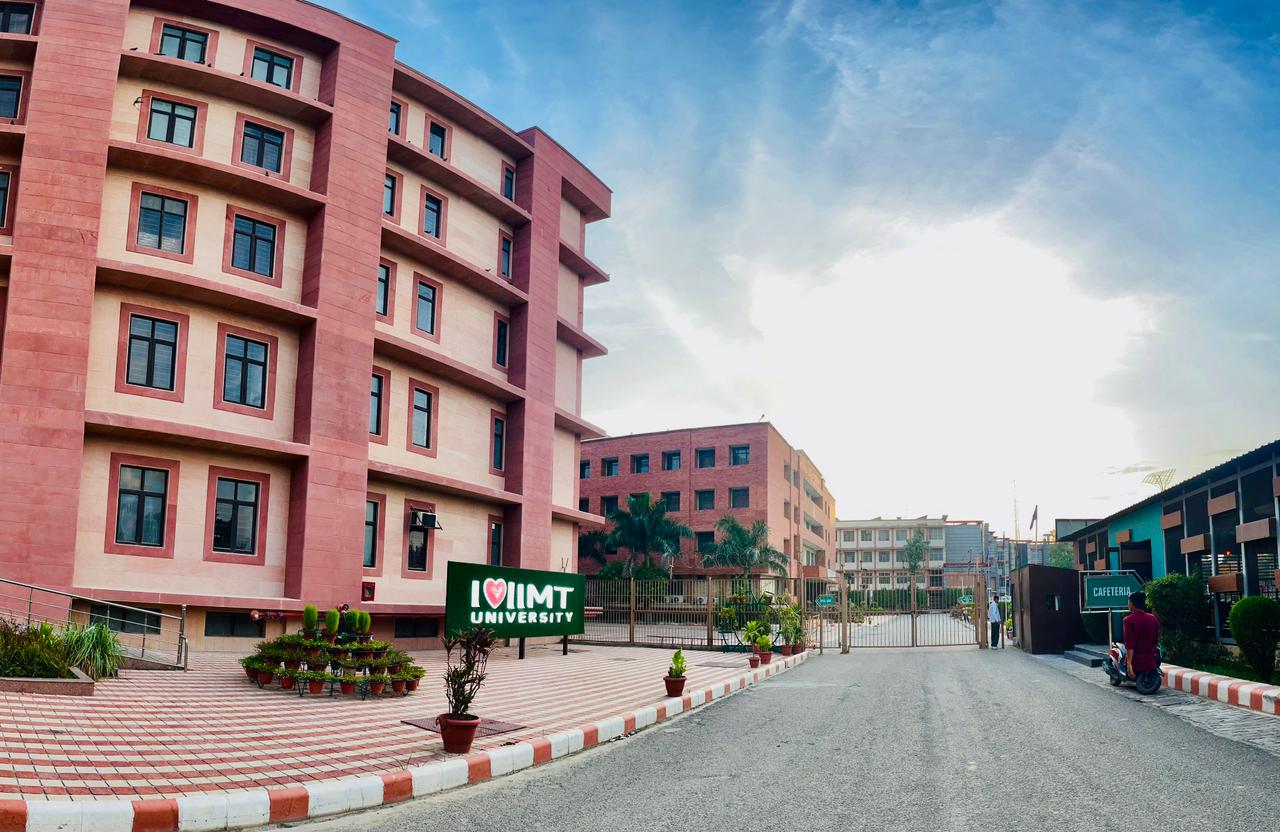
Ph.D. in Chemistry from IIMT University: Eligibility, Entrance Exam, Fee Structure, Admission Process, Subjects, Research Areas, Syllabus, Scholarship & Career Scope
Introduction about Ph.D. in Chemistry at IIMT University
Embarking on a Ph.D. in Chemistry at IIMT University opens the door to cutting‑edge research, interdisciplinary collaboration, and a transformative academic journey. Recognized for its state‑of‑the‑art laboratories, expert faculty, and industry partnerships, IIMT University equips aspiring chemists with the knowledge and skills to become pioneers in areas ranging from sustainable energy to pharmaceutical innovation. This comprehensive guide walks you through every aspect of the doctoral program, ensuring you have a clear roadmap to success.
Eligibility Criteria for Ph.D. in Chemistry at IIMT University
- A Master's degree (M.Sc., M.Tech., or equivalent) in Chemistry or a closely related discipline with a minimum aggregate of 55% (or 5.5 CGPA) from a recognized university.
- Candidates who have qualified the National Eligibility Test (NET), GATE, or CSIR‑UGC JRF are exempted from the university entrance examination.
- For candidates holding a B.E./B.Tech. in Chemical Engineering, a minimum of 60% is required, provided they have completed relevant chemistry coursework.
- Foreign nationals must possess a Master's degree equivalent to the Indian standards, evaluated by IIMT University's International Admissions Office.
Entrance Exam for Ph.D. in Chemistry at IIMT University
The university conducts a rigorous written test followed by a personal interview. The written test evaluates:
- Fundamental concepts in Physical, Organic, Inorganic, and Analytical Chemistry.
- Research aptitude, data interpretation, and problem‑solving skills.
- Scientific writing and presentation abilities.
Candidates who have cleared NET, GATE, or CSIR‑UGC JRF are directly shortlisted for the interview phase, bypassing the written test.
Fee Structure for Ph.D. in Chemistry at IIMT University
| Fee Component | Indian Residents (INR) | International Residents (USD) |
|---|---|---|
| Admission & Registration Fee | ₹ 10,000 | $ 150 |
| Annual Tuition & Lab Charges | ₹ 75,000 per annum | $ 1,200 per annum |
| Research Materials & Consumables (estimated) | ₹ 20,000 per annum | $ 320 per annum |
| Library & Digital Resource Subscription | ₹ 5,000 per annum | $ 80 per annum |
| Total Approx. Cost (3‑Year Programme) | ₹ 2,85,000 | $ 4,560 |
Scholarships, teaching‑assistantships, and research grants can significantly reduce the financial burden.
Admission Process for Ph.D. in Chemistry at IIMT University
- Online Application: Fill the portal form, upload academic transcripts, and pay the non‑refundable registration fee.
- Document Verification: Submit scanned copies of qualifying exam certificates (NET/GATE/CSIR‑JRF) if applicable.
- Entrance Examination: Appear for the university‑conducted test (unless exempted).
- Personal Interview: Shortlisted candidates meet the panel of subject experts.
- Admission Offer: Successful candidates receive an official admission letter and guidance on registration.
- Enrollment & Orientation: Complete fee payment, obtain ID card, and attend the Ph.D. orientation program.
Ph.D. Subjects and Specializations in Chemistry at IIMT University
IIMT University offers a range of research specializations that align with global scientific challenges:
- Organic Synthesis & Medicinal Chemistry
- Physical Chemistry & Spectroscopy
- Materials Chemistry & Nanotechnology
- Environmental Chemistry & Green Processes
- Computational Chemistry & Molecular Modeling
- Analytical Chemistry & Sensor Development
- Polymer Chemistry & Biomaterials
Research Areas in Chemistry at IIMT University
The university’s interdisciplinary research hubs focus on:
- Renewable energy materials (solar cells, fuel cells)
- Drug discovery and targeted therapy
- Advanced catalytic systems for sustainable industry
- Environmental remediation and waste valorization
- Smart polymers and biodegradable plastics
- High‑resolution analytical techniques (mass spectrometry, NMR)
- Quantum chemical simulations for material design
Documents Required for Ph.D. in Chemistry at IIMT University
| Document | Details |
|---|---|
| Application Form (online) | Completed and submitted via university portal |
| Academic Transcripts | Original & certified copies of B.Sc. and M.Sc. marksheets |
| NET/GATE/CSIR‑JRF Scorecard | Applicable for exempted candidates |
| Research Proposal (Optional) | Brief outline of intended research topic |
| Curriculum Vitae | Including publications, conferences, and work experience |
| Two Academic References | Letters from professors familiar with the candidate’s work |
| Passport Size Photograph | Recent (within 6 months) |
IIMT University Ph.D. Syllabus for Chemistry
The doctoral syllabus is modular, allowing flexibility while ensuring depth:
- Core Modules (Year 1): Advanced Organic Chemistry, Advanced Inorganic Chemistry, Spectroscopic Techniques, Research Methodology & Ethics.
- Specialization Tracks (Year 2‑3): Choose electives aligned with your research focus – e.g., Nanomaterials, Computational Chemistry, Environmental Analyses.
- Thesis & Publication: Minimum of three peer‑reviewed journal articles and a comprehensive dissertation defended before an expert panel.
How To Apply for Ph.D. in Chemistry at IIMT University
Follow these straightforward steps to submit your application:
- Visit the official IIMT University admissions portal.
- Register using a valid email address and create a password.
- Complete the online application form, attaching scanned copies of all required documents.
- Pay the registration fee via net banking, credit/debit card, or UPI.
- Submit the form and note the application reference number for future correspondence.
- Monitor your email for notifications regarding the entrance test schedule or interview invitation.
Career Scope and Job Opportunities After Ph.D. in Chemistry from IIMT University
A doctorate in Chemistry from IIMT University equips graduates for high‑impact roles:
- Senior Research Scientist – pharmaceutical, agro‑chemical, or energy companies.
- Principal Investigator – academic institutions or research labs.
- Product Development Manager – overseeing innovation pipelines.
- Intellectual Property Analyst – focusing on patent strategy for chemical inventions.
- Science Communicator / Technical Writer – bridging science and industry.
- Entrepreneur – founding start‑ups in biotech, materials, or sustainability.
The Indian Council




