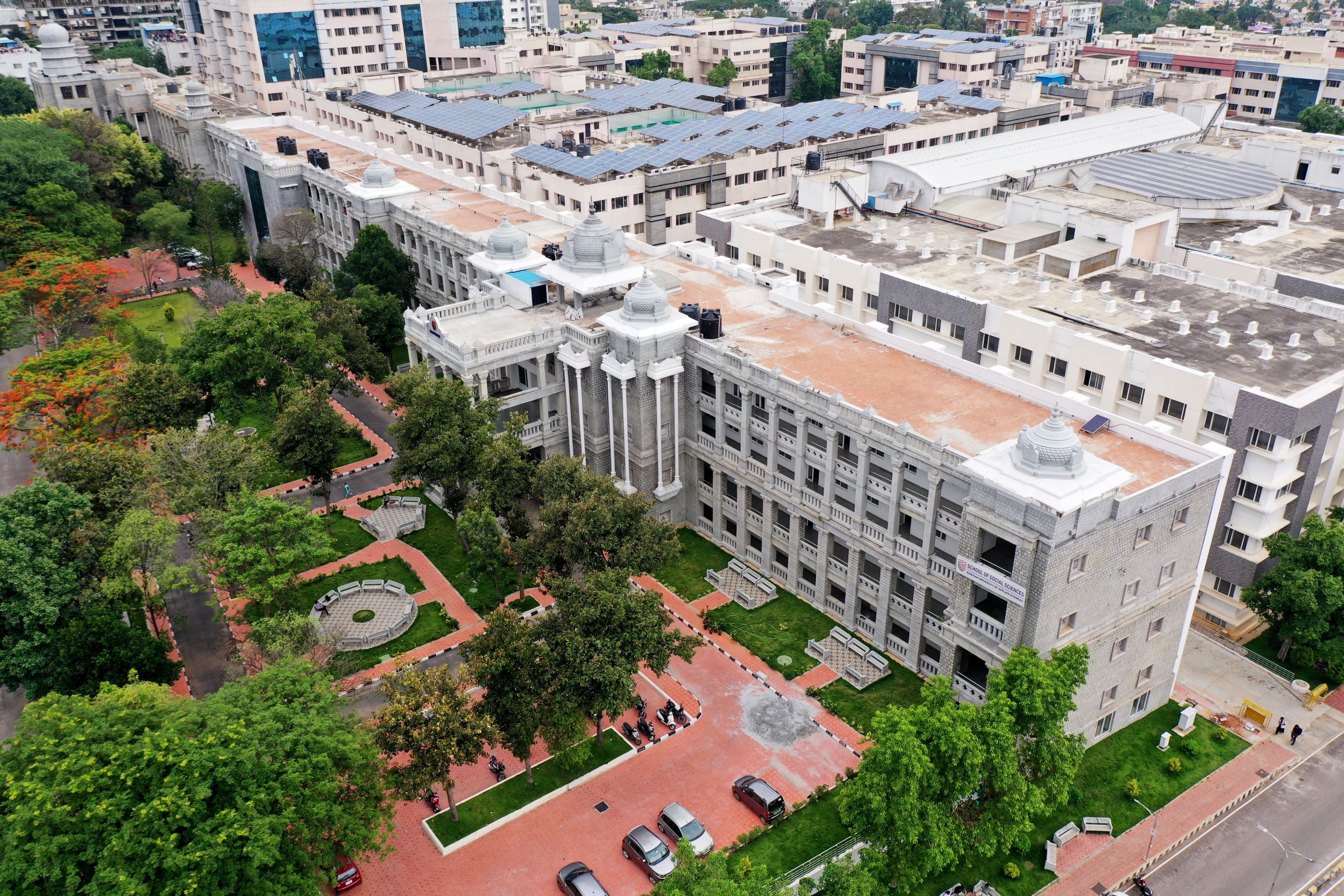
Ph.D. in Chemistry at M.S. Ramaiah University of Applied Sciences: Eligibility, Entrance Exam, Fee Structure, Admission Process, Subjects, Research Areas, Syllabus, Scholarship & Career Scope
Introduction about Ph.D. in Chemistry at M.S. Ramaiah University of Applied Sciences
The Doctor of Philosophy (Ph.D.) in Chemistry at M.S. Ramaiah University of Applied Sciences is a premier research program designed for ambitious professionals who wish to contribute to cutting?edge chemical science. With state?of?the?art laboratories, interdisciplinary collaborations, and a faculty roster that includes internationally published researchers, the university offers an inspiring environment where innovation meets industry relevance. This comprehensive guide explores every facet of the program?from eligibility and entrance examinations to fee structures, scholarships, and promising career pathways?empowering you to make an informed decision.
Eligibility Criteria for Ph.D. in Chemistry at M.S. Ramaiah University of Applied Sciences
Prospective candidates must meet the following minimum requirements:
- A Master?s degree (M.Sc., M.Tech., or equivalent) in Chemistry or a closely related discipline with a minimum of 55% aggregate (or 5.0 CGPA on a 10?point scale).
- Valid GATE score in Chemistry (or a related subject) is preferred but not mandatory; candidates without GATE may be evaluated based on university?conducted entrance tests.
- English proficiency: TOEFL ? 80 (iBT) or IELTS ? 6.5 for international applicants.
- Demonstrated research aptitude through publications, project work, or patents.
- For candidates holding a Ph.D. in a different discipline, a bridging course in core chemistry subjects may be required.
Entrance Exam for Ph.D. in Chemistry at M.S. Ramaiah University of Applied Sciences
The university conducts a two?stage entrance assessment:
- Written Test: 100?question objective exam covering Physical Chemistry, Organic Chemistry, Inorganic Chemistry, Analytical Chemistry, and Research Methodology. Duration: 2 hours.
- Interview & Viva?voce: Candidates who clear the written test are invited for a personal interview focusing on prior research experience, technical knowledge, and future research proposals.
Preparation tips include reviewing past GATE papers, publishing a concise research proposal, and staying updated with recent advancements in nanochemistry, green chemistry, and computational chemistry.
Fee Structure for Ph.D. in Chemistry at M.S. Ramaiah University of Applied Sciences
| Component | Annual Cost (INR) | Notes |
|---|---|---|
| Tuition & Laboratory Charges | ? 75,000 | Includes access to all core chemistry labs |
| Registration & Examination Fee | ? 12,000 | One?time fee payable at admission |
| Library & Digital Resources | ? 5,000 | Access to e?journals, databases, and inter?library loans |
| Research Project Stipend (Optional) | ? 60,000 ? 1,00,000 | Based on project funding and external grants |
| Total Approximate Annual Fee | ? 1,52,000 ? 1,92,000 | Varies with stipend and project assistance |
Admission Process for Ph.D. in Chemistry at M.S. Ramaiah University of Applied Sciences
The admission journey is streamlined into six clear steps:
- Online Application: Complete the application form on the university portal, upload academic transcripts, a research proposal (max 1500 words), and a statement of purpose.
- Document Verification: The admissions office reviews all uploaded documents and schedules a slot for the entrance exam.
- Entrance Examination: Attend the written test at the designated test center.
- Interview: Qualified candidates appear for the interview/viva?voce with the Department of Chemistry faculty.
- Offer Letter: Successful candidates receive a formal admission offer, detailing fee payment schedule and scholarship eligibility.
- Enrollment & Registration: Pay the required fees, submit the final set of documents, and enroll in the first semester.
Ph.D. Subjects and Specializations in Chemistry at M.S. Ramaiah University of Applied Sciences
The program offers a diverse spectrum of specializations, enabling candidates to align their research with emerging industry trends:
- Organic Synthesis and Catalysis
- Physical Chemistry & Spectroscopy
- Inorganic Materials & Nanostructures
- Analytical Chemistry & Sensor Development
- Computational Chemistry & Molecular Modeling
- Environmental & Green Chemistry
- Biochemistry & Chemical Biology
- Polymer Chemistry & Advanced Materials
Research Areas in Chemistry at M.S. Ramaiah University of Applied Sciences
Faculty and research scholars collaborate on high?impact projects. Current research thrusts include:
- Design of sustainable catalytic processes for waste valorization.
- Development of smart polymeric materials for drug delivery.
- Exploration of metal?organic frameworks for gas storage.
- Computational studies on reaction mechanisms and energy landscapes.
- Advanced spectroscopic techniques for real?time monitoring of chemical reactions.
- Environmental remediation using nanostructured adsorbents.
- Electrochemical energy storage and conversion systems.
Students are encouraged to publish in high?impact journals and present at international conferences, fostering a culture of scholarly excellence.
Documents Required for Ph.D. in Chemistry at M.S. Ramaiah University of Applied Sciences
| Document | Format | Remarks |
|---|---|---|
| Academic Transcripts (M.Sc./M.Tech.) | PDF (Scanned) | Attested copies required |
| Degree Certificate | Original or notarized copy | |
| GATE Score Card (if applicable) | Valid for the current admission year | |
| Research Proposal | Word Document | Maximum 1500 words, includes objectives and methodology |
| Curriculum Vitae (CV) | Highlight publications, patents, and conference presentations | |
| Proof of English Proficiency | TOEFL/IELTS for international candidates | |
| Letter of Recommendation (2) | From academicians or industry supervisors |
M.S. Ramaiah University of Applied Sciences Ph.D. Syllabus for Chemistry
The syllabus is structured to blend theoretical depth with practical expertise:
- Year 1: Advanced topics in Physical, Organic, and Inorganic Chemistry; Research Methodology; Ethics in Science.
- Year 2: Specialized elective courses aligned with chosen research area; Intensive lab work; Seminar presentations.
- Year 3 & Beyond: Independent research, manuscript preparation, conference participation, and dissertation writing.
The university regularly updates the curriculum to incorporate emerging fields such as artificial intelligence?driven drug design and renewable energy catalysis.
How To Apply for Ph.D. in Chemistry at M.S. Ramaiah University of Applied Sciences
Follow these concise steps to submit a successful application:
- Visit the official university portal and click on ?Apply for Ph.D.?
- Create a user account and fill in personal & academic details.
- Upload scanned copies of all required documents (refer to the table above).
- Enter the research proposal in the designated text box or upload as a separate file.
- Pay the non?refundable application fee of ? 5,000 via net banking or UPI.
- Submit the form and note the application reference number for future correspondence.
After submission, keep an eye on your registered email for notifications regarding the entrance exam schedule and interview invitation.
Career Scope and Job Opportunities After Ph.D. in Chemistry from M.S. Ramaiah University of Applied Sciences
A Ph.D. in Chemistry opens doors to a plethora of high?impact roles across academia, industry, and research institutes:
- Assistant/Associate Professor ? leading labs at premier universities.
- Research Scientist ? R&D divisions of pharmaceutical, agro?chemical, and




