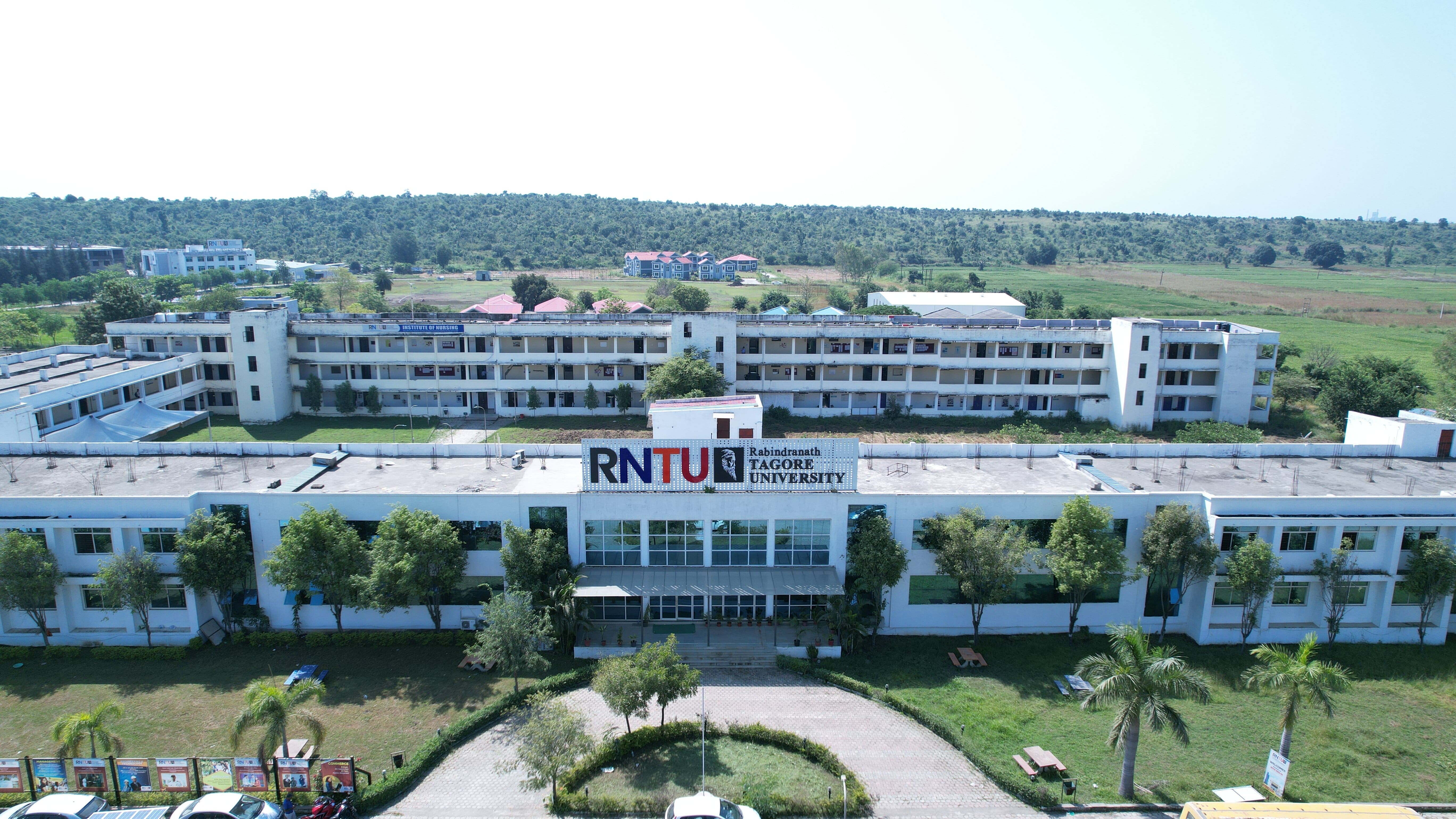
Ph.D. in Chemistry from Rabindranath Tagore University: Eligibility, Admission, Fee, Syllabus & Career
Introduction about Ph.D. in Chemistry at Rabindranath Tagore University
Embarking on a doctoral journey in Chemistry at Rabindranath Tagore University (RTU) opens doors to cutting‑edge research, world‑class mentorship, and a thriving scholarly community. The program is designed for professionals who aspire to innovate in fields such as sustainable materials, pharmaceutical chemistry, and nanotechnology. With state‑of‑the‑art laboratories, interdisciplinary collaborations, and strong industry linkages, RTU equips its scholars to become thought leaders who shape the future of chemical science.
Eligibility Criteria for Ph.D. in Chemistry at Rabindranath Tagore University
- Master’s degree (M.Sc. or equivalent) in Chemistry or a closely related discipline with a minimum of 55% aggregate (or CGPA 6.0/10).
- Candidates holding a postgraduate degree in allied branches (e.g., Biochemistry, Chemical Engineering) are also considered.
- For the final year of master’s students, a provisional admission is possible upon successful clearance of the entrance test.
- English proficiency (IELTS/TOEFL) is not mandatory for Indian nationals but may be required for foreign candidates.
- Applicants must have a valid GATE score in Chemistry (optional but gives a direct entry advantage).
Entrance Exam for Ph.D. in Chemistry at Rabindranath Tagore University
RTU conducts its own Ph.D. entrance examination twice a year (June & December). The test evaluates:
- Fundamental Concepts: Physical, organic, inorganic, and analytical chemistry.
- Analytical Skills: Data interpretation, problem solving, and critical thinking.
- Research Aptitude: Ability to formulate hypotheses and design experiments.
The exam comprises 100 multiple‑choice questions (MCQs) and 2 descriptive sections, lasting 3 hours. A minimum of 60% is required to qualify for the interview stage.
Fee Structure for Ph.D. in Chemistry at Rabindranath Tagore University
| Component | Annual Fee (INR) | Notes |
|---|---|---|
| Tuition & Laboratory Charges | 85,000 | Includes access to all central and departmental labs. |
| Library & Digital Resources | 10,000 | Unlimited access to e‑journals and databases. |
| Research & Publication Fee | 15,000 | Subsidized for conference presentations. |
| Miscellaneous (Student Services, Sports) | 5,000 | Optional for non‑resident scholars. |
| Total Approximate Annual Cost | 1,15,000 | Subject to yearly revision by the University. |
Admission Process for Ph.D. in Chemistry at Rabindranath Tagore University
- Online Application: Fill the RTU Ph.D. portal, upload academic transcripts, and pay the application fee (₹2,000).
- Entrance Examination: Appear for the written test on the scheduled date.
- Interview & Proposal Review: Shortlisted candidates present a research proposal before the Departmental Committee.
- Final Selection: Offer letter issued within 15 days of interview, subject to document verification.
- Enrollment: Pay the first year’s fee and submit the signed registration form.
Ph.D. Subjects and Specializations in Chemistry at Rabindranath Tagore University
The doctoral program offers a wide spectrum of specializations, allowing scholars to align their research with global challenges:
- Organic Synthesis and Medicinal Chemistry
- Inorganic Materials and Catalysis
- Physical Chemistry and Spectroscopy
- Analytical Chemistry and Sensor Development
- Computational Chemistry and Molecular Modeling
- Environmental Chemistry and Green Technologies
Research Areas in Chemistry at Rabindranath Tagore University
RTU’s research thrusts are driven by industry partnerships and national priorities. Current focal areas include:
- Design of novel organometallic catalysts for sustainable chemical processes.
- Development of biodegradable polymers and nano‑composites.
- Advanced spectroscopic techniques for real‑time reaction monitoring.
- Computational drug design targeting emerging pathogens.
- Wastewater treatment using photocatalytic materials.
Documents Required for Ph.D. in Chemistry at Rabindranath Tagore University
| Document | Format | Remarks |
|---|---|---|
| Academic Transcripts (M.Sc.) | PDF (Scanned) | Original and notarized copies. |
| Curriculum Vitae | Maximum 2 pages. | |
| Research Proposal (2,000 words) | DOCX or PDF | Include objectives, methodology, and expected outcomes. |
| Letter of Recommendation (2) | From academicians familiar with your work. | |
| Entrance Exam Scorecard | If GATE/RTU test taken. |
Rabindranath Tagore University Ph.D. Syllabus for Chemistry
The syllabus is divided into core modules and elective research components. Core modules (mandatory) cover advanced topics in:
- Quantum Chemistry
- Advanced Analytical Techniques
- Modern Inorganic Chemistry
- Organic Reaction Mechanisms
- Physical Chemistry of Materials
Electives are selected based on the chosen specialization and can include:
- Computational Modelling
- Environmental Toxicology
- Bio‑inorganic Chemistry
- Nanostructured Materials
How To Apply for Ph.D. in Chemistry at Rabindranath Tagore University
Follow these simple steps to submit a successful application:
- Visit the official RTU Ph.D. portal and create a new applicant account.
- Complete the online application form, ensuring all mandatory fields are filled.
- Upload scanned copies of the required documents (see Documents Required section).
- Pay the non‑refundable application fee through net banking or UPI.
- Submit the application and note the reference number for future correspondence.
- Prepare for the entrance exam; sample papers are available on the university website.
For personalized guidance, you may also explore professional support services such as Thesis and Dissertation Writing Services, Research Data Analysis Services, Research Paper Writing Services, and Questionnaire Design and Development.
Career Scope and Job Opportunities After Ph.D. in Chemistry from Rabindranath Tagore University
A doctorate in Chemistry from RTU equips graduates for high‑impact roles across academia, industry, and government. Typical career trajectories include:
- Assistant/Associate Professor and eventually Full Professor at premier universities.
- Senior Research Scientist in pharmaceuticals, agro‑chemicals, or material science firms.
- Research & Development Manager leading innovation pipelines.
- Consultant for regulatory agencies and environmental NGOs.
- Entrepreneurial ventures – start‑ups focused on green chemistry or analytical instrumentation.
Alumni of RTU have secured positions at leading organizations such as Indian Institute of Science, Tata Chemicals, Sun Pharma, and the Council of Scientific & Industrial Research (CSIR).
Scholarship for Ph.D. in Chemistry at Rabindranath Tagore University
RTU offers a range of merit‑based and need‑based scholarships to reduce financial burden:
- RTU Research Fellowship: Covers 100% tuition and provides a monthly stipend of ₹20,000.
- UGC‑JRF (Junior Research Fellowship): Competitive national award, fully funded.
- State Government Scholarships: For candidates belonging to under‑represented categories.
- Industry Sponsored Grants: Collaborative projects with partner companies that include salary support.
Applications for scholarships are evaluated simultaneously with the Ph.D. admission process. Early submission of a well‑crafted research proposal enhances the chances of receiving funding.
FAQs Regarding Ph.D. in Chemistry at Rabindranath Tagore University
- Q1: Can I enroll in a part‑time Ph.D. while working?
- Yes. RTU offers a flexible part‑time mode for working professionals, with weekend labs and online seminars.
- Q2: Is there




