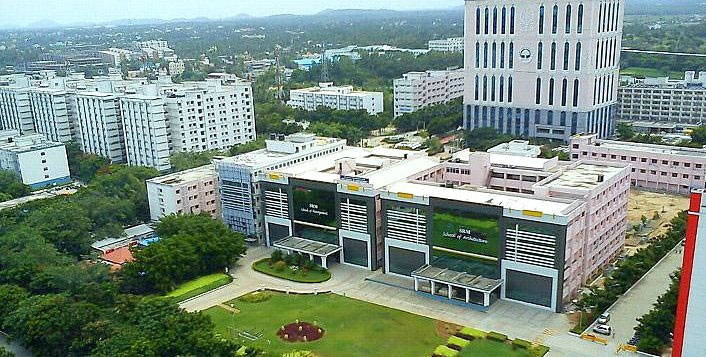
Introduction about Ph.D. in Chemistry at SRM University
Pursuing a Ph.D. in Chemistry at SRM University empowers professionals to become pioneers in chemical research, innovation, and industrial application. The university blends rigorous academic frameworks with state‑of‑the‑art laboratories, fostering an environment where curiosity translates into groundbreaking discoveries. Whether you aim to lead cutting‑edge projects, publish in high‑impact journals, or mentor the next generation of scientists, SRM’s doctoral program equips you with the expertise, resources, and global network required for excellence.
Eligibility Criteria for Ph.D. in Chemistry at SRM University
- Master’s degree (M.Sc., M.Pharma, M.Tech) in Chemistry or a closely related discipline with a minimum of 55% aggregate (or equivalent CGPA).
- For candidates with a B.E./B.Tech background, a minimum of 60% aggregate is mandatory.
- Valid GATE score in Chemistry (optional but advantageous).
- Proficiency in English (IELTS/TOEFL not mandatory for Indian nationals; required for foreign candidates).
- Research proposal aligning with the faculty expertise at SRM University.
Entrance Exam for Ph.D. in Chemistry at SRM University
The university conducts its own SRM Ph.D. Entrance Test (online) followed by a personal interview. The exam assesses:
- Fundamental concepts in Physical, Organic, Inorganic, and Analytical Chemistry.
- Problem‑solving ability and research aptitude.
- Data interpretation and scientific writing skills.
Applicants with a valid GATE score may be exempted from the written test but will still undergo an interview.
Fee Structure for Ph.D. in Chemistry at SRM University
| Component | Annual Fee (INR) | Notes |
|---|---|---|
| Tuition & Laboratory Charges | 85,000 | Includes access to all research labs and equipment. |
| Research Materials & Consumables | 30,000 | Estimated based on average project requirements. |
| Library & Digital Resources | 5,000 | Unlimited access to journals and databases. |
| Miscellaneous (Administrative, Examination) | 10,000 | |
| Total (Approx.) | 130,000 |
Scholarships, teaching assistantships, and research grants can significantly reduce the overall cost. Learn more about financial support in the Research Data Analysis Services section.
Admission Process for Ph.D. in Chemistry at SRM University
- Online Application: Submit the application form through the university portal along with academic transcripts.
- Entrance Examination: Appear for the SRM Ph.D. Entrance Test (or submit a valid GATE score).
- Interview & Research Proposal Review: Qualified candidates are invited for a personal interview and proposal discussion with the faculty panel.
- Admission Offer: Successful candidates receive an official admission letter and fee payment instructions.
- Enrollment & Orientation: Complete fee payment, enrollment formalities, and attend the orientation program.
Ph.D. Subjects and Specializations in Chemistry at SRM University
- Physical Chemistry & Quantum Chemistry
- Organic Synthesis and Medicinal Chemistry
- Inorganic Materials and Nanochemistry
- Analytical Chemistry & Instrumental Techniques
- Polymer Chemistry and Sustainable Materials
- Computational Chemistry and Molecular Modeling
Research Areas in Chemistry at SRM University
SRM University hosts cutting‑edge research clusters covering:
- Renewable energy materials (photocatalysts, fuel cells)
- Drug discovery and bio‑active molecules
- Environmental remediation (heavy‑metal removal, green solvents)
- Nanostructured catalysts for industrial processes
- Advanced spectroscopy and imaging techniques
- Artificial intelligence in chemical data analysis
For professional assistance in publishing your findings, explore our Research Paper Writing Services.
Documents Required for Ph.D. in Chemistry at SRM University
| Document | Details |
|---|---|
| Academic Transcripts | Certified copies of B.Sc./M.Sc. (or equivalent) marksheets. |
| Degree Certificates | Original degree certificates with notarized copies. |
| Research Proposal | 2‑3 page synopsis outlining objectives, methodology, and expected outcomes. |
| Entrance Exam Scorecard | SRM Ph.D. Test score or valid GATE score. |
| Curriculum Vitae | Professional CV highlighting academic and research experience. |
| Identity Proof | Passport, Aadhar, or PAN card. |
SRM University Ph.D. Syllabus for Chemistry
The doctoral syllabus is research‑driven and tailored to the chosen specialization. Core components include:
- Advanced Theoretical Modules (e.g., Quantum Mechanics, Thermodynamics).
- Methodology Workshops (spectroscopy, chromatography, computational tools).
- Seminars and Journal Club presentations.
- Experimental Design and Safety Training.
- Thesis Writing and Defense Preparation.
How To Apply for Ph.D. in Chemistry at SRM University
- Visit the official SRM University admissions portal.
- Create a user account and fill in personal & academic details.
- Upload required documents (as listed above) and your research proposal.
- Pay the non‑refundable application fee (INR 1,500).
- Submit the form and note the application reference number for future correspondence.
Career Scope and Job Opportunities After Ph.D. in Chemistry from SRM University
Graduates enjoy a wide spectrum of career paths:
- Academic Positions: Assistant Professor, Research Fellow, Post‑doctoral Scientist.
- Industrial R&D: Lead Chemist, Process Development Engineer, Materials Scientist in pharmaceuticals, petrochemicals, and specialty chemicals.
- Entrepreneurship: Startup founders focusing on green chemistry, analytical services, or chemical manufacturing.
- Consultancy & Policy: Scientific advisor for regulatory bodies, environmental consultancies, and intellectual property firms.
- Data‑Driven Roles: Chemical informatics, AI‑enabled drug design, and big‑data analysis (see our Questionnaire Design and Development for tools to assess industry needs).
Scholarship for Ph.D. in Chemistry at SRM University
SRM University offers merit‑based scholarships covering up to 75% of tuition fees, along with:
- Monthly research stipends (INR 12,000–15,000).
- Travel grants for conferences and workshops.
- Fully funded projects under national agencies (DST, CSIR, etc.).
Applicants are encouraged to explore additional funding through the Thesis and Dissertation Writing Services, which can help secure grants by delivering compelling project proposals.
FAQs Regarding Ph.D. in Chemistry at SRM University
- Q1: Can I enroll in the Ph.D. program without a GATE score?
- A: Yes. A valid SRM Entrance Test score and a strong research proposal are sufficient.
- Q2: How long does it take to complete the Ph.D.?
- A: Typically 3‑5 years, depending on research progress and publication requirements.
- Q3: Are there part‑time options for working professionals?
- A: SRM offers a flexible part‑time track with evening lab access and remote supervision.
- Q4: What is the minimum publication requirement for thesis submission?
- A: At least two papers in peer‑reviewed journals indexed in Scopus or Web of Science.
- Q5: Is there industry collaboration for research projects?
- A: Yes. SRM maintains MoUs with leading chemical firms, providing project sponsorship and internship opportunities.




