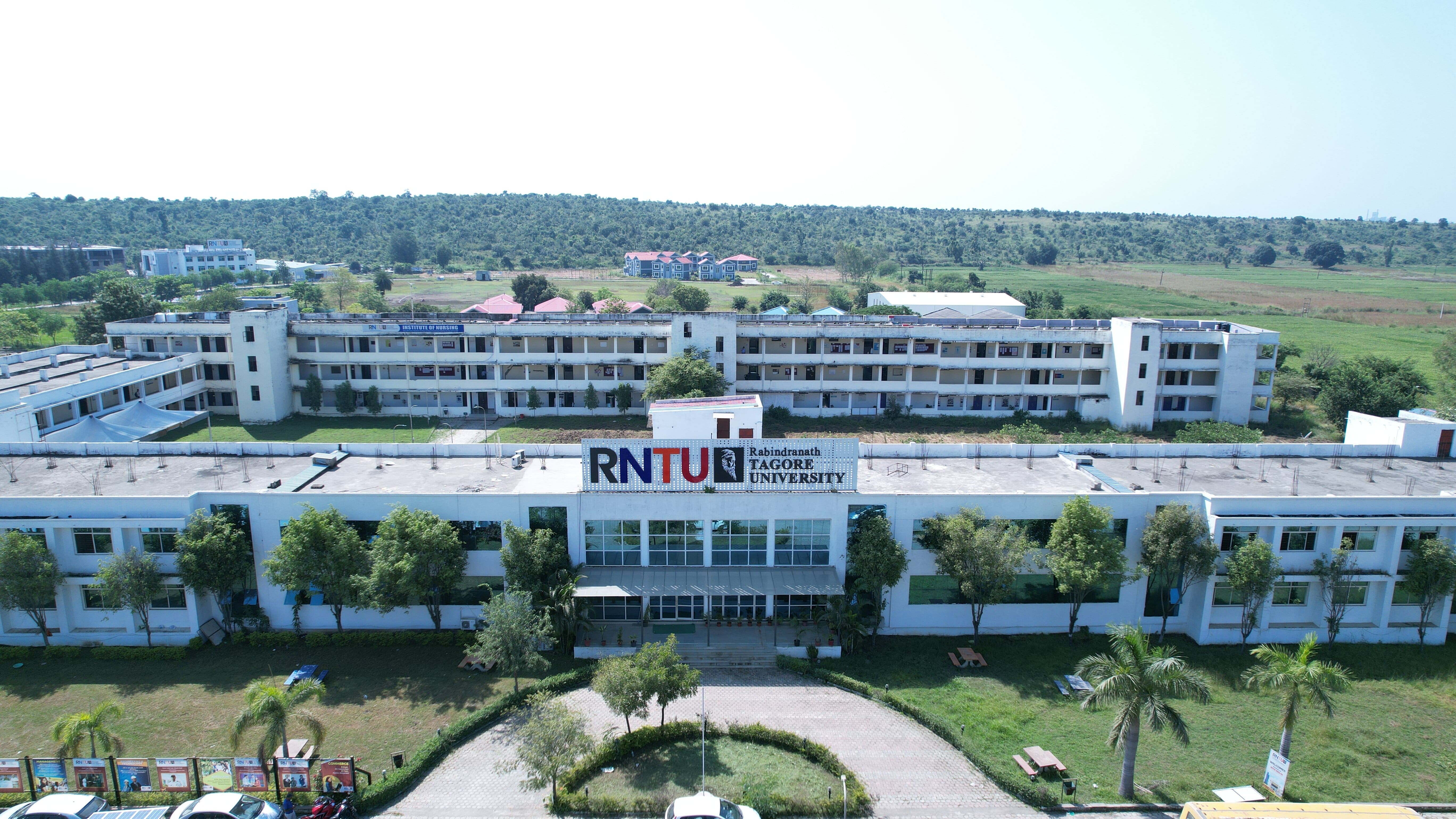
Ph.D. in Civil Engineering from Rabindranath Tagore University
Introduction about Ph.D. in Civil Engineering at Rabindranath Tagore University
The Ph.D. in Civil Engineering offered by Rabindranath Tagore University is a flagship research program designed for engineers, academicians, and industry professionals who aspire to become thought leaders in the built environment. This doctoral programme blends rigorous theoretical foundations with cutting‑edge practical applications, empowering candidates to address complex challenges such as sustainable infrastructure, advanced construction materials, disaster‑resilient design, and smart city development. With state‑of‑the‑art laboratories, collaborative ties with leading construction firms, and a faculty comprising internationally recognized scholars, the university provides an inspiring ecosystem for research excellence.
Eligibility Criteria for Ph.D. in Civil Engineering at Rabindranath Tagore University
Prospective candidates must satisfy the following baseline requirements:
- Possess a Master’s degree (M.Tech, M.E., or equivalent) in Civil Engineering or a closely related discipline with a minimum aggregate of 55% (or CGPA 6.0/10).
- For candidates holding a Bachelor’s degree (B.E./B.Tech) with a minimum of 65% and a minimum of 5 years of relevant research or industry experience, the university may consider a direct Ph.D. entry through a rigorous interview.
- Demonstrate proficiency in English – either through TOEFL/IELTS scores or by clearing the university’s language assessment.
- Adherence to the National Eligibility Test (NET) or GATE qualification is advantageous but not mandatory.
Entrance Exam for Ph.D. in Civil Engineering at Rabindranath Tagore University
The admission process incorporates a two‑stage evaluation:
- Written Test: A 90‑minute examination covering advanced topics in structural analysis, geotechnical engineering, transportation planning, and research methodology.
- Personal Interview: Conducted by a panel of senior faculty members, this interview assesses research aptitude, conceptual clarity, and alignment with the university’s research priorities.
Candidates who have cleared national-level examinations such as GATE or NET may be exempted from the written test, subject to verification of scores.
Fee Structure for Ph.D. in Civil Engineering at Rabindranath Tagore University
The fee schedule is transparent and varies according to residency status (general, OBC, SC/ST) and scholarship eligibility. Below is a breakdown for the academic year 2025‑26:
| Component | General Category (INR) | OBC Category (INR) | SC/ST Category (INR) |
|---|---|---|---|
| Admission Processing Fee | 5,000 | 3,000 | 2,000 |
| Annual Tuition & Laboratory Charges | 45,000 | 35,000 | 30,000 |
| Research Material & Publication Support | 20,000 | 15,000 | 12,000 |
| Annual Miscellaneous (library, internet, etc.) | 10,000 | 8,000 | 6,000 |
| Total per Year | 80,000 | 61,000 | 50,000 |
A one‑time registration deposit of INR 10,000 is required at the time of admission. The university also offers a 30% fee waiver for candidates who secure a merit scholarship.
Admission Process for Ph.D. in Civil Engineering at Rabindranath Tagore University
The admission workflow is streamlined into the following steps:
- Online Application: Submit the digital application form via the university portal, attaching scanned copies of academic transcripts, a research proposal (maximum 1500 words), and two letters of recommendation.
- Application Fee Payment: Pay the non‑refundable processing fee through net banking or credit/debit card.
- Eligibility Verification: The admissions committee reviews academic qualifications and research background.
- Entrance Examination & Interview: Eligible candidates are invited for the written test and subsequent interview as described earlier.
- Final Selection & Offer Letter: Successful candidates receive an official admission letter along with details about fee payment deadlines.
- Enrollment: Complete enrollment by submitting the original documents and paying the first year’s tuition fee.
Ph.D. Subjects and Specializations in Civil Engineering at Rabindranath Tagore University
The doctoral programme allows candidates to tailor their research across a spectrum of specializations, including:
- Structural Dynamics and Earthquake Engineering
- Advanced Concrete Technology and Sustainable Materials
- Geotechnical Engineering and Soil‑Structure Interaction
- Transportation Systems and Intelligent Infrastructure
- Water Resources Management and Hydraulic Modelling
- Construction Management, BIM, and Lean Construction
- Environmental Impact Assessment and Green Building Design
Research Areas in Civil Engineering at Rabindranath Tagore University
Faculty members lead nationally funded projects in the following cutting‑edge research domains:
- Seismic Resilience of High‑Rise Structures
- Nano‑engineered Construction Materials for Durability
- Smart Sensors for Real‑Time Structural Health Monitoring
- Urban Flood Modelling and Climate‑Adaptive Infrastructure
- Autonomous Vehicle Integration into Urban Transport Networks
- Life‑Cycle Assessment (LCA) of Infrastructure Projects
- Digital Twin Technology for Infrastructure Management
Students are encouraged to collaborate with industry partners, government agencies, and international research consortia to publish in high‑impact journals.
Documents Required for Ph.D. in Civil Engineering at Rabindranath Tagore University
A complete application dossier must include the following documents:
| Document | Remarks |
|---|---|
| Completed Online Application Form | PDF format, signed electronically |
| Academic Transcripts & Degree Certificates | Original and attested copies |
| Research Proposal | 1500‑word limit, include objectives and methodology |
| Curriculum Vitae (CV) | Highlight publications, projects, and work experience |
| Two Recommendation Letters | From academicians or senior industry professionals |
| Proof of English Proficiency | TOEFL/IELTS scorecard or university language test |
| GATE/NET Scorecard (if applicable) | Optional but beneficial |
| Passport‑size Photograph | Recent, white background |
Rabindranath Tagore University Ph.D. Syllabus for Civil Engineering
The structured syllabus is divided into core and elective modules, followed by a research phase:
- Core Courses (Year 1): Research Methodology, Advanced Structural Analysis, Advanced Geotechnical Engineering, Computational Fluid Dynamics.
- Elective Courses (Year 1‑2): Sustainable Infrastructure, Smart Cities Planning, Advanced Concrete Materials, Transportation Modelling, Environmental Engineering.
- Seminars & Workshops: Participation in at least two national conferences and one international workshop.
- Thesis Work (Year 2‑4): Original research leading to a dissertation of 80‑100 pages, followed by a viva‑voce examination.
How To Apply for Ph.D. in Civil Engineering at Rabindranath Tagore University
Applying is straightforward:
- Visit the official university portal and click on the “Apply for Ph.D.” button.
- Register using a valid email address and create a secure password.
- Complete the application form, upload all required documents, and submit the research proposal.
- Pay the INR 5,000 processing fee through the integrated payment gateway.
- Monitor your email for the invitation to the written test or interview.
- Upon selection, follow the enrollment instructions sent in the official offer letter.
Career Scope and Job Opportunities After Ph.D. in Civil Engineering from Rabindranath Tagore University
Graduates of the Ph.D. programme are highly sought after for leadership positions in academia, research institutes, and industry. Typical career pathways include:
- Assistant/Associate Professor in leading engineering colleges or universities.</li




