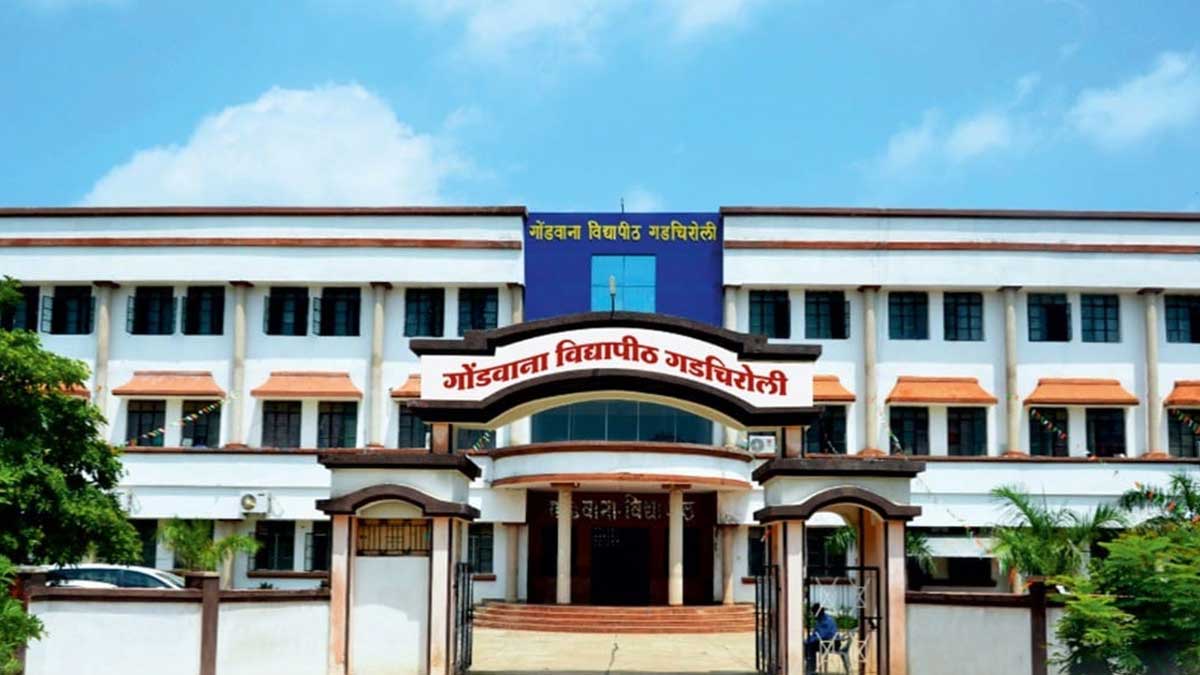
Introduction about Ph.D. in Commerce at Gondwana University
Embarking on a doctoral journey is more than just an academic pursuit; it is a profound commitment to reshaping the future of global trade, finance, and economics. Gondwana University, located in Gadchiroli, Maharashtra, stands as a beacon of intellectual growth and research excellence for professionals aspiring to reach the pinnacle of their careers. A Ph.D. in Commerce from this esteemed institution is designed to challenge your intellectual boundaries and equip you with the advanced analytical tools necessary to solve complex business enigmas. In an era where data-driven decisions dictate market trends, this program offers a rigorous framework to transform your professional experience into scholarly contributions that resonate across industries. Whether you are an academician seeking to deepen your pedagogical expertise or a corporate leader aiming to influence policy through evidence-based research, Gondwana University provides the ideal ecosystem to nurture your ambitions and leave a legacy of knowledge.
Ph.D Admission 2026-2027 & Writing Support Services by Shiksha Research
Eligibility Criteria for Ph.D. in Commerce at Gondwana University
To enter this prestigious research community, candidates must meet specific academic benchmarks that ensure they possess the foundational knowledge required for high-level scholarly inquiry. The eligibility criteria for professionals and graduates are as follows:
- Master?s Degree: Candidates must hold a Master?s degree in Commerce (M.Com), Management (MBA), or a closely related discipline from a recognized university.
- Minimum Percentage: A minimum of 55% marks in the aggregate (or an equivalent grade) is required for general category candidates.
- Relaxation: A relaxation of 5% is typically provided to candidates belonging to reserved categories (SC/ST/OBC/VJNT/SBC) and differently-abled individuals, as per UGC guidelines and state government norms.
- Professional Experience: While not always mandatory, having professional experience in the finance or commerce sector can significantly enhance the quality of your research proposal during the interview stage.
Entrance Exam for Ph.D. in Commerce at Gondwana University
The gateway to doctoral research at Gondwana University is the Ph.D. Entrance Test (PET). This examination is meticulously designed to evaluate a candidate?s aptitude for research, logical reasoning, and subject-specific depth. Success in PET requires a strategic approach and a thorough understanding of commerce fundamentals. Candidates who have already demonstrated excellence through national or state-level examinations such as UGC-NET (including JRF), CSIR-NET (including JRF), SLET, or GATE are generally exempted from the PET, though they must still participate in the subsequent interview process. Strengthening your skills through professional Research Paper Writing Services during your preparation can help you understand the nuances of academic literature, giving you an edge over other applicants.
Fee Structure for Ph.D. in Commerce at Gondwana University
The cost of pursuing a Ph.D. at Gondwana University is structured to be affordable while maintaining the highest standards of academic resources. The following table provides an approximate estimation of the fee components involved during the tenure of the program:
| Fee Component | Approximate Amount (INR) | Frequency |
|---|---|---|
| Registration Fee | 2,000 - 5,000 | One-time |
| Course Work Fee | 10,000 - 15,000 | One-time |
| Annual Tuition Fee | 15,000 - 25,000 | Per Annum |
| Library & Laboratory Fee | 5,000 - 8,000 | Per Annum |
| Thesis Submission Fee | 15,000 - 20,000 | At the time of submission |
Note: The fees mentioned above are indicative and subject to change based on university ordinances. Students should refer to the official notification for current rates.
Admission Process for Ph.D. in Commerce at Gondwana University
The admission journey is a multi-staged process that filters the most dedicated minds for the research cohort. It begins with an official notification issued by the university, followed by an online application process. Once the PET results are declared or exemptions are verified, eligible candidates are called for a personal interview or a Research Advisory Committee (RAC) presentation. During this interview, you will be expected to discuss your research interest, the feasibility of your topic, and your potential contribution to the field of commerce. This is where your vision is tested, and having a well-structured proposal becomes critical. Many professionals seek Thesis and Dissertation Writing Services at various stages to ensure their research methodology and theoretical frameworks are robust and academically sound.
Ph.D. Subjects and Specializations in Commerce at Gondwana University
The Ph.D. program in Commerce at Gondwana University allows for extensive specialization, enabling researchers to align their studies with their professional backgrounds or future career goals. The primary specializations include:
- Advanced Accountancy and Auditing: Focusing on international accounting standards and forensic auditing.
- Business Economics: Analyzing market trends, fiscal policies, and economic behavior.
- Finance and Banking: Exploring fintech, digital banking, and investment management.
- Marketing Management: Specialized research in consumer behavior, digital marketing, and rural markets.
- Human Resource Management: Investigating organizational culture, labor laws, and employee engagement in the corporate sector.
Research Areas in Commerce at Gondwana University
Gondwana University encourages interdisciplinary research that addresses modern economic challenges. Potential research areas include the impact of Goods and Services Tax (GST) on small-scale industries, the evolution of e-commerce in rural Maharashtra, and the sustainability of Microfinance institutions. To navigate these complex topics, researchers often utilize Questionnaire Design and Development to gather primary data from diverse stakeholders. Effective research in these areas not only contributes to the academic world but also provides valuable insights for policy-making and corporate strategy.
Documents Required for Ph.D. in Commerce at Gondwana University
For a smooth application experience, ensure you have the following documents ready for verification:
- Original and Photocopies of SSC, HSC, Graduation, and Post-Graduation Mark sheets.
- Master?s Degree Certificate and Convocation Certificate.
- PET Score Card or NET/SET/GATE Exemption Certificate.
- Transfer Certificate (TC) and Migration Certificate (if from another university).
- Category Certificate and Validity (for reserved categories).
- Research Proposal (Synopsis) approved by the prospective supervisor.
- Passport-sized photographs and Identity Proof (Aadhar Card/PAN Card).
Gondwana University Ph.D. Syllabus for Commerce
The Ph.D. journey starts with a mandatory "Course Work," which acts as a bridge between your Master?s knowledge and your doctoral specialized research. The syllabus for the Ph.D. in Commerce is split into two primary segments:
- Part I: Research Methodology: This includes quantitative and qualitative research methods, statistical tools, data collection techniques, and ethics in research. Mastering this section is crucial for high-quality output. Researchers frequently rely on professional Research Data Analysis Services to interpret complex data sets accurately during their actual dissertation work.
- Part II: Advanced Subject Knowledge: This covers the latest developments in Commerce, emerging trends in global trade, advanced financial management, and contemporary business laws.
How To Apply for Ph.D. in Commerce at Gondwana University
The application process is primarily conducted through the official university website. Aspiring scholars must follow these steps:
- Visit the Gondwana University Ph.D. portal and register with a valid email and mobile number.
- Fill out the PET application form or the Ph.D. registration form carefully, ensuring all academic details are accurate.
- Upload scanned copies of the required documents in the prescribed format.
- Pay the application fee via the integrated online payment gateway.
- Download and print the application form for future reference and for submission to the university during the document verification phase.
Career Scope and Job Opportunities After Ph.D. in Commerce from Gondwana University
A Ph.D. in Commerce opens doors to elite career paths that are often inaccessible with just a Master's degree. In the academic sphere, you are eligible for the position of Assistant Professor or Researcher in top-tier universities and colleges. In the corporate sector, your expertise is highly sought after for roles such as Chief Financial Officer (CFO), Research Analyst, Financial Consultant, or Strategic Planner. Furthermore, government bodies and international organizations like the World Bank or IMF value Ph.D. holders for policy development and economic analysis. Your ability to conduct rigorous independent research marks you as a thought leader in the commerce domain.
Scholarship for Ph.D. in Commerce at Gondwana University
Financial assistance can greatly ease the burden of research. Gondwana University students are eligible for various scholarships based on merit and category. These include the UGC-NET JRF fellowship for those who have cleared the Junior Research Fellowship exam, the Maulana Azad National Fellowship (MANF) for minority students, and various state government fellowships for SC/ST/OBC students. Additionally, the university may offer internal stipends to full-time researchers who demonstrate exceptional progress in their work.
FAQs Regarding Ph.D. in Commerce at Gondwana University
Q1: What is the duration of the Ph.D. in Commerce program?
A: The minimum duration is 3 years, including course work, and the maximum is usually 6 years. Extensions can be granted based on university regulations.
Q2: Is PET mandatory for all candidates?
A: No, candidates who have cleared NET, SET, GATE, or have an M.Phil degree through a regular mode are generally exempt from PET.
Q3: Can I pursue a Ph.D. while working?
A: Yes, many professionals pursue their Ph.D. part-time, provided they fulfill the residency and course work requirements of Gondwana University.
Q4: How important is the Ph.D. interview?
A: The interview is vital as it assesses your research aptitude and the originality of your proposed topic. It is your opportunity to convince the committee of the significance of your research.




