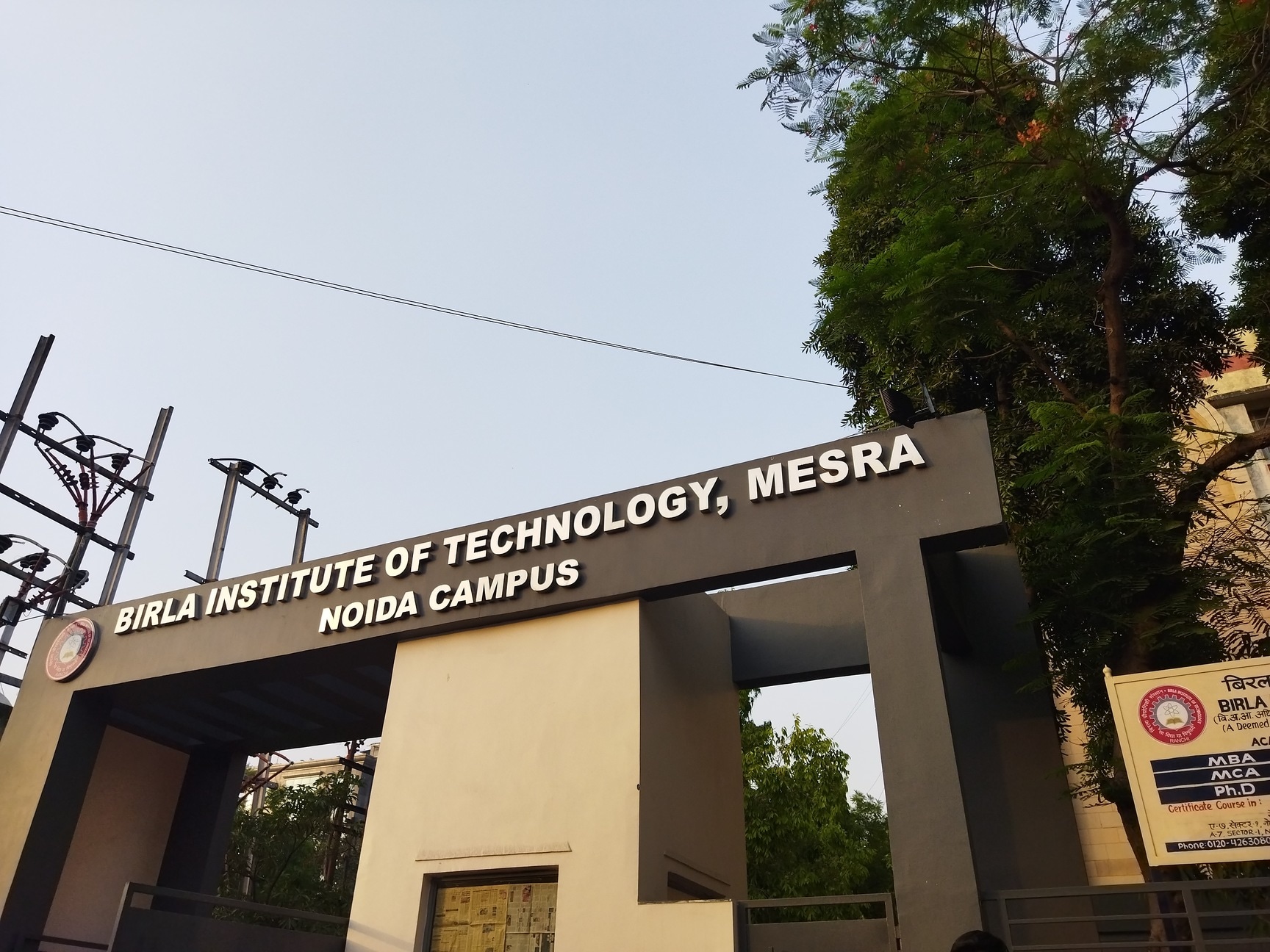
Ph.D. in Economics from Birla Institute of Technology: Eligibility, Entrance Exam, Fee Structure, Admission Process, Subjects, Research Areas, Syllabus, Scholarship & Career Scope
Introduction about Ph.D. in Economics at Birla Institute of Technology
The Birla Institute of Technology (BIT) has emerged as a premier destination for aspiring economists who wish to blend rigorous quantitative training with real‑world policy analysis. A Ph.D. in Economics at BIT not only equips you with advanced econometric tools but also fosters a research mindset that can influence national and global economic strategies. Whether you aim to become a university professor, a policy analyst, or a senior consultant, BIT’s interdisciplinary ecosystem provides the ideal launchpad.
Eligibility Criteria for Ph.D. in Economics at Birla Institute of Technology
- Master’s degree (M.Sc., M.A., M.Com., or equivalent) with a minimum of 55% aggregate marks from a recognized university.
- Valid GATE score in Economics/Mathematics/Statistics (or equivalent national level exam) is preferred but not mandatory.
- Demonstrated research aptitude through a published paper, conference presentation, or a well‑crafted research proposal.
- English language proficiency – IELTS/TOEFL scores are required for international candidates.
Entrance Exam for Ph.D. in Economics at Birla Institute of Technology
BIT conducts a comprehensive entrance examination that evaluates candidates on:
- Micro‑economics & Macro‑economics: Core theoretical concepts and contemporary applications.
- Quantitative Methods: Statistics, econometrics, and mathematical modeling.
- Research Aptitude: Ability to formulate hypotheses, design experiments, and interpret data.
- General English: Comprehension and academic writing skills.
The exam is followed by a personal interview where the candidate’s research proposal is scrutinized. Candidates with a qualifying GATE score may be exempted from the written test and directly invited for interview.
Fee Structure for Ph.D. in Economics at Birla Institute of Technology
| Component | Annual Fee (INR) | Notes |
|---|---|---|
| Tuition & Laboratory Charges | 75,000 | Includes access to BIT’s econometrics lab and library resources. |
| Research & Publication Allowance | 30,000 | Subsidized for conference travel and journal fees. |
| Administrative & Examination Fees | 15,000 | Cover evaluation, registration, and certification. |
| Total (Approx.) | 1,20,000 | Subject to annual revision. |
Admission Process for Ph.D. in Economics at Birla Institute of Technology
- Online Application: Submit the completed application form through BIT’s portal along with scanned copies of academic transcripts.
- Entrance Examination: Appear for the written test (or present a valid GATE score).
- Interview & Proposal Review: Shortlisted candidates are invited for a panel interview where research interests are discussed.
- Final Selection: Admission offers are dispatched via email, followed by fee payment and enrollment.
Applicants are encouraged to explore additional academic support such as Thesis and Dissertation Writing Services to strengthen their proposal before submission.
Ph.D. Subjects and Specializations in Economics at Birla Institute of Technology
BIT offers a flexible curriculum allowing candidates to specialize in one or more of the following domains:
- Development Economics
- International Trade & Finance
- Environmental & Resource Economics
- Health Economics
- Applied Econometrics
- Behavioral Economics
- Public Policy & Governance
Research Areas in Economics at Birla Institute of Technology
Faculty members at BIT are actively engaged in cutting‑edge research across a broad spectrum of topics. Current focal areas include:
- Impact of digital currencies on macro‑financial stability.
- Econometric analysis of climate‑change mitigation policies.
- Socio‑economic determinants of health outcomes in emerging economies.
- Quantitative assessment of inclusive growth strategies.
- Machine‑learning applications in predictive economic modeling.
Students can leverage Research Data Analysis Services to enhance the robustness of their empirical work.
Documents Required for Ph.D. in Economics at Birla Institute of Technology
| Document | Format | Remarks |
|---|---|---|
| Academic Transcripts (Post‑Graduate) | PDF (Scanned) | Original seal and signature required. |
| GATE/Equivalent Score Card | Valid for the year of application. | |
| Research Proposal (5–7 pages) | Word/PDF | Clearly state objectives, methodology, and expected contribution. |
| Letters of Recommendation (2) | Preferably from academic supervisors. | |
| English Proficiency Test Scores (if applicable) | IELTS/TOEFL only. |
Birla Institute of Technology Ph.D. Syllabus for Economics
The syllabus is structured into three phases:
- Core Coursework (Year 1): Advanced Micro‑economics, Advanced Macro‑economics, Econometric Theory, Research Methodology.
- Elective Modules (Year 2): Choose from specialized tracks such as Financial Economics, Development Policy, or Environmental Economics.
- Dissertation Phase (Years 3‑5): Conduct original research, publish at least two peer‑reviewed articles, and defend the thesis before a scholarly panel.
To support academic writing, candidates may also use Research Paper Writing Services for manuscript preparation.
How To Apply for Ph.D. in Economics at Birla Institute of Technology
- Visit the official BIT admissions portal and create a new applicant account.
- Fill in personal details, educational background, and upload the required documents.
- Select “Ph.D. – Economics” from the program list and pay the non‑refundable application fee of INR 2,500.
- Submit the application and note the generated reference number for future correspondence.
- Prepare for the entrance exam; study guides are available on the BIT website.
For assistance in designing research instruments, explore Questionnaire Design and Development services.
Career Scope and Job Opportunities After Ph.D. in Economics from Birla Institute of Technology
Graduates of BIT’s Ph.D. program enjoy a diverse portfolio of career paths:
- Academia: Assistant Professor, Associate Professor, or Research Fellow at leading universities.
- International Organizations: Economist at the World Bank, IMF, UNDP, or Asian Development Bank.
- Government & Policy Think‑Tanks: Senior Analyst, Policy Advisor, or Chief Economist.
- Financial Sector: Quantitative Analyst, Risk Manager, or Chief Economist in banks and investment firms.
- Consulting: Economic Consultant for global consulting houses or independent advisory boutiques.
The blend of theoretical depth and practical research experience positions BIT alumni for leadership roles that shape economic policy worldwide.
Scholarship for Ph.D. in Economics at Birla Institute of Technology
BIT offers merit‑based scholarships covering up to 50% of tuition fees for candidates with a GPA above 8.0 or a top‑20 GATE percentile. Additionally, external fellowships such as the UGC‑CSIR NET and the RBI Research Grant are recognized and can be combined with university awards.
FAQs Regarding Ph.D. in Economics at Birla Institute of Technology
- Can I pursue the Ph.D. part‑time while working?
- Yes, BIT provides a flexible part‑time schedule for working professionals, subject to approval by the Department Chair.
- Is there a minimum age limit for admission?
- No, admission is based solely on academic qualifications and research potential.
- How long does it take to complete the Ph.D. program?
- The typical duration is 4–5 years, depending on the progress of the dissertation.
- Are there any publication requirements?
- Candidates must publish at least two papers in indexed journals before submission of the final thesis.
- What are the language requirements for international students?
- IELTS minimum 6.5 or TOEFL iBT minimum 80 is required for non‑native English speakers.




