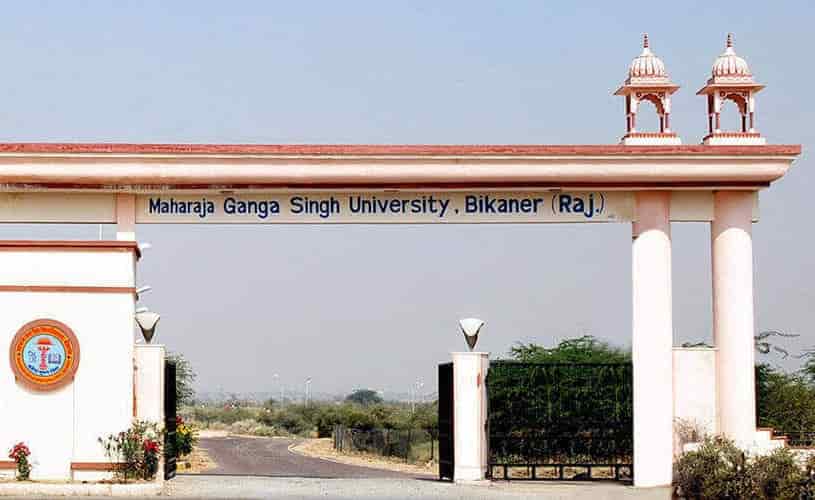
Introduction about Ph.D. in Economics at Maharaja Ganga Singh University
Embarking on a Ph.D. in Economics at Maharaja Ganga Singh University (MGSU), Bikaner, is more than just an academic pursuit; it is a transformative journey into the heart of global and local economic dynamics. For professionals seeking to influence policy, lead academic discourse, or master the complexities of financial markets, MGSU offers a rigorous environment where intellectual curiosity meets structured research. This program is designed to cultivate experts who can navigate the intricacies of econometrics, development economics, and fiscal policies, contributing meaningfully to the socio-economic fabric of society. Through a Ph.D., you transition from being a consumer of knowledge to a creator of insights that can reshape industries and governance.
Ph.D Admission 2026-2027 & Writing Support Services by Shiksha Research
Navigating the doctoral landscape requires precision and dedication. Whether you are aiming for a career in top-tier research institutions or high-level consultancy, having professional Editing and Proofreading Services ensures your findings are articulated with the clarity and academic rigor demanded by international standards. At MGSU, the Department of Economics provides a blend of traditional values and modern analytical techniques, making it an ideal destination for scholars dedicated to excellence.
Eligibility Criteria for Ph.D. in Economics at Maharaja Ganga Singh University
To secure a seat in this prestigious program, candidates must meet stringent academic benchmarks. The university ensures that only the most dedicated scholars enter the research phase. The primary eligibility requirements are as follows:
- Educational Qualification: Candidates must possess a Master?s degree in Economics or a closely related discipline from a recognized university.
- Minimum Percentage: A minimum of 55% marks (or an equivalent grade) in the postgraduate degree is mandatory.
- Relaxation: A relaxation of 5% is granted to candidates belonging to SC/ST/OBC (non-creamy layer) and PwD categories, as per UGC guidelines.
- Exemption: Candidates who have successfully cleared the UGC-NET (including JRF), SLET, or possess an M.Phil. through a regular program may be exempted from the entrance test portion as per the prevailing university statutes.
Entrance Exam for Ph.D. in Economics at Maharaja Ganga Singh University
The MGSU Research Entrance Test (RET) is the gateway to your doctoral dreams. This examination is designed to test your analytical depth and your grasp of economic theories. The entrance exam typically consists of two distinct parts:
- Research Methodology: This section evaluates your understanding of quantitative techniques, data analysis, and the philosophical foundations of research.
- Subject-Specific Analysis: Focuses on Microeconomics, Macroeconomics, International Trade, and Public Finance.
For candidates who need support in refining their application or navigating the selection hurdles, seeking professional PhD Admission Assistance can provide the competitive edge needed to secure a spot in this highly sought-after program.
Fee Structure for Ph.D. in Economics at Maharaja Ganga Singh University
While MGSU is committed to making quality higher education accessible, it maintain high standards of research infrastructure. The fee structure is categorized into various components from registration to thesis submission. Below is an approximate breakdown of the expenses involved:
| Fee Component | Approximate Amount (INR) | Payment Frequency |
|---|---|---|
| Entrance Examination Fee | 2,000 - 3,000 | One-time |
| Admission/Registration Fee | 5,000 - 10,000 | One-time |
| Coursework Fee | 15,000 - 20,000 | One-time |
| Annual Tuition Fee | 8,000 - 12,000 | Per Annum |
| Library and Lab Charges | 2,000 - 4,000 | Per Annum |
| Thesis Submission Fee | 10,000 - 15,000 | One-time (at end) |
Admission Process for Ph.D. in Economics at Maharaja Ganga Singh University
The admission process at MGSU is transparent and merit-based, following a multi-step verification to ensure research quality. It begins with an official notification on the university portal, followed by:
- Application Submission: Candidates must fill the online application form with the required academic credentials.
- Entrance Testing: Eligible candidates appear for the RET (Research Entrance Test).
- Personal Interview: Successful candidates in the entrance test are invited for an interview. Here, you will discuss your research interests and the feasibility of your proposed study.
- Guide Allocation: Based on the interview performance and the availability of supervisors, a research guide is assigned to the candidate.
During the interview, having a well-defined plan is crucial. Professionals often utilize PhD Topic Selection and Proposal Assistance to ensure their research idea is both innovative and academically sound.
Ph.D. Subjects and Specializations in Economics at Maharaja Ganga Singh University
Economics is a vast field, and MGSU allows scholars to specialize in niche areas that align with current market demands. Specialization allows for deep focus, making the researcher an authority in a specific domain. Available specializations include:
- International Economics: Focusing on trade flows and currency dynamics.
- Agricultural Economics: Crucial for the local economy of Bikaner and Rajasthan.
- Labor Economics: Investigating employment trends and human capital.
- Financial Economics: Studying market efficiency and banking structures.
- Environmental Economics: Analyzing the impact of economic activities on ecology.
Research Areas in Economics at Maharaja Ganga Singh University
The university encourages research that bridges the gap between theory and practice. Scholars are currently exploring diverse research areas such as:
Rural Development & Sustainable Agriculture: Exploring how technological interventions can boost the rural economy. Econometric Modeling: Using statistics to predict market trends. Public Policy Analysis: Evaluating the effectiveness of government schemes in poverty alleviation. For those whose work leads to high-impact discoveries, securing Patent Filing and Support Services may be necessary to protect original methodologies or economic models.
Documents Required for Ph.D. in Economics at Maharaja Ganga Singh University
Candidates must ensure they have all necessary documentation ready for verification during the admission process:
- Mark sheets and Degrees of Class 10th, 12th, Graduation, and Post-Graduation.
- Original Migration Certificate.
- Caste Certificate (if applicable).
- UGC-NET/JRF/SLET Certificate (if applicable).
- No Objection Certificate (NOC) if the candidate is currently employed.
- A detailed Research Proposal (Synopsis).
- Recent passport-sized photographs and Valid ID proof.
Maharaja Ganga Singh University Ph.D. Syllabus for Economics
The Ph.D. journey at MGSU starts with a mandatory "Coursework" phase. The syllabus is designed to build a strong foundation for the thesis work ahead. It typically includes:
- Module I: Research Methodology: Ethics in research, literature review techniques, and bibliographies.
- Module II: Advanced Economic Theory: In-depth study of Micro and Macro economic theories.
- Module III: Quantitative Methods: Application of SPSS, R, or Stata in economic data interpretation.
- Module IV: Computer Applications: Use of digital tools for academic research and presentation.
How To Apply for Ph.D. in Economics at Maharaja Ganga Singh University
Following these steps will ensure a smooth application process:
- Visit the official MGSU Bikaner website.
- Navigate to the 'Research' or 'Admission' section to find the Ph.D. RET link.
- Register with your email and mobile number.
- Fill the application form accurately, selecting 'Economics' as your subject.
- Upload scanned copies of required documents and your signature/photo.
- Pay the application fee via the integrated payment gateway.
- Submit the form and download the confirmation page for future reference.
Career Scope and Job Opportunities After Ph.D. in Economics from Maharaja Ganga Singh University
The career trajectory for a Ph.D. holder in Economics is exceptionally promising. Beyond academia, the expertise of an economist is invaluable in various sectors:
- Academia: Join as an Assistant Professor in prestigious universities and colleges.
- Policy Advisor: Work with government bodies like NITI Aayog or the Ministry of Finance.
- Financial Analyst: Lead consulting firms, banks, and investment houses.
- Economic Journalism: Provide expert commentary for global financial news outlets.
- International Organizations: Opportunities at the World Bank, IMF, or United Nations.
To reach these heights, your research must be visible. Utilizing Research Publication Support helps in getting your work published in Scopus-indexed or UGC-CARE listed journals, which is a vital step for career advancement. Additionally, for senior professionals or individuals with vast experience, there are pathways to explore Honorary Doctorate Programs to acknowledge their contributions to the field of economics.
Scholarship for Ph.D. in Economics at Maharaja Ganga Singh University
Financial assistance is available to support dedicated researchers. MGSU facilitates various scholarships including:
- UGC-JRF Fellowship: Substantial monthly stipend for those who have cleared the JRF.
- State Government Scholarships: Targeted at Rajasthan residents belonging to reserved categories.
- Post-Matric Scholarship: Available for eligible minority and OBC/SC/ST students.
- University Department Fellowships: Occasionally offered based on department-specific funding.
FAQs Regarding Ph.D. in Economics at Maharaja Ganga Singh University
Q1: What is the duration of the Ph.D. Economics program at MGSU?
A1: The minimum duration is three years, and the maximum is six years, including the coursework.
Q2: Is a regular appearance required for the coursework?
A2: Yes, the 6-month coursework is mandatory and usually requires regular attendance as per the university's research ordinance.
Q3: Can I pursue a Ph.D. in Economics while working?
A3: Yes, but you must provide a 'No Objection Certificate' (NOC) from your employer and complete the mandatory coursework.
Q4: How many seats are available each year?
A4: The number of seats varies annually based on the vacancy available under registered research supervisors.
Q5: What is the primary language of the thesis at MGSU?
A5: The thesis can generally be written in English or Hindi, depending on the research supervisor's approval and department guidelines.




