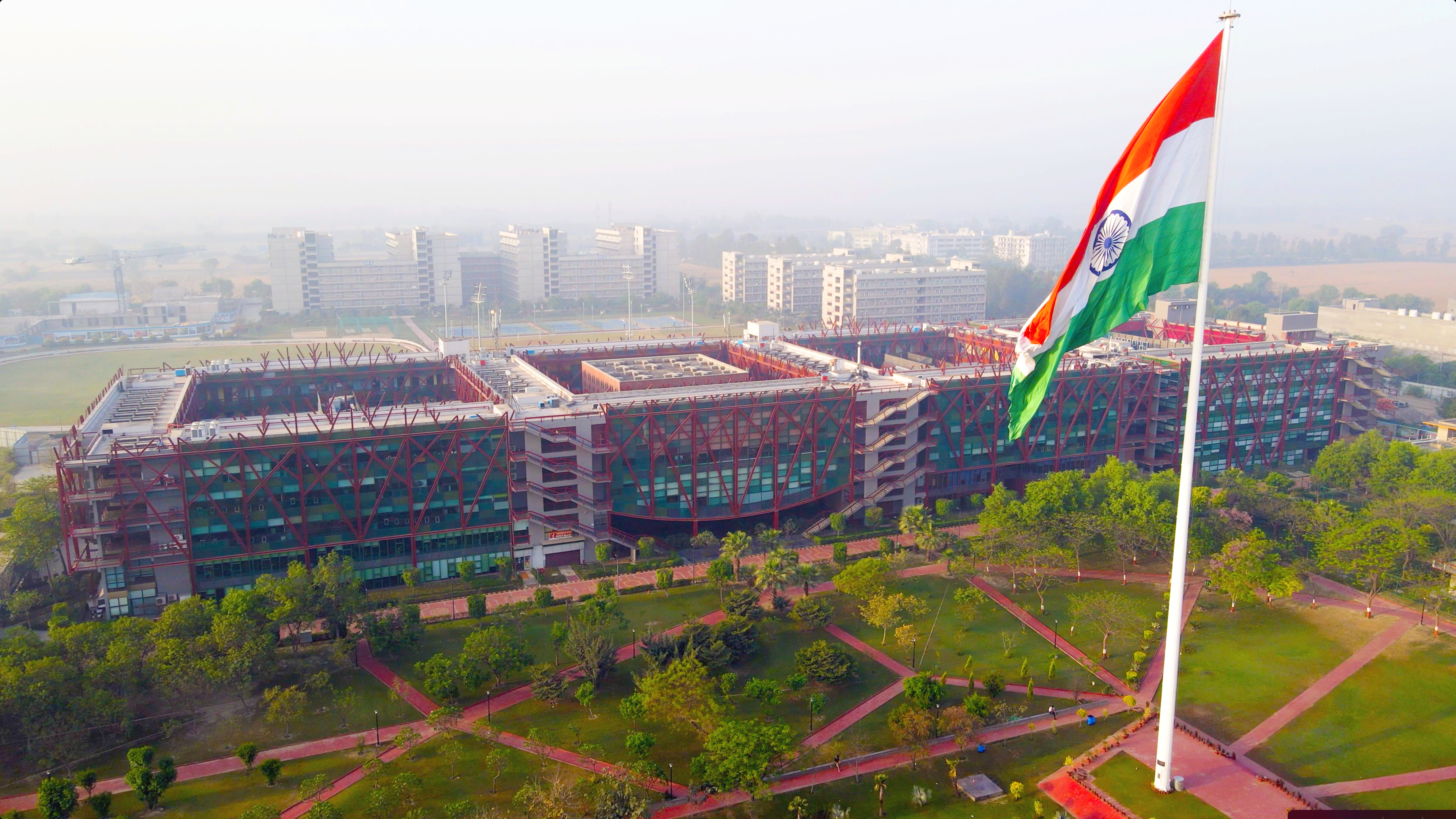
Introduction about Ph.D. in Economics at O.P. Jindal Global University
The Doctor of Philosophy (Ph.D.) in Economics at O.P. Jindal Global University (JGU) is a rigorous, research‑intensive program designed for professionals who aspire to become thought leaders, policy analysts, and academic scholars. With a curriculum rooted in contemporary economic theory, quantitative methods, and real‑world policy challenges, the program equips graduates to influence economic discourse at national and global levels. JGU’s world‑class faculty, state‑of‑the‑art research facilities, and strong industry linkages create an inspiring environment where curiosity transforms into impactful research.
Eligibility Criteria for Ph.D. in Economics at O.P. Jindal Global University
- Master’s degree (M.A., M.Sc., M.Com, MBA, or equivalent) with a minimum of 55% aggregate marks (or equivalent CGPA).
- Valid GATE, UGC‑NET, or CSIR‑NET scores are preferred but not mandatory.
- Applicants should have a solid foundation in micro‑economics, macro‑economics, econometrics, and quantitative analysis.
- Professional experience of at least 2 years in research, policy‑making, banking, consulting, or related fields adds significant advantage.
- English proficiency (IELTS/TOEFL) for international candidates.
Entrance Exam for Ph.D. in Economics at O.P. Jindal Global University
The entrance assessment comprises two components:
- Written Test: 90‑minute objective‑type test covering core economics concepts, mathematics, and statistics.
- Interview & Research Proposal Presentation: Shortlisted candidates present a concise research proposal (max 1,500 words) and undergo a panel interview to evaluate research aptitude and fit.
Candidates with valid GATE/UGC‑NET scores are exempted from the written test but must still appear for the interview.
Fee Structure for Ph.D. in Economics at O.P. Jindal Global University
| Component | Annual Fee (INR) | Notes |
|---|---|---|
| Tuition & Laboratory Charges | 1,80,000 | Includes access to JGU’s econometrics lab and digital libraries. |
| Registration & Examination Fee | 30,000 | One‑time fee payable at the time of admission. |
| Research & Publication Support | 20,000 | Covers conference participation and journal submission fees. |
| Infrastructure & Miscellaneous | 15,000 | Campus facilities, student activities, and welfare. |
| Total Approximate Cost (per year) | 2,45,000 | Subject to change based on university policy. |
Admission Process for Ph.D. in Economics at O.P. Jindal Global University
- Online Application: Fill the application form on the university portal, upload scanned documents, and pay the application fee.
- Document Verification: Upload academic transcripts, degree certificates, and proof of work experience.
- Entrance Test & Interview: Appear for the written test (if applicable) and attend the interview with a research proposal.
- Final Selection: Merit list based on academic record, test score, interview performance, and research proposal.
- Admission Confirmation: Accept the offer, pay the first year’s tuition, and complete enrollment formalities.
Ph.D. Subjects and Specializations in Economics at O.P. Jindal Global University
- Development Economics
- International Trade & Finance
- Monetary Economics & Policy
- Environmental & Resource Economics
- Behavioral Economics
- Health Economics
- Econometrics & Data Analytics
Research Areas in Economics at O.P. Jindal Global University
Faculty members guide research across a diverse set of themes, including:
- Impact of digital currencies on emerging markets.
- Econometric modeling of climate change mitigation policies.
- Gender disparities in labor markets.
- Fiscal decentralization and regional development.
- Artificial intelligence in financial forecasting.
- Public health financing and policy evaluation.
Documents Required for Ph.D. in Economics at O.P. Jindal Global University
| Document | Details |
|---|---|
| Academic Transcripts | Original and certified copies of all higher‑education degrees. |
| Degree Certificates | Proof of graduation for Master’s degree. |
| Entrance Test Scorecard | GATE/UGC‑NET/CSIR‑NET (if applicable). |
| Research Proposal | 1,500‑word document outlining research objectives and methodology. |
| Curriculum Vitae | Professional experience, publications, and projects. |
| Identity Proof | Aadhaar / Passport / Driving License. |
| Passport‑Size Photographs | Three recent color photographs. |
O.P. Jindal Global University Ph.D. Syllabus for Economics
The syllabus is structured into core modules, electives, and research milestones:
- Core Modules (Year 1): Advanced Microeconomics, Advanced Macroeconomics, Econometric Theory, Research Methodology, and Academic Writing.
- Electives (Year 2‑3): Choose 3‑4 electives based on specialization – e.g., Financial Economics, Labour Economics, Environmental Economics, etc.
- Comprehensive Exams: Conducted at the end of Year 2 to assess mastery of core subjects.
- Thesis Phase: Original research, data collection, analysis, and dissertation submission by the end of Year 4.
How To Apply for Ph.D. in Economics at O.P. Jindal Global University
Follow these steps to submit a successful application:
- Visit the official JGU admissions portal and create a user account.
- Select “Ph.D. – Economics” from the program dropdown.
- Complete the personal, academic, and professional sections.
- Upload the required documents as listed in the “Documents Required” table.
- Pay the non‑refundable application fee (INR 5,000).
- Submit the research proposal and wait for the admit card for the entrance test.
- After the test, attend the interview (online or on‑campus) and await the final selection list.
Career Scope and Job Opportunities After Ph.D. in Economics from O.P. Jindal Global University
Graduates emerge as highly sought‑after experts for a spectrum of roles:
- University Professor or Lecturer (Assistant/Associate/Full Professor).
- Senior Economist at central banks, RBI, World Bank, IMF, or Asian Development Bank.
- Policy Analyst in government ministries, think‑tanks, and NGOs.
- Chief Data Scientist / Quantitative Analyst in financial institutions.
- Research Director in multinational consulting firms (e.g., McKinsey, BCG).
- Independent consultant and author of high‑impact economic research.
According to recent placement data, Ph.D. economists command an average starting salary of INR 15‑20 lakh per annum, with rapid growth as experience and publications increase.
Scholarship for Ph.D. in Economics at O.P. Jindal Global University
JGU offers merit‑based and need‑based scholarships:
- JGU Merit Scholarship: Up to 50% waiver on tuition for top 10% rankers in the entrance test.
- Research Grant Scholarships: Funding for fieldwork, data purchase, and conference travel.
- Government Fellowships: Eligibility for UGC‑JRF, CSIR‑NET, and other central schemes.
- Industry Sponsored Scholarships: Partnerships with leading banks and consultancies providing stipends.
FAQs Regarding Ph.D. in Economics at O.P. Jindal Global University
- Q: Is a GATE score mandatory for admission?
- A: No. GATE/UGC‑NET scores are advantageous but not compulsory. Candidates can qualify through the university’s own entrance test.
- Q: How long does the Ph.D. program take?
- A: The regular duration is four years, extendable up to six years based on research progress.
- Q: Can I pursue the program part‑time while working?
- A: Yes. JGU offers a flexible part‑time mode with weekend seminars and remote supervision.
- Q: Are there opportunities for international collaborations?
- A: Absolutely. The university maintains MoUs with several foreign universities, allowing joint publications and exchange visits.
- Q: What language proficiency is required for international candidates?
- A: Minimum IELTS 6.5 or TOEFL iBT 80 is required, unless the candidate has completed a degree in English.




