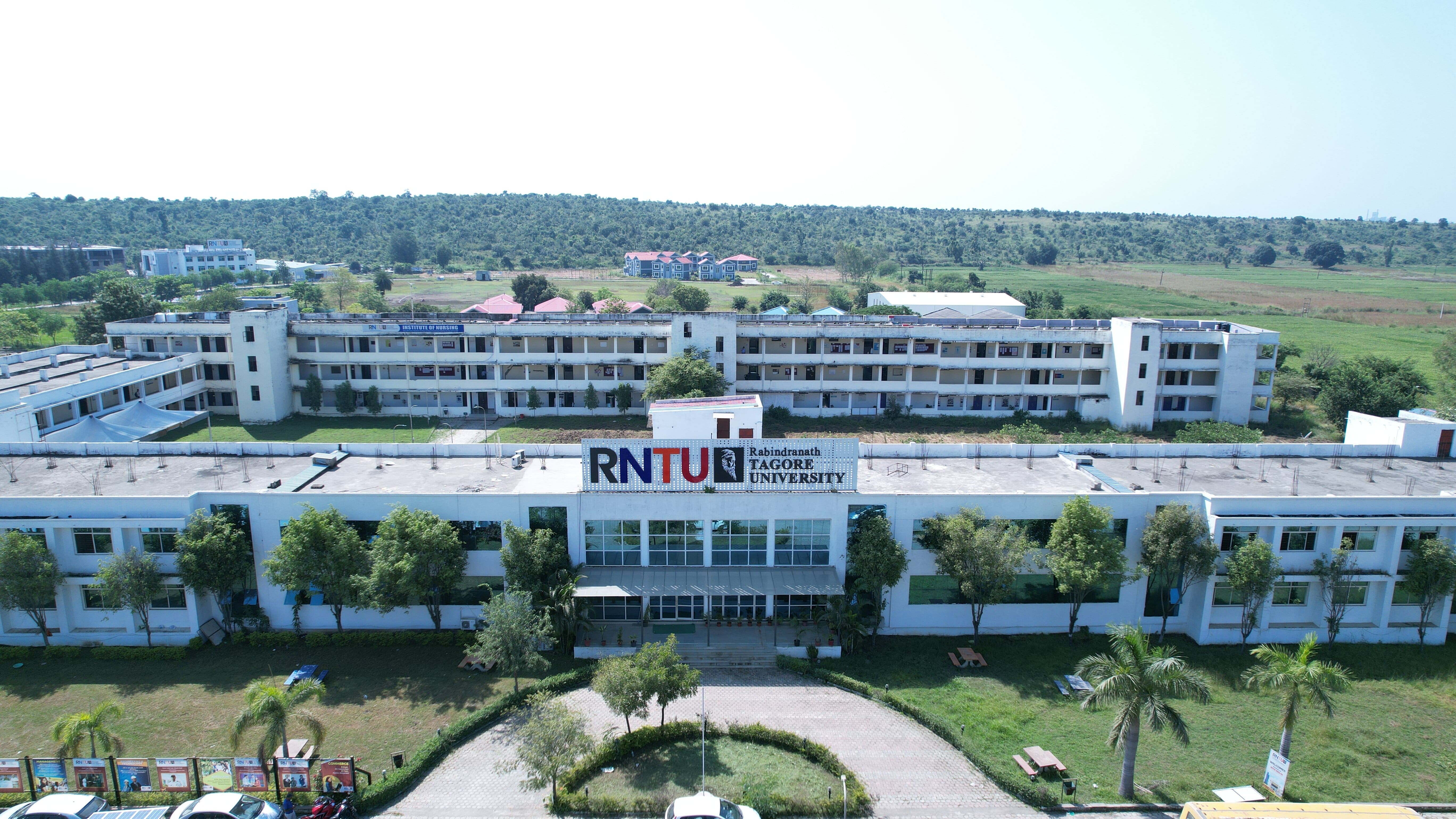
Ph.D. in Economics from Rabindranath Tagore University: Eligibility, Admission, Fee, Syllabus & Career
Introduction about Ph.D. in Economics at Rabindranath Tagore University
The Doctor of Philosophy (Ph.D.) in Economics at Rabindranath Tagore University (RTU) is a rigorous, research‑oriented program designed for ambitious professionals who aspire to become thought leaders, policy analysts, and academic scholars. With a legacy of interdisciplinary excellence, RTU offers state‑of‑the‑art facilities, seasoned faculty, and a vibrant intellectual community that nurtures innovative economic research. Whether you aim to influence macro‑policy, delve into development economics, or pioneer quantitative financial analysis, this doctoral journey equips you with the analytical depth and methodological rigor required to make impactful contributions in academia, industry, and government.
Eligibility Criteria for Ph.D. in Economics at Rabindranath Tagore University
Prospective candidates must fulfill the following minimum requirements:
- Master’s degree in Economics, Applied Economics, Finance, Statistics, or a closely related discipline with at least 55% aggregate (or equivalent CGPA).
- Valid score in any recognized national-level entrance test (e.g., UGC NET, CSIR NET, GATE) or the university’s own screening test.
- Proficiency in English (IELTS/TOEFL scores are optional but advantageous for international scholars).
- Demonstrated research interest through a Statement of Purpose (SOP) and a research proposal of 1,500‑2,000 words.
Entrance Exam for Ph.D. in Economics at Rabindranath Tagore University
RTU conducts a two‑stage entrance process:
- Written Test: 90‑minute objective‑type paper covering micro‑economics, macro‑economics, econometrics, and quantitative methods.
- Interview & Presentation: Candidates present their research proposal, followed by a viva‑voce to assess conceptual clarity, analytical skills, and alignment with faculty expertise.
Applicants who hold a valid UGC NET/CSIR NET qualification are exempted from the written test and directly advance to the interview stage.
Fee Structure for Ph.D. in Economics at Rabindranath Tagore University
| Component | Amount (INR) | Notes |
|---|---|---|
| Application Processing Fee | 5,000 | Non‑refundable, payable at the time of online submission |
| Annual Tuition & Laboratory Charges | 45,000 | Includes access to the university’s economics data labs |
| Registration & Examination Fee | 12,000 | Charged each academic year |
| Thesis Submission & Binding Fee | 8,000 | Payable in the final year |
| Total Approximate Cost (4‑Year Program) | 212,000 | Subject to revision based on inflation and policy updates |
Students may avail of merit‑based scholarships, research assistantships, and external funding to offset tuition fees.
Admission Process for Ph.D. in Economics at Rabindranath Tagore University
Follow these steps to secure admission:
- Complete the online application form available on the RTU portal.
- Upload academic transcripts, a passport‑size photograph, and a valid ID proof.
- Submit the research proposal and Statement of Purpose in PDF format.
- Pay the non‑refundable application fee.
- Schedule and appear for the written entrance test (if applicable).
- Attend the interview and presentation session.
- Receive the admission offer letter via email, along with guidance on fee payment and enrollment.
Ph.D. Subjects and Specializations in Economics at Rabindranath Tagore University
RTU’s doctoral program offers a broad spectrum of specializations, including:
- Development Economics
- International Trade and Finance
- Environmental and Resource Economics
- Behavioral and Experimental Economics
- Health Economics
- Econometrics and Quantitative Methods
- Public Policy and Governance
Research Areas in Economics at Rabindranath Tagore University
Faculty members guide research in cutting‑edge domains such as:
- Digital Economy and FinTech Innovations
- Poverty Alleviation and Inclusive Growth
- Climate Change Economics and Sustainable Development
- Labor Market Dynamics in Emerging Economies
- Macroeconomic Modeling for Policy Design
- Applied Econometrics for Big Data Analytics
Documents Required for Ph.D. in Economics at Rabindranath Tagore University
| Document | Format | Remarks |
|---|---|---|
| Completed Application Form | Online PDF | Signature required |
| Academic Transcripts (Post‑Graduation) | Scanned PDF (certified) | Include all semesters |
| Research Proposal & SOP | PDF (max 2 MB) | Original work, plagiarism‑free |
| Entrance Exam Score Card (if applicable) | UGC NET/CSIR NET/GATE recognized | |
| Identity Proof (Aadhaar/Passport) | Scanned PDF | Valid and current |
| Photographs | JPEG (200 KB) | 2 recent passport size |
Rabindranath Tagore University Ph.D. Syllabus for Economics
The syllabus is structured to blend core theoretical foundations with advanced research methodology:
- Advanced Microeconomic Theory
- Advanced Macroeconomic Theory
- Econometric Modelling and Data Analysis
- Research Methodology & Academic Writing
- Specialized Electives (choose 2): Development Economics, Financial Economics, Environmental Economics, etc.
- Seminar Series & Publication Workshops
- Thesis Research & Defense
How To Apply for Ph.D. in Economics at Rabindranath Tagore University
Applying is straightforward:
- Visit the official RTU admissions portal.
- Register using a valid email address and create a password.
- Fill in personal, academic, and professional details.
- Upload the required documents (refer to the Documents Required table).
- Pay the application fee through the secured payment gateway.
- Submit the application and note the generated Application ID for future reference.
For additional assistance, prospective candidates can explore Thesis and Dissertation Writing Services or consult the university’s Research Data Analysis Services.
Career Scope and Job Opportunities After Ph.D. in Economics from Rabindranath Tagore University
Graduates enjoy a wide spectrum of career pathways:
- Academic Positions: Assistant Professor, Associate Professor, or Lecturer at premier universities and research institutes.
- Research Analyst: Think‑tanks, policy research organizations, and international agencies such as the World Bank, IMF, and UN.
- Economic Consultant: Advisory roles in multinational corporations, financial institutions, and government ministries.
- Data Scientist / Econometrician: Leveraging big‑data analytics in sectors like fintech, e‑commerce, and healthcare.
- Public Policy Designer: Crafting evidence‑based policies for sustainable development and economic reform.
The program also prepares scholars for post‑doctoral fellowships and industry‑academia collaborations.
Scholarship for Ph.D. in Economics at Rabindranath Tagore University
RTU offers several merit‑based and need‑based scholarships:
- RTU Excellence Scholarship




