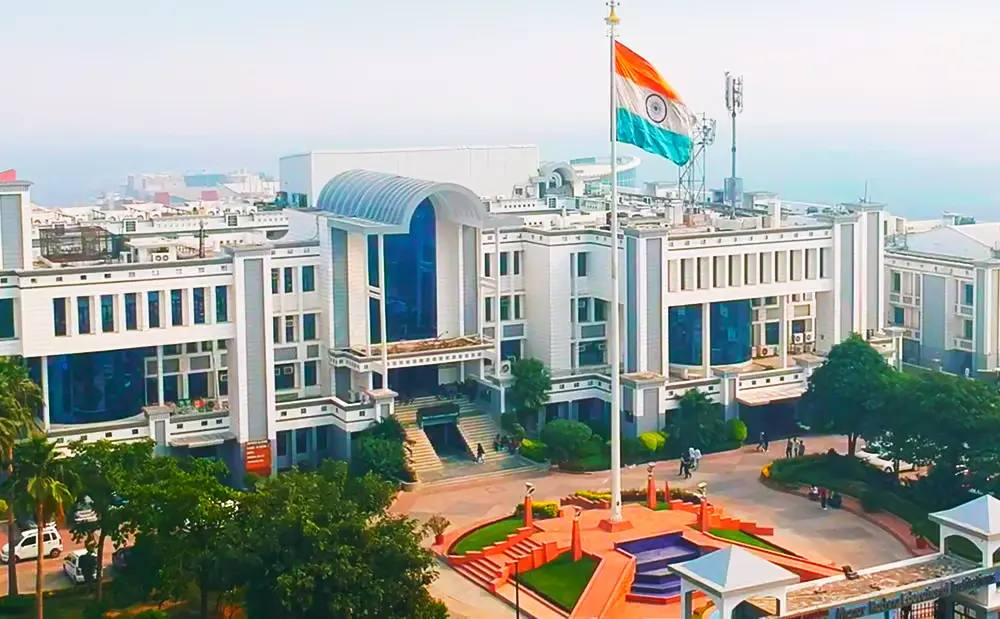
Ph.D. in Education from Manav Rachna University: Eligibility, Entrance Exam, Fee Structure, Admission Process, Subjects, Research Areas, Syllabus, Scholarship & Career Scope
Introduction about Ph.D. in Education at Manav Rachna University
Manav Rachna University (MRU) stands as a beacon of academic excellence, offering a research?driven Ph.D. in Education that empowers professionals to become visionary leaders in the learning ecosystem. With a curriculum designed around contemporary pedagogical challenges, the program nurtures critical thinking, innovative research, and transformational leadership. Whether you aim to influence policy, design cutting?edge curricula, or spearhead educational technology initiatives, MRU's doctoral pathway equips you with the scholarly rigor and practical insight needed to shape the future of education.
Ph.D Admission 2026-2027 & Writing Support Services by Shiksha Research
Eligibility Criteria for Ph.D. in Education at Manav Rachna University
- Master?s degree in Education or a related discipline with a minimum aggregate of 55% (or 5.0 CGPA on a 10?point scale).
- Qualifying national level examinations such as UGC?NET, CSIR?NET, or a university?conducted entrance test.
- For candidates holding a Ph.D. in another field, a minimum of two years of professional experience in the education sector is required.
- International applicants must provide a recognized equivalence certificate for their previous qualifications.
Entrance Exam for Ph.D. in Education at Manav Rachna University
Prospective scholars are required to appear for the MRU Ph.D. Entrance Examination, which assesses:
- Research aptitude and methodology.
- Core knowledge in educational theories, policies, and practices.
- Analytical and quantitative skills relevant to educational research.
The exam comprises Multiple Choice Questions (MCQs) and a descriptive component. Successful candidates are invited for a personal interview that evaluates research interests, communication skills, and alignment with MRU?s research priorities.
Fee Structure for Ph.D. in Education at Manav Rachna University
| Component | Annual Fee (INR) | One?Time Charges |
|---|---|---|
| Tuition & Lecture Fees | 55,000 | ? |
| Library & Laboratory Access | 5,000 | ? |
| Examination & Evaluation Fees | 3,000 | ? |
| Registration & Admission Processing | ? | 12,000 |
| Miscellaneous (Online Platform, Campus Facilities) | 2,000 | ? |
| Total (First Year) | 65,000 | 12,000 |
Admission Process for Ph.D. in Education at Manav Rachna University
- Online Application: Submit the digital application form via the MRU portal, attaching scanned copies of academic certificates.
- Entrance Examination: Appear for the MRU Ph.D. Entrance Exam (or submit a valid UGC?NET/CSIR?NET score).
- Interview & Proposal Review: Qualified candidates are invited for a personal interview and asked to present a concise research proposal.
- Final Selection & Offer Letter: Successful applicants receive an admission offer detailing fee payment schedules and enrollment dates.
- Enrollment & Orientation: Complete fee payment, submit original documents for verification, and attend the mandatory orientation program.
Ph.D. Subjects and Specializations in Education at Manav Rachna University
MRU offers a diverse array of specialization tracks to align with evolving educational demands:
- Curriculum Design & Development
- Educational Technology & E?Learning
- Policy Analysis & Administration
- Special Education & Inclusive Practices
- Higher Education Management
- Psychology of Learning & Motivation
- Assessment & Evaluation Strategies
Research Areas in Education at Manav Rachna University
Faculty mentors guide doctoral candidates through cutting?edge research domains, including:
- Digital Pedagogy and Virtual Learning Environments.
- Impact of Artificial Intelligence on Teaching?Learning Processes.
- Equity, Access, and Social Justice in Education.
- Teacher Professional Development and Lifelong Learning.
- Learning Analytics and Data?Driven Decision Making.
- Community?Based Education Models.
- Neuroscience Applications in Classroom Settings.
Documents Required for Ph.D. in Education at Manav Rachna University
| Document | Format | Remarks |
|---|---|---|
| Completed Application Form | Upload through the portal. | |
| Academic Transcripts (10?12, Graduation, Post?Graduation) | Scanned copies (PDF/JPEG) | Attested by the issuing institution. |
| UGC?NET/CSIR?NET Scorecard (if applicable) | Original scorecard required for verification. | |
| Research Proposal (max 1500 words) | Word/PDF | Outline objectives, methodology, and expected outcomes. |
| Curriculum Vitae (CV) | Include publications, conferences, and professional experience. | |
| Two Academic Reference Letters | PDF (signed) | From faculty familiar with your research potential. |
| Proof of Identity (Aadhaar/Passport) | Valid government?issued ID. |
Manav Rachna University Ph.D. Syllabus for Education
The doctoral syllabus is structured into three core phases:
- Foundational Coursework (Year 1): Research Methodology, Advanced Statistics, Educational Theories, and Ethics in Research.
- Specialized Modules (Year 2): Choose electives aligned with your specialization ? e.g., Digital Learning Environments, Policy Formulation, or Inclusive Education.
- Dissertation Phase (Years 3?4): Conduct original research, publish findings in peer?reviewed journals, and defend the thesis before a scholarly panel.
How To Apply for Ph.D. in Education at Manav Rachna University
Follow these streamlined steps to submit a successful application:
- Visit the official MRU Ph.D. Admissions portal.
- Register using your email address and create a secure password.
- Fill in personal, academic, and professional details accurately.
- Upload all required documents (refer to the Documents Required table).
- Pay the non?refundable application fee of INR 2,500 via online banking or credit card.
- Submit the form and note the application reference number for future correspondence.
- Prepare for the entrance exam and interview as per the schedule sent to your registered email.
Career Scope and Job Opportunities After Ph.D. in Education from Manav Rachna University
A doctorate in Education unlocks senior?level roles across academia, research, and industry:
- Professor / Associate Professor at leading universities.
- Director of Educational Research Institutes.
- Policy Analyst or Advisor in government ministries and NGOs.
- Chief Learning Officer (CLO) for corporate training divisions.
- Consultant for curriculum development firms and EdTech startups.
- Lead researcher for international education projects funded by agencies such as UNESCO, World Bank, or the Indian Council of Social Science Research (ICSSR).
The blend of scholarly depth and practical expertise makes Ph.D. graduates highly sought after for leadership positions that shape learning ecosystems nationally and globally.
Scholarship for Ph.D. in Education at Manav Rachna University
Merit?based scholarships are available to outstanding candidates, covering up to 50% of tuition fees. Additional financial aid includes:
- Research Grants for fieldwork and data collection.
- Travel Stipends for national and international conferences.
- Assistantship opportunities (Teaching / Research) with monthly stipends.
Applicants are encouraged to explore external funding avenues such as the Editing and Proofreading Services for manuscript preparation, and the PhD Admission Assistance to streamline their enrollment journey.
FAQs Regarding Ph.D. in Education at Manav Rachna University
- What is the minimum duration to complete the Ph.D. in Education?
- The program is designed for a minimum of 4 years, subject to successful completion of coursework, comprehensive exams, and dissertation defense.
- Can working professionals enroll in the program?
- Yes. MRU offers a part?time/online mode for working scholars, allowing flexibility while maintaining academic rigor.
- Is there a requirement for publishing before dissertation submission?
- While not mandatory, candidates are strongly encouraged to publish at least one peer?reviewed article, and many scholarships are contingent on publication records.
- How does the university support dissertation research?
- Students receive access to state?of?the?art labs, a dedicated research grant office, and mentorship from faculty who have secured national and international research funding.
- What career services are available after graduation?
- MRU?s Career Development Cell provides placement assistance, industry networking events, and alumni mentorship programs to facilitate smooth transitions into leadership roles.
Emb




