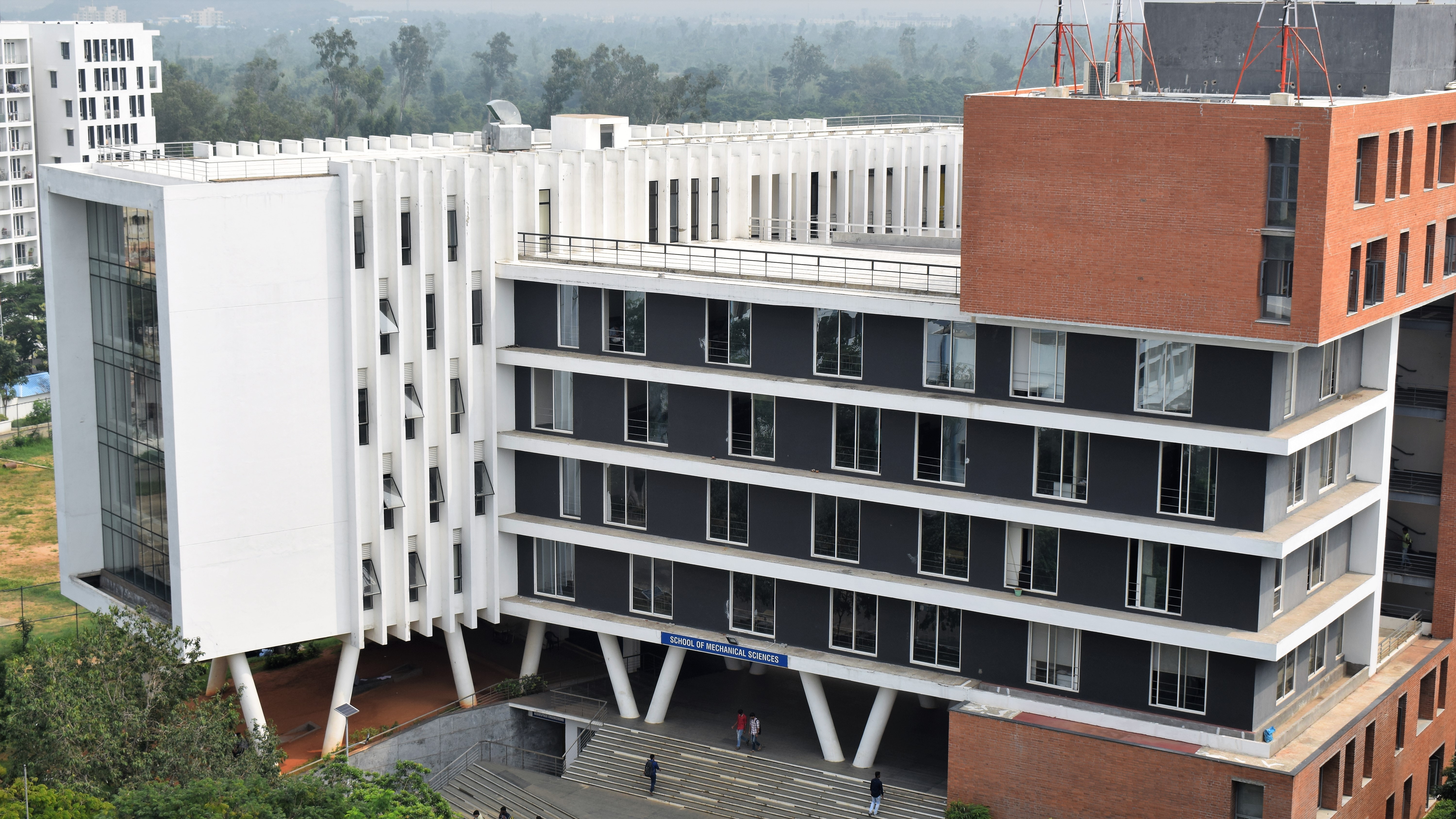
Introduction about Ph.D. in Electrical & Electronics Engineering at B.S. Abdur Rahman Crescent Institute of Science and Technology
The B.S. Abdur Rahman Crescent Institute of Science and Technology (BACIST) offers a cutting‑edge Ph.D. in Electrical & Electronics Engineering designed for seasoned professionals eager to lead research, innovate technologies, and shape the future of power systems, communication, and embedded intelligence. With state‑of‑the‑art laboratories, industry collaborations, and a faculty roster of internationally published scholars, BACIST provides an environment where theory meets real‑world impact.
Eligibility Criteria for Ph.D. in Electrical & Electronics Engineering at B.S. Abdur Rahman Crescent Institute of Science and Technology
Prospective candidates must satisfy one of the following conditions:
- Hold a Master’s degree (M.E., M.Tech., or M.Sc.) in Electrical Engineering, Electronics Engineering, Power Engineering, or a closely related discipline with a minimum aggregate of 55%.
- Possess a Bachelor’s degree (B.E./B.Tech.) with a minimum of 65% and a valid GATE score (Paper 31). Candidates with a GATE score are exempted from the entrance exam.
- Be a research scholar with a valid NET/SLET/UGC‑JRF qualification.
Professional experience of at least two years in a relevant R&D role is highly regarded.
Entrance Exam for Ph.D. in Electrical & Electronics Engineering at B.S. Abdur Rahman Crescent Institute of Science and Technology
Applicants without a valid GATE or NET score must appear for the institute’s own entrance test. The exam evaluates:
- Fundamental concepts in Circuit Theory, Electromagnetics, Control Systems, and Digital Signal Processing.
- Analytical skills through problem‑solving and case‑study questions.
- Research aptitude via a short essay on emerging trends such as IoT, smart grids, and AI‑driven power electronics.
The written test is followed by a personal interview and a research proposal presentation.
Fee Structure for Ph.D. in Electrical & Electronics Engineering at B.S. Abdur Rahman Crescent Institute of Science and Technology
| Component | Annual Fee (INR) |
|---|---|
| Tuition & Laboratory Charges | 45,000 |
| Library & Resource Center Access | 8,000 |
| Examination & Evaluation Fees | 5,000 |
| Research Project Grant (Optional) | 30,000* |
| Total Approximate Cost | 88,000 |
*The project grant is available only for candidates who secure a faculty‑sponsored research fellowship.
Admission Process for Ph.D. in Electrical & Electronics Engineering at B.S. Abdur Rahman Crescent Institute of Science and Technology
- Online application through the institute’s portal.
- Upload scanned copies of academic transcripts, GATE/NET scorecard (if any), and a detailed curriculum vitae.
- Submit a research proposal (max 1500 words) outlining problem statement, objectives, and methodology.
- Pay the non‑refundable application fee (₹1,500).
- Appear for the entrance examination (or submit GATE/NET score).
- Participate in the interview and proposal defense.
- Receive admission offer and complete enrollment within 15 days.
Ph.D. Subjects and Specializations in Electrical & Electronics Engineering at B.S. Abdur Rahman Crescent Institute of Science and Technology
The doctoral program allows concentration in the following domains:
- Power Systems and Smart Grids
- Renewable Energy Integration
- Power Electronics and Drives
- Embedded Systems and VLSI Design
- Signal Processing and Communication Networks
- Control Theory and Robotics
- Internet of Things (IoT) and Cyber‑Physical Systems
Research Areas in Electrical & Electronics Engineering at B.S. Abdur Rahman Crescent Institute of Science and Technology
Faculty members are actively pursuing projects funded by agencies such as DRDO, ISRO, and the Ministry of Power. Current research thrusts include:
- High‑efficiency photovoltaic converters.
- AI‑based fault detection in transmission lines.
- Low‑power wearable sensor networks.
- Quantum‑dot LEDs for next‑generation displays.
- Blockchain‑enabled micro‑grid energy trading.
Students are encouraged to collaborate with industry partners for applied research, leveraging the institute’s dedicated Research Data Analysis Services to handle complex datasets.
Documents Required for Ph.D. in Electrical & Electronics Engineering at B.S. Abdur Rahman Crescent Institute of Science and Technology
| Document | Details |
|---|---|
| Academic Transcripts | Original mark sheets of B.E./B.Tech. and M.E./M.Tech. |
| GATE/NET Score Card | Valid score card (if applicable). |
| Research Proposal | 1500‑word document signed by the prospective guide. |
| Curriculum Vitae | Professional experience, publications, patents. |
| Identity Proof | Aadhaar card / Passport. |
B.S. Abdur Rahman Crescent Institute Ph.D. Syllabus for Electrical & Electronics Engineering
The syllabus is structured into three phases:
- Core Coursework (Year 1) – Advanced Electromagnetics, Modern Control Systems, High‑Voltage Engineering, and Research Methodology.
- Comprehensive Exams (End of Year 1) – Written and oral assessments covering all core subjects.
- Dissertation Research (Years 2‑4) – Original contribution, publications in indexed journals, and a final viva‑voce.
Students may avail the institute’s Thesis and Dissertation Writing Services for guidance on structuring and polishing their final manuscript.
How To Apply for Ph.D. in Electrical & Electronics Engineering at B.S. Abdur Rahman Crescent Institute of Science and Technology
Follow these steps for a seamless application:
- Visit the official BACIST admission portal and click “Apply for Ph.D.”
- Register using a valid email address and create a secure password.
- Complete the online application form, ensuring all mandatory fields are filled.
- Upload the required PDFs (as listed in the Documents table).
- Pay the application fee via net banking or credit card.
- Submit the form and note the application reference number for future correspondence.
Career Scope and Job Opportunities After Ph.D. in Electrical & Electronics Engineering from B.S. Abdur Rahman Crescent Institute of Science and Technology
A doctorate from BACIST opens doors to high‑impact roles such as:
- Senior Research Engineer – leading R&D in power electronics firms.
- Faculty Positions – Assistant Professor or Associate Professor in premier universities.
- Chief Technology Officer (CTO) – steering technology strategy in IoT startups.
- Project Director – overseeing large‑scale smart‑grid deployments for utilities.
- Consultant – providing expertise to governmental agencies on renewable energy policies.
According to recent placement data, 78% of Ph.D. graduates secure positions with a median salary of INR 12 lakhs per annum within six months of graduation.
Scholarship for Ph.D. in Electrical & Electronics Engineering at B.S. Abdur Rahman Crescent Institute of Science and Technology
The institute offers merit‑based scholarships and research fellowships, including:
- Institute Merit Scholarship – Covers 100% tuition for candidates with >75% in their master’s degree.
- Industry Sponsored Fellowship – Up to INR 2,00,000 per annum for projects aligned with partner companies.
- Government Research Grant – Available for proposals approved by AICTE or DST.
Applicants may also leverage the institute’s Research Paper Writing Services to enhance publication quality, increasing the likelihood of external funding.
FAQs Regarding Ph.D. in Electrical & Electronics Engineering at B.S. Abdur Rahman Crescent Institute of Science and Technology
- Q1: Is a GATE score mandatory?
- A: No. While a valid GATE/NET score provides direct admission, candidates can qualify through the institute’s entrance exam.
- Q2: How long does the Ph.D. program take?
- A: The minimum duration is 3 years, extendable up to 5 years based on research progress.
- Q3: Can I pursue the doctorate part‑time while working?
- A: Yes, BACIST offers a flexible part‑time schedule for industry professionals, subject to approval by the supervising guide.
- Q4: What support is available for publishing my research?
- A: The institute provides access to the Questionnaire Design and Development tool for survey‑based studies and also offers editorial assistance through its in‑house research support unit.
- Q5: Are there any age restrictions?
- A: No explicit age limit,




