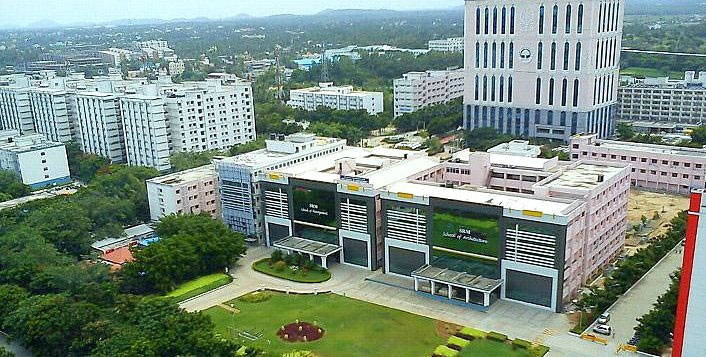
Introduction about Ph.D. in Electrical & Electronics Engineering at SRM University
Embarking on a doctoral journey in Electrical & Electronics Engineering at SRM University unlocks a realm of innovation, cutting‑edge research, and leadership opportunities. The program is meticulously designed for seasoned professionals who aspire to become thought‑leaders, pioneering advanced solutions in power systems, communications, embedded systems, and intelligent electronics. With state‑of‑the‑art laboratories, collaborations with industry giants, and a vibrant scholarly community, SRM University provides the ideal ecosystem to transform curiosity into impactful discoveries.
Eligibility Criteria for Ph.D. in Electrical & Electronics Engineering at SRM University
Prospective candidates must satisfy the following baseline requirements:
- Hold a Master’s degree (M.E., M.Tech., M.Sc.) in Electrical & Electronics Engineering or a closely related discipline with a minimum aggregate of 55% (or equivalent CGPA of 5.5/10).
- Candidates with a B.E./B.Tech. degree (minimum 65% aggregate) are eligible if they have published at least two research papers in peer‑reviewed journals or conferences.
- Valid GATE score (Electrical Engineering) is advantageous but not mandatory.
- Proficiency in English (IELTS/TOEFL) for international scholars.
Entrance Exam for Ph.D. in Electrical & Electronics Engineering at SRM University
SRM University conducts a comprehensive entrance examination to assess the analytical and research aptitude of candidates. The exam comprises:
- Paper‑I: General Aptitude & English (30 marks)
- Paper‑II: Core Electrical & Electronics Engineering concepts (70 marks)
- Paper‑III: Research Methodology & Proposal Presentation (30 marks, interview‑based)
The selection is based on a weighted score of written exam (70%) and interview (30%). Candidates with a valid GATE score may receive a relaxation in the written component.
Fee Structure for Ph.D. in Electrical & Electronics Engineering at SRM University
| Component | Annual Fee (INR) | One‑Time Fee (INR) |
|---|---|---|
| Tuition & Laboratory Charges | 1,40,000 | — |
| Registration & Examination Fee | — | 30,000 |
| Library & Digital Resources | 10,000 | — |
| Infrastructure & Sports Facility | 5,000 | — |
| Total (per year) | 1,55,000 | 30,000 |
Financial assistance in the form of teaching assistantships, research grants, and scholarships is available for meritorious candidates.
Admission Process for Ph.D. in Electrical & Electronics Engineering at SRM University
The admission journey follows a transparent, multi‑step pathway:
- Online Application: Submit the digital application form through the university portal, uploading academic transcripts and a research proposal.
- Document Verification: The Admissions Committee verifies eligibility, publications, and GATE scores.
- Entrance Examination: Qualifying candidates sit for the SRM Ph.D. entrance test.
- Interview & Proposal Defense: A panel of faculty members evaluates research interests and communication skills.
- Final Offer Letter: Successful candidates receive an admission letter with fee details and enrollment instructions.
Ph.D. Subjects and Specializations in Electrical & Electronics Engineering at SRM University
Students can tailor their doctoral research across several cutting‑edge specializations, including:
- Power Systems & Smart Grids
- Renewable Energy Conversion
- Signal Processing & Communications
- VLSI Design & Embedded Systems
- Internet of Things (IoT) and Cyber‑Physical Systems
- Control Systems & Robotics
- Artificial Intelligence in Electronics
Research Areas in Electrical & Electronics Engineering at SRM University
SRM University fosters interdisciplinary research that bridges theory and industry. Prominent research themes include:
- Grid‑Edge Integration and Energy Storage
- High‑Frequency Power Electronics
- 5G/6G Wireless Communication Systems
- Neural Networks for Fault Diagnosis
- Quantum Computing Hardware
- Biomedical Instrumentation and Wearable Sensors
- Advanced Antenna Design for Satellite Communications
Students are encouraged to collaborate with the university’s Research Paper Writing Services to publish findings in high‑impact journals.
Documents Required for Ph.D. in Electrical & Electronics Engineering at SRM University
| Document | Details |
|---|---|
| Academic Transcripts | Original degree certificates & mark sheets of all qualifications. |
| Research Proposal | 2‑page abstract outlining objectives, methodology, and expected outcomes. |
| Curriculum Vitae | Professional experience, publications, patents, and project work. |
| GATE Scorecard (if applicable) | Official score report for Electrical Engineering. |
| Letter of Recommendation (2) | From academic supervisors or industry mentors. |
| Identity Proof | Aadhar, Passport, or Driving License. |
SRM University Ph.D. Syllabus for Electrical & Electronics Engineering
The doctoral syllabus is research‑driven and comprises the following core modules:
- Advanced Power System Analysis
- Modern Communication Theory
- Digital Signal Processing Techniques
- Micro‑Nano Electronics
- Research Methodology & Ethics
- Seminar & Publication Practices
Students may also enroll in elective workshops covering Research Data Analysis Services and emerging software tools.
How To Apply for Ph.D. in Electrical & Electronics Engineering at SRM University
Follow these steps to submit a successful application:
- Visit the official SRM University admissions portal.
- Create an account and fill in personal and academic details.
- Upload scanned copies of all required documents.
- Enter a concise research proposal (max 500 words).
- Pay the non‑refundable application fee of INR 2,500.
- Submit the form and note the generated application ID for future correspondence.
Career Scope and Job Opportunities After Ph.D. in Electrical & Electronics Engineering from SRM University
Graduates emerge as experts equipped for high‑impact roles such as:
- Senior Research Scientist in national labs or R&D centers.
- Professor or Department Head at premier engineering institutions.
- Chief Technology Officer (CTO) in renewable energy startups.
- Lead Systems Engineer in aerospace and defense firms.
- Consultant for government policy on smart grid implementation.
The robust industry connections of SRM University ensure placement pipelines, funded projects, and collaborative patents.
Scholarship for Ph.D. in Electrical & Electronics Engineering at SRM University
Merit‑based scholarships covering up to 100% of tuition fees are awarded to candidates with outstanding academic records and research potential. Additionally, the university offers:
- Teaching Assistantship (TA) – Stipend of INR 15,000 per month.
- Research Assistantship (RA) – Project‑specific funding ranging from INR 25,000 to 45,000 per month.
- External Fellowships – Guidance on applying for CSIR, UGC, and industry-sponsored grants.
Applicants are encouraged to explore the Thesis and Dissertation Writing Services for assistance in preparing high‑quality dissertations that meet scholarship criteria.
FAQs Regarding Ph.D. in Electrical & Electronics Engineering at SRM University
- Q1: What is the minimum duration of the Ph.D. program?
- A: The standard duration is 3 years, extendable up to 5 years based on research progress.
- Q2: Can I pursue the Ph.D. part‑time while working?
- A: Yes, SRM University offers a flexible part‑time mode with evening seminars and online coursework.
- Q3: Is there a provision for publishing my thesis internationally?
- A: The university maintains collaborations with reputed journals and provides support through its Questionnaire Design and Development team for comprehensive data collection.
- Q4: How many publications are required to complete the degree?
- A: Candidates must submit at least two papers in indexed journals and present one at a recognized conference.
- Q5: Are there any age restrictions?
- A: No explicit age limit, but candidates should be able to meet the rigorous research demands.




