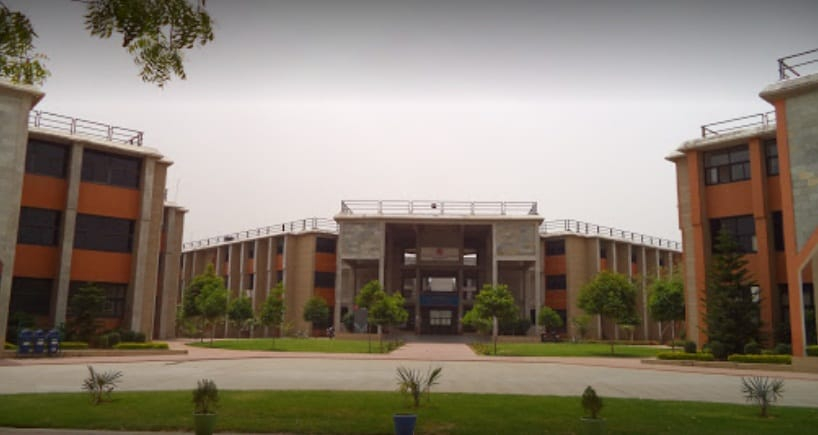
Ph.D. in Electrical Engineering from Ganpat University: Eligibility, Entrance Exam, Fee Structure, Admission Process, Subjects, Research Areas, Syllabus, Scholarship & Career Scope
Introduction about Ph.D. in Electrical Engineering at Ganpat University
The Doctor of Philosophy (Ph.D.) in Electrical Engineering at Ganpat University stands as a beacon for ambitious professionals seeking to push the frontiers of power systems, signal processing, and emerging intelligent technologies. The program blends rigorous coursework with cutting‑edge research, fostering innovators who can transform industries ranging from renewable energy to advanced telecommunications. With state‑of‑the‑art laboratories, collaborative industry partnerships, and a faculty distinguished for patents and publications, Ganpat University empowers scholars to convert academic insight into real‑world impact.
Eligibility Criteria for Ph.D. in Electrical Engineering at Ganpat University
Prospective candidates must demonstrate a solid academic foundation and research aptitude. The core eligibility requirements are:
- Master’s Degree: A minimum of 55% aggregate in Electrical Engineering, Electronics & Communication, Power Engineering, or a closely related discipline from a recognized university.
- Qualifying Entrance Test: A valid score in GATE, UGAT, or the university’s own Ph.D. entrance exam.
- Research Proposal: Submission of a concise research proposal (max 1500 words) outlining objectives, methodology, and expected contributions.
- Work Experience (Optional): Professionals with at least 2 years of relevant industry experience may be considered for direct interview based admission.
The university also evaluates candidates on publications, conference presentations, and prior project experience, ensuring a holistic view of research potential.
Entrance Exam for Ph.D. in Electrical Engineering at Ganpat University
Ganpat University conducts a two‑stage entrance evaluation:
- Written Test: A 90‑minute examination covering core Electrical Engineering concepts, mathematics, research methodology, and analytical reasoning.
- Interview & Presentation: Shortlisted candidates present their research proposal before a panel of experts, followed by a Q&A session to assess depth of knowledge and originality.
Applicants holding a valid GATE or UGAT score are exempted from the written test and proceed directly to the interview stage.
Fee Structure for Ph.D. in Electrical Engineering at Ganpat University
| Component | Annual Fee (INR) | One‑Time Charges |
|---|---|---|
| Tuition & Laboratory Fees | 45,000 | — |
| Registration & Examination Fee | 10,000 | — |
| Library & Digital Resource Access | 5,000 | — |
| Health & Insurance (First Year) | — | 8,000 |
| Scholarship Administration (if applicable) | — | 2,000 |
| Total Approximate Cost (3‑Year Program) | 180,000 | 10,000 |
All fees are subject to revision in accordance with the university’s annual financial policy. Candidates are encouraged to explore merit‑based scholarships and research grants to offset expenses.
Admission Process for Ph.D. in Electrical Engineering at Ganpat University
The admission journey is streamlined into distinct phases:
- Online Application: Complete the digital application form on the university portal, upload academic transcripts, GATE/UGAT scores, and the research proposal.
- Document Verification: Submit notarized copies of degrees, mark sheets, and identity proof for validation.
- Entrance Evaluation: Appear for the written test (if required) and the interview/presentation.
- Selection & Offer Letter: Successful candidates receive an admission offer detailing supervision, fee schedule, and enrollment instructions.
- Enrollment & Orientation: Pay the requisite fees, complete the enrollment formalities, and attend a comprehensive orientation covering research ethics, campus facilities, and mentorship expectations.
Applications are accepted twice a year – Spring (January–March) and Autumn (July–September). Early submission is advised to secure a slot with the desired faculty guide.
Ph.D. Subjects and Specializations in Electrical Engineering at Ganpat University
Ganpat University offers a spectrum of specialized research streams within Electrical Engineering, enabling scholars to align their doctoral pursuits with industry trends and personal interests:
- Power Systems & Smart Grids
- Renewable Energy Integration
- Power Electronics & Drives
- Signal Processing & Communications
- Embedded Systems & IoT
- VLSI Design & Nanoelectronics
- Machine Learning for Electrical Applications
- Control Systems & Automation
Research Areas in Electrical Engineering at Ganpat University
Faculty members spearhead research projects in collaboration with leading corporations and government agencies. Key research domains include:
- Smart Grid Analytics
- Development of predictive algorithms for load forecasting, fault detection, and demand‑response management.
- Advanced Renewable Energy Converters
- Design of high‑efficiency inverters for solar and wind applications, focusing on reliability and cost reduction.
- 5G/6G Communication Systems
- Exploration of millimeter‑wave antenna arrays, beamforming techniques, and low‑latency networking protocols.
- Biomedical Signal Processing
- Application of wavelet transforms and deep learning for diagnostic imaging and wearable health monitors.
- Industrial Automation & Robotics
- Integration of AI‑driven control strategies for autonomous manufacturing and predictive maintenance.
Students are encouraged to publish in reputed journals, file patents, and present at international conferences, reinforcing Ganpat University’s reputation as a research powerhouse.
Documents Required for Ph.D. in Electrical Engineering at Ganpat University
| Document | Details |
|---|---|
| Academic Transcripts | Original and certified copies of Bachelor’s and Master’s degree marksheets. |
| Entrance Exam Scorecard | GATE/UGAT or university‑conducted test score certificate. |
| Research Proposal | 1500‑word document outlining objectives, methodology, and expected outcomes. |
| Curriculum Vitae (CV) | Professional CV highlighting publications, projects, and work experience. |
| Identity Proof | Aadhaar card, passport, or driving license (photocopy). |
| Passport‑Size Photographs | Four recent color photographs (2”×2”). |
All documents must be submitted in PDF format with a maximum size of 2 MB per file.
Ganpat University Ph.D. Syllabus for Electrical Engineering
The doctoral syllabus is structured to balance theoretical depth with practical research exposure. Core components include:
- Research Methodology & Ethics (30 hrs)
- Advanced Topics in Power Systems (45 hrs)
- Signal Processing & Communications (45 hrs)
- Elective Modules (choose any two):
- Renewable Energy Technologies
- VLSI Design and Fabrication
- Artificial Intelligence in Electrical Engineering
- Industrial Automation and Robotics
- Seminar & Publication Workshops (30 hrs)
In parallel, students devote the majority of their time to original research culminating in a dissertation of at least 80 pages, followed by a viva‑voce defense.
How To Apply for Ph.D. in Electrical Engineering at Ganpat University
Follow these step‑by‑step instructions to submit a successful application:
- Visit the official Ganpat University admissions portal and click on “Ph.D. Programs – Electrical Engineering”.
- Create a user account with a valid email address and mobile number.
- Fill in personal, academic, and professional details accurately.
- Upload the required documents (transcripts, scorecards, research proposal, CV, ID proof, photographs).
- Pay the non‑refundable application fee of INR 2,500 via net banking or credit card.
- Submit the application and note the generated application reference number.
- Monitor the email for updates regarding entrance test schedules or interview invitations.
- Upon selection, complete the fee payment and enrollment formalities within the stipulated deadline.
For any queries, the university’s admissions helpdesk is available Monday to Friday, 9 am–5 pm.
Career Scope and Job Opportunities After Ph.D. in Electrical Engineering from Ganpat University
Graduates emerge as highly sought‑after experts equipped to lead innovation across multiple sectors:
- Academia: Assistant Professor, Research Fellow, Department Head. <li




