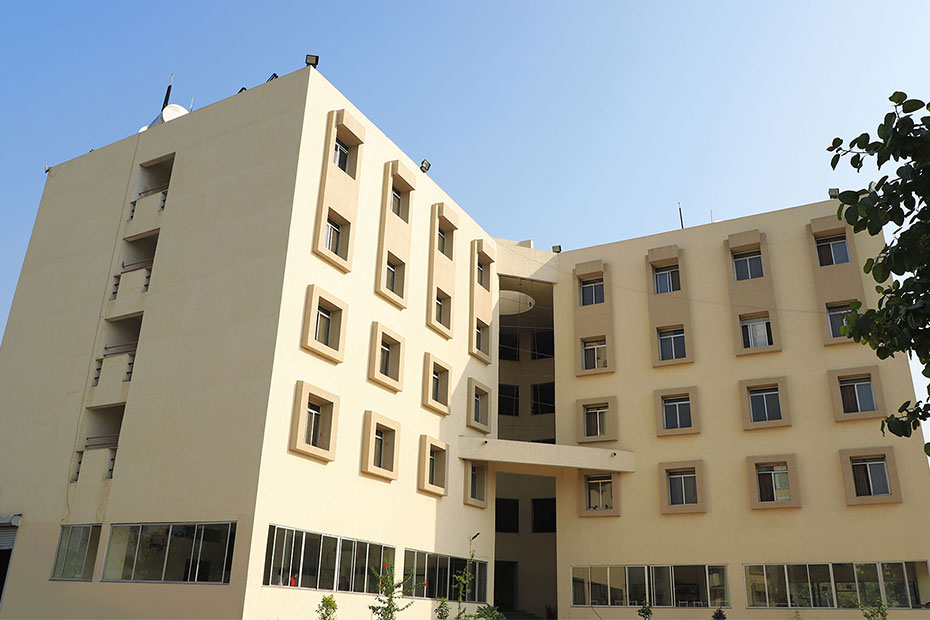
Introduction about Ph.D. in Electrical Engineering at Indus University
Embarking on a Ph.D. in Electrical Engineering at Indus University is more than just an academic pursuit; it is a journey toward becoming a pioneer in the technological landscape. Indus University, located in the vibrant city of Ahmedabad, provides a stimulating environment where intellectual curiosity meets practical innovation. For professionals looking to elevate their careers from technical experts to industry thought leaders, this doctoral program offers a rigorous yet rewarding framework. The university?s commitment to excellence in research is reflected in its state-of-the-art laboratory facilities and a faculty cohort comprising seasoned researchers and industry veterans. By pursuing this doctorate, you align yourself with a legacy of innovation, preparing to solve the world's most complex energy and automation challenges through dedicated scholarship and visionary thinking.
Ph.D Admission 2026-2027 & Writing Support Services by Shiksha Research
Eligibility Criteria for Ph.D. in Electrical Engineering at Indus University
Aspiring candidates for the Ph.D. program must demonstrate a strong academic background and a commitment to advanced research. The eligibility criteria at Indus University are designed to ensure that scholars possess the foundational knowledge necessary to thrive in high-level academic inquiry. Candidates must hold a Master?s degree (M.E. or M.Tech.) in Electrical Engineering or a closely related discipline from a recognized university. A minimum aggregate of 55% marks (or an equivalent CGPA) is generally required at the postgraduate level. However, a relaxation of 5% is often provided to candidates belonging to SC, ST, and OBC (non-creamy layer) categories, in accordance with UGC guidelines. Professional experience in research and development or high-level industrial projects is highly regarded during the selection process, as it brings a practical dimension to the academic discourse.
Entrance Exam for Ph.D. in Electrical Engineering at Indus University
Admissions to the doctoral program are governed by the Indus University Research Aptitude Test (IURAT). This entrance examination is tailored to evaluate a candidate's aptitude for research, logical reasoning, and core technical proficiency in Electrical Engineering. The exam typically consists of two sections: Research Methodology and Subject-Specific Knowledge. While the former tests your analytical and quantitative abilities, the latter delves deep into advanced electrical engineering concepts. Candidates who have successfully cleared national-level examinations such as GATE, NET, or SLET are frequently exempted from the written test, though they must still participate in the subsequent personal interview. Scoring well in this exam is the first step toward securing your place in a community dedicated to technological advancement.
Fee Structure for Ph.D. in Electrical Engineering at Indus University
The fee structure at Indus University is designed to be transparent and competitive, ensuring that high-quality research is accessible to dedicated scholars. Below is a comprehensive breakdown of the estimated costs involved in the Ph.D. journey.
| Particulars | Estimated Amount (INR) | Frequency |
|---|---|---|
| Application & Registration Fee | ?2,500 - ?5,000 | One-time |
| Tuition Fee (Coursework) | ?40,000 - ?60,000 | Per Semester |
| Thesis Submission Fee | ?15,000 - ?25,000 | During Final Submission |
| Library & Laboratory Security (Refundable) | ?10,000 | One-time |
| University Development Fee | ?5,000 | Annual |
Note: The fees mentioned above are subject to change based on university policy revision. Candidates are advised to confirm the final figures at the time of admission.
Admission Process for Ph.D. in Electrical Engineering at Indus University
The admission process is a multi-stage evaluation aimed at identifying candidates with the potential for transformative research. It begins with the submission of an online or physical application form along with the required processing fee. Following the application, eligible candidates are called for the IURAT entrance exam. Shortlisted individuals are then invited for a comprehensive personal interview. During this interview, candidates are expected to present their research interests and discuss their preliminary plans for their doctoral study. This conversation allows the departmental research committee to assess the candidate's depth of knowledge and the feasibility of their proposed research. Once selected, candidates undergo a formal document verification process and complete their registration by paying the initial semester fees.
Ph.D. Subjects and Specializations in Electrical Engineering at Indus University
At Indus University, Ph.D. scholars are encouraged to specialize in areas that align with current global trends and industrial needs. The subjects covered during the coursework transition from fundamental engineering principles to advanced specialized domains. Scholars engage deeply with topics such as Smart Grid Technologies, High Voltage Engineering, Integrated Power Systems, and Signal Processing. For many researchers, the complexity of developing data-driven frameworks necessitates professional Questionnaire Design and Development to gather empirical data from industrial stakeholders. Specializations often extend into Industrial Automation, Energy Markets, and Electric Vehicle (EV) technology, providing a broad spectrum for academic investigation.
Research Areas in Electrical Engineering at Indus University
Innovation is the heartbeat of the Electrical Engineering Department at Indus University. The university encourages interdisciplinary research, enabling scholars to explore the intersections of electrical engineering with computer science and environmental sustainability. Major research areas include:
- Renewable Energy Integration and Microgrids
- Advanced Power Electronics and Motor Drives
- Artificial Intelligence and Machine Learning applications in Power Systems
- Wireless Power Transfer and Energy Harvesting
- Control Systems and Robotics
Documents Required for Ph.D. in Electrical Engineering at Indus University
To ensure a smooth admission process, candidates must prepare a comprehensive dossier of documents. These typically include:
- Attested copies of 10th and 12th Marks Sheets.
- Bachelor?s and Master?s degree certificates and transcripts.
- Valid Scorecard of GATE/NET/SLET (if applicable).
- A detailed Research Proposal (SOP) outlining the intended area of study.
- Professional Experience Certificates (for working professionals).
- Migration and Transfer Certificates.
- Recent Passport-sized Photographs.
- Identity Proof (Aadhar Card, Passport, or PAN Card).
Indus University Ph.D. Syllabus for Electrical Engineering
The Ph.D. syllabus at Indus University is bifurcated into mandatory coursework and independent research phases. The coursework is designed to equip the scholar with the necessary tools for advanced inquiry. Subjects include Research Methodology, Quantitative Techniques, and Advanced Trends in Electrical Engineering. As part of the curriculum, scholars must master statistical tools and software for modeling and simulation. Given the quantitative nature of electrical research, utilizing Research Data Analysis Services can be instrumental in interpreting complex simulation results and experimental data. Upon successful completion of the coursework and a comprehensive examination, the scholar transitions into their primary research phase, focusing on their specific thesis topic under the guidance of a chosen supervisor.
How To Apply for Ph.D. in Electrical Engineering at Indus University
Applying for a Ph.D. at Indus University is a streamlined process. Interested candidates should visit the official university website and navigate to the 'Research' or 'Admissions' section. The first step is to register online by providing basic details and a valid email address. Following registration, you must fill out the detailed application form, providing academic history, professional details, and research interests. The application fee can be paid through the university?s secure payment gateway. Ensure that you upload scanned copies of all necessary documents in the prescribed format. It is highly recommended to contact potential supervisors within the department before the final submission to discuss research alignment. Once the application is submitted, you will receive notifications regarding the entrance exam dates and interview schedules.
Career Scope and Job Opportunities After Ph.D. in Electrical Engineering from Indus University
A Ph.D. in Electrical Engineering from a prestigious institution like Indus University opens doors to some of the most influential roles in academia and industry. Graduates are highly sought after by global giants in sectors such as energy, aerospace, manufacturing, and telecommunications. Common career paths include:
- Research Scientist: Leading R&D divisions in private and public sectors.
- University Professor: Shaping the next generation of engineers in prestigious academic institutions.
- Technical Consultant: Advising governmental and non-governmental bodies on energy policy and infrastructure.
- Entrepreneurship: Founding tech-startups centered around innovative electrical solutions.
Scholarship for Ph.D. in Electrical Engineering at Indus University
Indus University believes in rewarding merit and supporting talent. Financial assistance and scholarships are available for deserving full-time Ph.D. scholars. These may include university-funded fellowships that provide a monthly stipend to cover research expenses and living costs. Additionally, scholars are encouraged to apply for external fellowships such as those offered by the CSIR, UGC, and DST (JRF/SRF). Candidates working on specific government-funded projects may also receive financial support through project grants. The university's research cell provides guidance on applying for these scholarships, ensuring that financial constraints do not hinder the progress of groundbreaking research.
FAQs Regarding Ph.D. in Electrical Engineering at Indus University
Q1: Is the Ph.D. program at Indus University available part-time?
A1: Yes, Indus University offers both full-time and part-time Ph.D. tracks, making it an ideal choice for working professionals who wish to pursue research while maintaining their careers.
Q2: What is the minimum duration for completing the Ph.D.?
A2: The minimum duration is typically three years, including coursework. However, most scholars complete their research within four to five years depending on the complexity of the topic.
Q3: Does the university provide assistance for industrial collaborations?
A3: Absolutely. Indus University has several MoUs with leading industries, facilitating internships, collaborative research, and industrial visits for its doctoral scholars.
Q4: Do I need a GATE score to apply?
A4: While a GATE score is not mandatory (since the university conducts its own entrance test), having one may exempt you from the written test and enhance your application profile.
Q5: How many publications are required before the final thesis submission?
A5: Usually, Indus University requires a scholar to publish at least two research papers in peer-reviewed or Scopus-indexed journals as a prerequisite for thesis submission.




