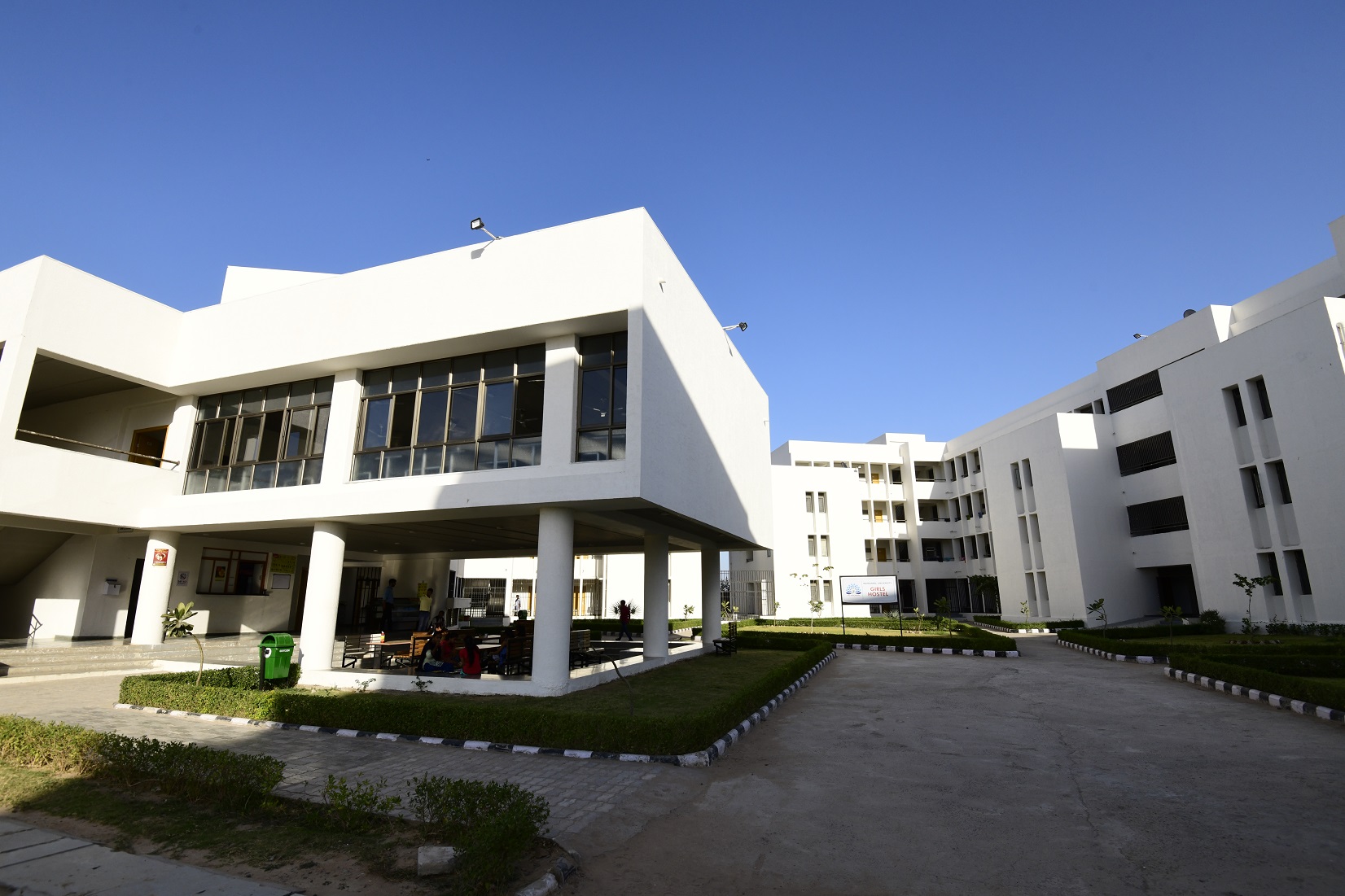
Introduction about Ph.D. in Electrical Engineering at Invertis University
Invertis University has emerged as a premier destination for advanced research in Electrical Engineering. The Ph.D. program blends rigorous academic coursework with cutting‑edge laboratory work, empowering professionals to become innovators, thought leaders, and academicians. Whether you aim to pioneer sustainable power systems, develop next‑generation communication technologies, or delve into quantum electronics, this doctorate equips you with the expertise to shape the future of the electrical engineering landscape.
Eligibility Criteria for Ph.D. in Electrical Engineering at Invertis University
- Master’s degree (M.Tech, M.E., or equivalent) in Electrical Engineering or a closely related discipline with a minimum of 55% aggregate marks (or CGPA = 5.5/10).
- For candidates holding a B.Tech/M.Tech (Integrated) program, a minimum of 60% overall is required.
- GATE score (any discipline) is preferred but not mandatory; a valid GATE score can substitute the university’s entrance test.
- Candidates must possess a strong foundation in mathematics, circuit theory, control systems, and signal processing.
- Professional experience of at least 2 years in research, design, or development roles is advantageous.
Entrance Exam for Ph.D. in Electrical Engineering at Invertis University
The university conducts a two‑stage entrance process:
- Written Test: A 100‑minute objective exam covering advanced topics such as Power Electronics, Electromagnetics, Digital Signal Processing, and Renewable Energy Systems. The test assesses analytical reasoning, problem‑solving ability, and research aptitude.
- Interview & VIVA: Shortlisted candidates undergo a technical interview where they discuss their research interests, past projects, and potential thesis proposals. Communication skills and alignment with faculty expertise are evaluated.
Applicants with a valid GATE score (minimum 500) are exempted from the written test and directly invited for the interview.
Fee Structure for Ph.D. in Electrical Engineering at Invertis University
| Component | Amount (INR) |
|---|---|
| Application Fee (one‑time) | 2,500 |
| Admission Fee (once per semester) | 15,000 |
| Tuition & Laboratory Charges (per semester) | 22,000 |
| Research Project Grant (annual, optional) | 30,000 – 80,000 |
| Miscellaneous (library, internet, etc.) | 5,000 |
| Total Estimated Cost (4‑year program) | ≈ 3,00,000 – 3,50,000 |
Admission Process for Ph.D. in Electrical Engineering at Invertis University
- Online Application: Fill the electronic application form on the university portal, upload academic transcripts, a detailed CV, and a research proposal (max 1000 words).
- Document Verification: The admissions office validates the submitted certificates and issues a provisional roll number.
- Entrance Examination: Eligible candidates appear for the written test unless exempted by a GATE score.
- Interview & VIVA: Successful test‑takers are invited for a personal interview with the department faculty.
- Final Selection & Offer Letter: Admission offers are dispatched via email, followed by payment of the admission fee.
- Enrollment: Students register for courses, obtain their university ID, and commence their research under the guidance of a designated supervisor.
Ph.D. Subjects and Specializations in Electrical Engineering at Invertis University
Candidates can choose from a variety of specialized tracks, each aligned with contemporary industry and academic demands:
- Power Systems & Smart Grids
- Renewable Energy Technologies
- Control Systems & Automation
- Signal Processing & Communications
- VLSI Design & Nanoelectronics
- Robotics & Embedded Systems
- Electromagnetic Compatibility & RF Engineering
- Machine Learning for Electrical Engineering Applications
Research Areas in Electrical Engineering at Invertis University
The university hosts state‑of‑the‑art laboratories and collaborates with leading research institutes. Prominent research domains include:
- Smart Power Networks: Development of resilient micro‑grids, demand‑response algorithms, and AI‑driven load forecasting.
- Advanced Energy Storage: Investigations on battery management systems, supercapacitors, and hydrogen fuel cells.
- 5G/6G Communication Systems: Design of high‑frequency antennas, beamforming techniques, and low‑latency protocols.
- IoT & Cyber‑Physical Systems: Secure sensor networks, edge computing, and real‑time analytics for industrial automation.
- Quantum Electronics: Exploration of qubit control, photonic circuits, and quantum communication channels.
- Renewable Integration: Grid‑level modeling of solar and wind farms, hybrid energy systems, and policy frameworks.
Documents Required for Ph.D. in Electrical Engineering at Invertis University
| Document | Details |
|---|---|
| Application Form (online) | Completed with personal & academic details. |
| Academic Transcripts | Certified copies of B.Tech/M.Tech marksheets. |
| Degree Certificates | Original and attested copies of all degrees. |
| GATE Score Card (optional) | Valid for the current admission cycle. |
| Research Proposal | Maximum 1000 words outlining objectives and methodology. |
| Curriculum Vitae | Professional experience, publications, and projects. |
| Two Academic References | Letters from professors or industry mentors. |
| Proof of Identity | Aadhaar card / passport copy. |
Invertis University Ph.D. Syllabus for Electrical Engineering
The syllabus is structured into three phases: coursework, comprehensive exams, and dissertation research.
- Phase I – Core Courses (12 credits): Advanced Power Electronics, Digital Signal Processing, Control Theory, Electromagnetic Field Theory.
- Phase II – Elective Modules (6 credits): Choose any two from Renewable Energy Systems, VLSI Design, Machine Learning for Signal Processing, Smart Grid Technologies.
- Phase III – Research & Thesis: Conduct original research, publish at least two papers in indexed journals, and defend a doctoral dissertation.
How To Apply for Ph.D. in Electrical Engineering at Invertis University
Follow these step‑by‑step instructions to submit a successful application:
- Visit the official Invertis University Admissions Portal and create a new user account.
- Complete the online application form, ensuring all mandatory fields are filled accurately.
- Upload scanned PDFs of the required documents (see the Documents Required table).
- Pay the non‑refundable application fee of INR 2,500 via the secured payment gateway.
- Submit your research proposal. If you have a GATE score, attach the scorecard to qualify for exemption.
- After submission, monitor your email for acknowledgment and further instructions regarding the entrance exam or interview schedule.
Career Scope and Job Opportunities After Ph.D. in Electrical Engineering from Invertis University
Graduates enjoy a broad spectrum of high‑impact career paths:
- Academia: Assistant Professor, Associate Professor, or research faculty positions in leading universities.
- Research & Development: Senior R&D Engineer, Project Lead, or Chief Technology Officer in energy, telecom, and semiconductor firms.
- Industry Consulting: Subject‑matter expert for government agencies, power utilities, and multinational corporations.
- Entrepreneurship: Founder of start‑ups focusing on IoT solutions, renewable energy hardware, or AI‑enabled power management.
- Patents & Publications: Opportunities to author patents, publish in high‑impact journals, and present at international conferences.
According to recent placement statistics, 78% of Ph.D. alumni secure positions with a median salary of INR 12 Lakhs per annum within six months of graduation.
Scholarship for Ph.D. in Electrical Engineering at Invertis University
Invertis University offers several merit‑based and need‑based financial aids:
- University Merit Scholarship: Up to 50% tuition waiver for candidates with a CGPA ≥ 9.0/10.
- Research Assistantship: Stipend of INR 15,000 per month for participation in funded projects.
- External Fellowships: Support for applying to CSIR




