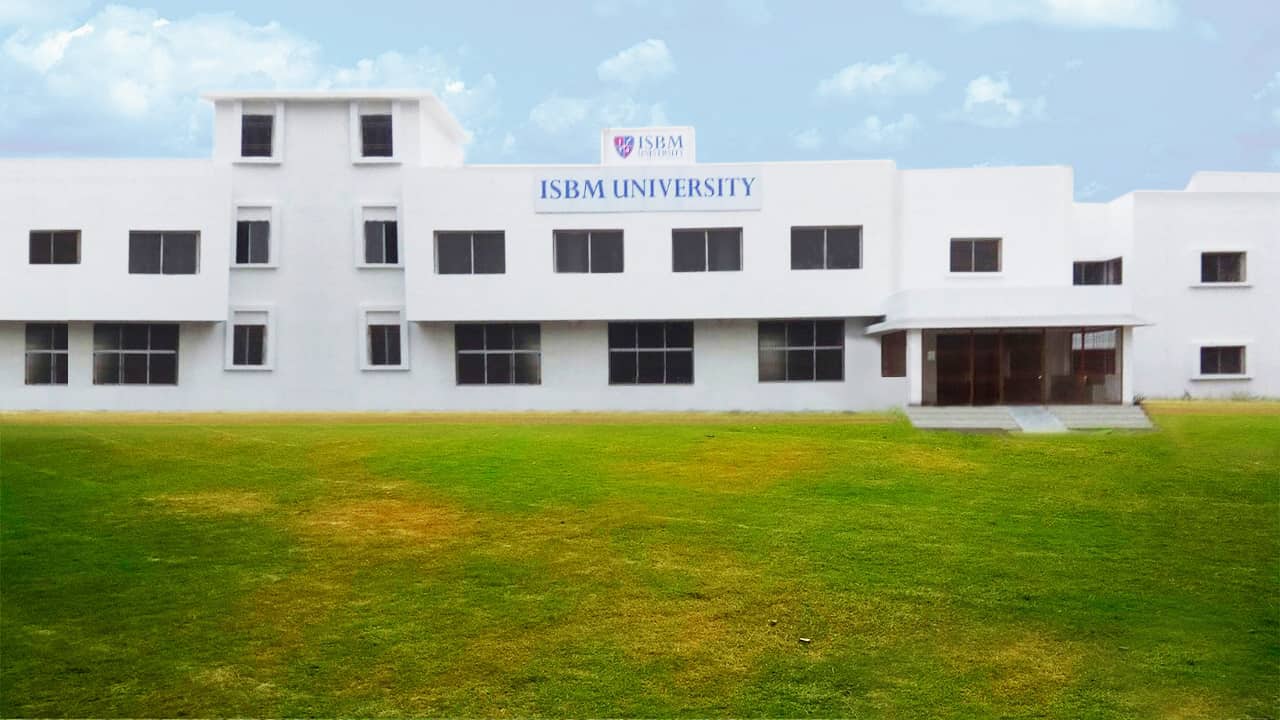
Ph.D. in Electrical Engineering from ISBM University
Introduction about Ph.D. in Electrical Engineering at ISBM University
Embarking on a Ph.D. in Electrical Engineering at ISBM University opens doors to cutting‑edge research, world‑class faculty mentorship, and a vibrant academic community. Designed for engineers, researchers, and industry professionals, the program blends theoretical depth with practical innovation, empowering scholars to shape the future of power systems, renewable energy, embedded electronics, and intelligent control. Whether you aim to lead R&D labs, teach at premier institutions, or launch transformative startups, ISBM University provides the rigorous curriculum, state‑of‑the‑art labs, and industry collaborations needed to turn ambition into impact.
Eligibility Criteria for Ph.D. in Electrical Engineering at ISBM University
- Master’s degree (M.Tech/M.E/M.Sc) in Electrical Engineering or a closely related discipline with ≥55% aggregate (or CGPA ≥6.5/10).
- Valid GATE score in Electrical Engineering (minimum 550 marks) – preferred but not mandatory.
- Research proposal/statement of purpose demonstrating clear research objectives.
- English proficiency: Minimum TOEFL iBT 80 or IELTS 6.5 for international applicants.
- For candidates with a Bachelor’s degree and 3+ years of relevant research experience, admission may be considered on a case‑by‑case basis.
Entrance Exam for Ph.D. in Electrical Engineering at ISBM University
ISBM University conducts its own entrance examination, ISBM Ph.D. Entrance Test (IPET), for candidates without a valid GATE score. The exam comprises:
- Core Electrical Engineering (Circuit Theory, Power Systems, Control, Signal Processing).
- Mathematics & Statistics (Linear Algebra, Probability, Numerical Methods).
- General Aptitude & English (Analytical Reasoning, Comprehension).
The test is held twice a year (June & December). Successful candidates are invited for an interview that evaluates research aptitude, communication skills, and alignment with faculty interests.
For candidates seeking specialized assistance, professional Thesis and Dissertation Writing Services can streamline the proposal development phase.
Fee Structure for Ph.D. in Electrical Engineering at ISBM University
| Component | Annual Fee (INR) | Notes |
|---|---|---|
| Tuition & Laboratory Charges | 1,25,000 | Includes access to all labs and research facilities. |
| Library & Digital Resources | 15,000 | Unlimited access to IEEE, Springer, and Elsevier databases. |
| Annual Examination & Evaluation | 20,000 | Cover internal assessments and semester exams. |
| Miscellaneous (Sports, Events, etc.) | 10,000 | Student welfare and co‑curricular activities. |
| Total Approximate Cost per Year | 1,70,000 | Subject to revision each academic year. |
Payments can be made in two installments (July & January). Financial aid, fellowships, and merit‑based scholarships are available for high‑performing candidates.
Admission Process for Ph.D. in Electrical Engineering at ISBM University
- Online Application: Fill the ISBM University portal form, upload academic transcripts, GATE score (if any), and research proposal.
- Document Verification: Submit scanned copies of certificates, ID proof, and passport‑size photograph.
- Entrance Test & Interview: Appear for IPET (or submit GATE score) and attend a faculty interview.
- Admission Offer: Receive the provisional offer letter subject to fee payment and document clearance.
- Fee Payment & Enrollment: Pay the first installment, complete enrollment, and obtain university credentials.
- Induction & Orientation: Participate in the Ph.D. orientation program and get assigned a research supervisor.
During the application phase, candidates may also benefit from professional Research Data Analysis Services to strengthen their proposal’s methodology section.
Ph.D. Subjects and Specializations in Electrical Engineering at ISBM University
ISBM University offers a diverse set of specializations tailored to emerging industry trends and national priorities:
- Power Systems Engineering & Smart Grids
- Renewable Energy Integration & Storage
- Control Systems & Robotics
- Signal Processing & Communications
- VLSI Design & Embedded Systems
- Artificial Intelligence for Electrical Engineering
- Electromagnetics & Antenna Design
Research Areas in Electrical Engineering at ISBM University
Faculty members lead research groups in the following cutting‑edge domains:
- Smart Grid Optimization: Real‑time load forecasting, demand‑response, and grid resilience.
- Advanced Power Electronics: Wide‑bandgap devices, converters for electric vehicles.
- Wireless Sensor Networks: Low‑power IoT protocols for industrial automation.
- Renewable Energy Systems: Photovoltaic‑thermal hybrid systems and offshore wind integration.
- Quantum Computing Hardware: Cryogenic electronics and error‑correction circuits.
Students are encouraged to publish in top‑tier journals such as IEEE Transactions, Elsevier Energy, and Springer’s Control Engineering.
When drafting research manuscripts, consider leveraging our Research Paper Writing Services for polished, peer‑ready articles.
Documents Required for Ph.D. in Electrical Engineering at ISBM University
| Document | Format | Remarks |
|---|---|---|
| Academic Transcripts (10+2, B.Tech/M.Tech) | PDF (Scanned) | Must be attested by the issuing institution. |
| GATE Scorecard (if applicable) | Valid for the current admission cycle. | |
| Research Proposal (2,000‑3,000 words) | DOCX/PDF | Include objectives, literature review, methodology. |
| Curriculum Vitae (CV) | Highlight publications, projects, and patents. | |
| English Proficiency Certificate | TOEFL/IELTS or equivalent. | |
| Passport‑size Photograph | JPEG (200 KB max) | Recent, white background. |
| Letter of Recommendation (2) | From academic supervisors or industry mentors. | |
| Identity Proof (Aadhaar/Passport) | Government‑issued ID. |
For questionnaire design, especially in surveys for thesis data collection, our Questionnaire Design and Development service can help you craft valid and reliable instruments.
ISBM University Ph.D. Syllabus for Electrical Engineering
The doctoral syllabus is modular and research‑oriented, comprising:
- Core Coursework (30 credits): Advanced Power System Analysis, Modern Control Theory, Computational Electromagnetics, and Research Methodology.
- Elective Modules (15 credits): Options include Renewable Energy Technologies, Machine Learning for Signal Processing, High‑Voltage Engineering, and VLSI Design.
- Comprehensive Exams: Written and oral assessments after the first year to evaluate foundational knowledge.
- Thesis Research: Minimum of 3 peer‑reviewed conference/journal publications before thesis submission.
- Seminars & Workshops:




