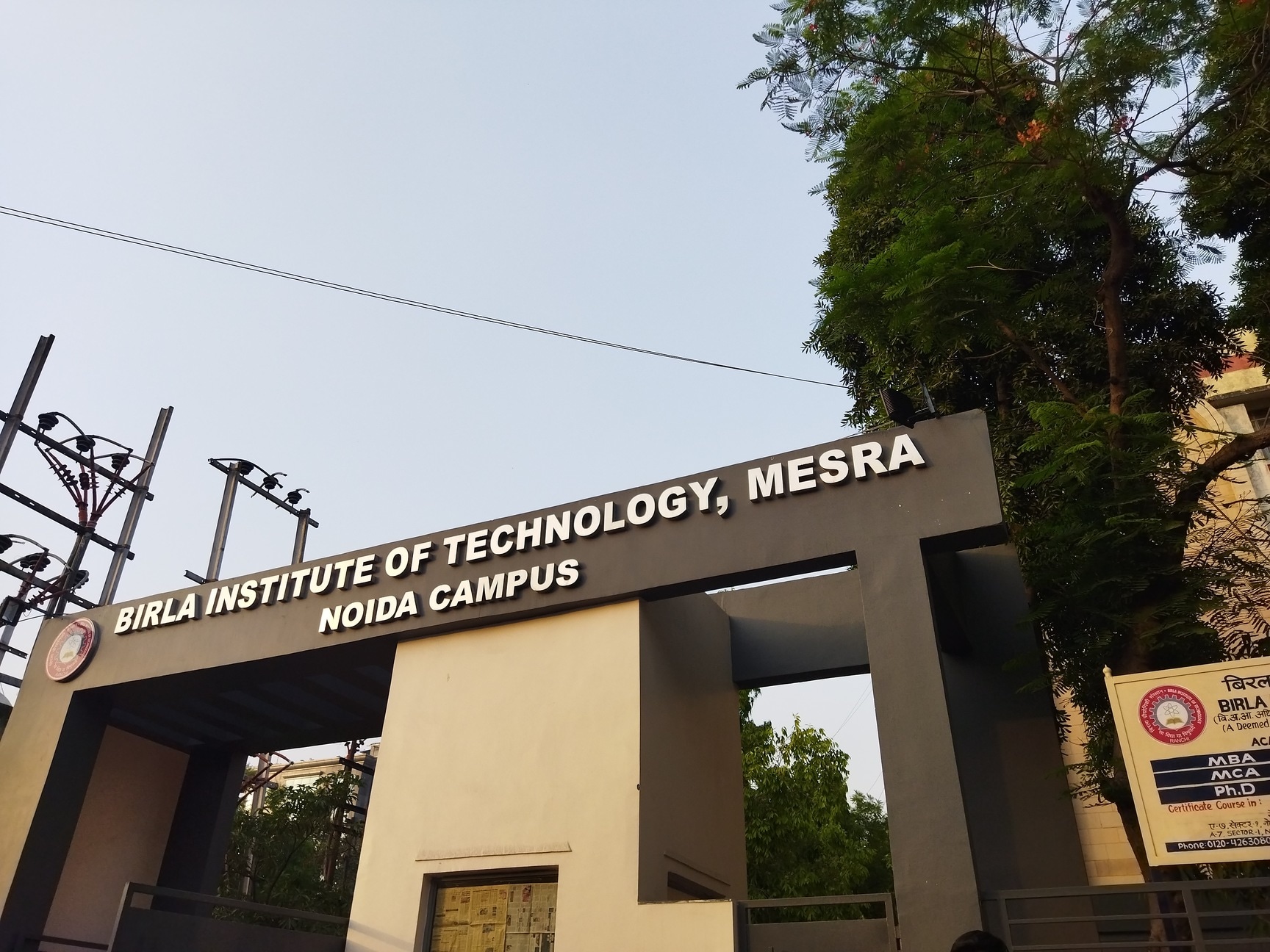
Ph.D. in Electronics and Communication Engineering at Birla Institute of Technology
Introduction about Ph.D. in Electronics and Communication Engineering at Birla Institute of Technology
The Birla Institute of Technology (BIT) has long been a beacon of innovation in engineering education, and its Ph.D. program in Electronics and Communication Engineering (ECE) stands as a testament to that legacy. Designed for ambitious professionals who aspire to push the boundaries of wireless communication, signal processing, and embedded systems, the program blends rigorous academic coursework with cutting‑edge research opportunities. Graduates emerge as thought leaders capable of driving transformative technologies in the rapidly evolving electronics landscape.
Eligibility Criteria for Ph.D. in Electronics and Communication Engineering at Birla Institute of Technology
Candidates must possess a Master’s degree (M.Tech / M.E.) in Electronics and Communication Engineering or a closely related discipline with a minimum aggregate of 55% (or 5.0 CGPA on a 10‑point scale). Candidates with a B.E./B.Tech degree (55% or higher) are also eligible provided they have cleared the GATE (Graduate Aptitude Test in Engineering) with a valid score. Professionals holding a Ph.D. in a different but related field may apply subject to departmental approval. Age restrictions are not imposed, fostering a diverse cohort of experienced engineers, researchers, and academicians.
Entrance Exam for Ph.D. in Electronics and Communication Engineering at Birla Institute of Technology
BIT conducts its own Ph.D. entrance examination, which evaluates candidates on core ECE concepts, research aptitude, and analytical skills. The exam comprises three sections: (1) Technical Knowledge (30 MCQs), (2) Research Methodology (15 MCQs), and (3) Verbal Ability (15 MCQs). International applicants may also submit a valid GATE score in lieu of the BIT entrance test. Successful candidates are invited for a personal interview where research interests, publications, and project experience are discussed in depth.
Fee Structure for Ph.D. in Electronics and Communication Engineering at Birla Institute of Technology
| Component | Annual Fee (INR) | Notes |
|---|---|---|
| Tuition & Laboratory Charges | 85,000 | Includes access to advanced ECE labs |
| Library & Resource Fees | 12,000 | Unlimited access to digital journals |
| Research Project Grant (Optional) | 30,000 | Subsidized for industry‑sponsored projects |
| Miscellaneous (Sports, Cultural Activities) | 5,000 | Student welfare and campus events |
| Total Approximate Annual Cost | 1,32,000 | Subject to change each academic year |
BIT also offers fee waivers for candidates with exceptional academic records, as well as financial assistance through various scholarships listed later in this article.
Admission Process for Ph.D. in Electronics and Communication Engineering at Birla Institute of Technology
- Online Application Submission via the official BIT portal.
- Upload scanned copies of academic transcripts, GATE scorecard (if applicable), and a research proposal.
- Pay the non‑refundable application fee of INR 2,500.
- Appear for the BIT Ph.D. entrance examination or submit a valid GATE score.
- Clear the personal interview and counseling round.
- Receive the admission offer letter and complete enrollment formalities.
The entire process, from application to enrollment, typically spans 8–10 weeks. Prospective scholars are encouraged to start early to accommodate document verification and admission council meetings.
Ph.D. Subjects and Specializations in Electronics and Communication Engineering at Birla Institute of Technology
The Ph.D. program offers a broad spectrum of research specializations, allowing candidates to tailor their study to emerging industry needs. Core specializations include:
- Wireless Communication and 5G/6G Networks
- Signal Processing and Machine Learning for Communications
- VLSI Design and Embedded Systems
- Optoelectronics and Photonic Devices
- Internet of Things (IoT) and Cyber‑Physical Systems
- Antennas, Propagation, and Electromagnetic Compatibility
Interdisciplinary projects that combine ECE with artificial intelligence, biomedical engineering, or renewable energy are also actively supported.
Research Areas in Electronics and Communication Engineering at Birla Institute of Technology
BIT’s dedicated ECE research centre collaborates with global industry leaders and government labs. Current research thrusts encompass:
- Massive MIMO and Beamforming Techniques for Next‑Generation Networks
- Low‑Power ASIC Design for Wearable and Edge Devices
- Quantum Communication Protocols
- Advanced Modulation Schemes for Satellite and Deep‑Space Links
- Smart Grid Communication and Energy‑Efficient Networks
- AI‑Driven Spectrum Management and Cognitive Radio
Students are encouraged to publish in high‑impact journals such as IEEE Transactions on Communications and present at international conferences.
Documents Required for Ph.D. in Electronics and Communication Engineering at Birla Institute of Technology
- Completed Online Application Form
- Academic Transcripts (Master’s & Bachelor’s degrees)
- GATE Scorecard (if applicable)
- Research Proposal (2,000–3,000 words)
- Curriculum Vitae highlighting publications and projects
- Two Recent Passport‑Size Photographs
- Proof of Identity (Aadhar, Passport, or Driving License)
- Letter of Recommendation (optional but recommended)
Birla Institute of Technology Ph.D. Syllabus for Electronics and Communication Engineering
The syllabus is structured into three phases: Core Coursework, Comprehensive Research, and Thesis Submission.
Core Coursework (Year 1)
- Advanced Digital Communication Systems
- Microwave Engineering and RF Design
- Statistical Signal Processing
- Research Methodology & Scientific Writing
Comprehensive Research (Years 2‑4)
- Laboratory Work and Prototype Development
- Regular Publication Targets (minimum 2 journal papers)
- Periodic Seminar Presentations
Thesis Submission
The final dissertation must demonstrate original contribution, rigorous methodology, and practical relevance. Defense is conducted before a panel of eminent faculty and industry experts.
How To Apply for Ph.D. in Electronics and Communication Engineering at Birla Institute of Technology
Interested candidates should follow these steps to secure admission:
- Visit the official BIT admissions portal and register a new account.
- Complete the online application form and upload all required documents.
- Select the “Ph.D. – Electronics and Communication Engineering” program from the dropdown menu.
- Pay the application fee using credit/debit card, net banking, or UPI.
- Print the acknowledgement receipt and keep it for future reference.
- Prepare for the entrance exam; study guides are available on the BIT website.
- After clearing the exam, attend the scheduled interview (online or on‑campus).
- Upon receiving the admission offer, confirm the seat by paying the first-year tuition fee.
Career Scope and Job Opportunities After Ph.D. in Electronics and Communication Engineering from Birla Institute of Technology
A BIT Ph.D. opens doors to a multitude of high‑impact career paths. Graduates frequently assume roles such as:
- Senior Research Scientist in multinational R&D labs (e.g., Qualcomm, Nokia, Ericsson)
- Lead Engineer – 5G/6G System Design
- Professor or Department Head in premier engineering colleges
- Entrepreneur – Founder of start‑ups focusing on IoT, AI‑enabled communication devices, or satellite tech
- Policy Analyst – Contributing to national telecom standards and spectrum allocation strategies
According to industry surveys, Ph.D. holders in ECE command an average salary increase of 30‑40% over their M.Tech counterparts, with median compensation ranging between INR 12–18 lakhs per annum in the Indian market and competitive packages abroad.
Scholarship for Ph.D. in Electronics and Communication Engineering at Birla Institute of Technology
BIT offers several merit‑based and need‑based scholarships to support deserving scholars:
- BIT Merit Scholarship: Covers 50% of tuition for students with a CGPA above 8.5.
- Government Fellowships: Includes CSIR, UGC‑JRF, and AICTE‑PD schemes.
- Industry Sponsored Grants: Companies such as Intel and Samsung fund specific research projects.
- Women in STEM Scholarship: Dedicated to encouraging female participation in advanced engineering research.
Application for scholarships is concurrent with the admission process. Successful candidates receive the award letter before the start of the academic session.
FAQs Regarding Ph.D. in Electronics and Communication Engineering at Birla Institute of Technology
- Q: Can a candidate with only a B.E. degree enroll directly?
- A: Yes, if the candidate has qualified GATE with a valid score and meets the minimum 55% aggregate requirement.
- Q: How long does the Ph.D. program typically take?
- A: The minimum duration is 3 years, but most candidates complete it within




