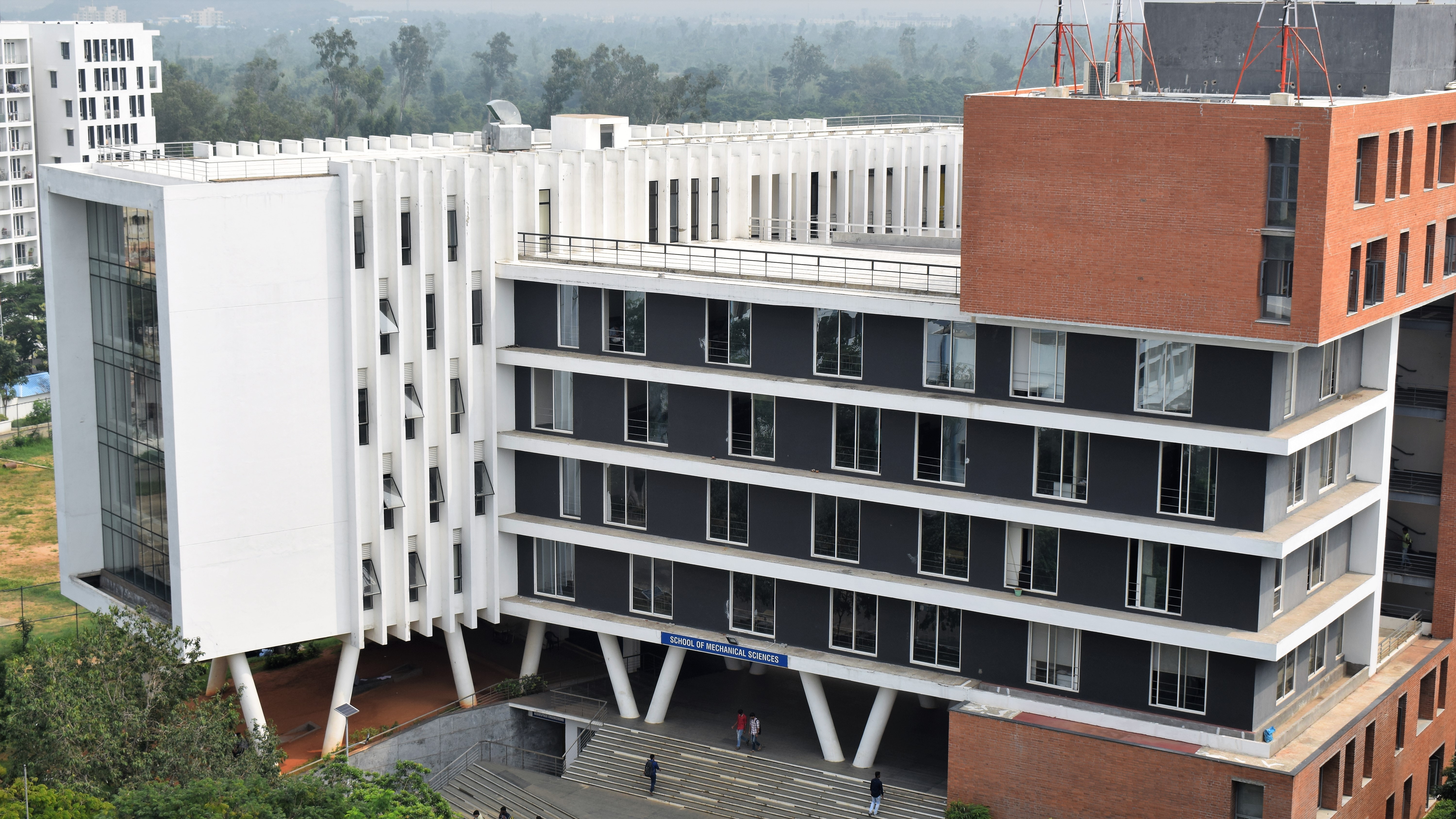
Ph.D. in Electronics And Communication Engineering from B.S. Abdur Rahman Crescent Institute of Science and Technology: Eligibility, Entrance Exam, Fee Structure, Admission Process, Subjects, Research Areas, Syllabus, Scholarship & Career Scope
Introduction about Ph.D. in Electronics And Communication Engineering at B.S. Abdur Rahman Crescent Institute of Science and Technology
Embarking on a doctoral journey in Electronics and Communication Engineering (ECE) at B.S. Abdur Rahman Crescent Institute of Science and Technology (BACIST) equips professionals with cutting‑edge expertise, research acumen, and the ability to drive innovation in a rapidly evolving technology landscape. The institute’s state‑of‑the‑art labs, industry collaborations, and distinguished faculty provide an inspiring environment for scholars aiming to become thought leaders in wireless communications, signal processing, VLSI design, and emerging IoT solutions.
Eligibility Criteria for Ph.D. in Electronics And Communication Engineering at B.S. Abdur Rahman Crescent Institute of Science and Technology
- Master’s degree (M.E., M.Tech., M.Sc.) in Electronics & Communication Engineering or a closely related discipline with a minimum CGPA of 6.5/10 (or equivalent).
- Qualified in GATE (Electronics & Communication) with a valid score, or have secured the required marks in the institute’s Ph.D. entrance test.
- For candidates with a B.E./B.Tech. degree, a minimum of 55% (or 5.5 GPA) plus a research proposal and a qualifying interview may be considered.
- English proficiency (IELTS/TOEFL) is not mandatory for Indian nationals but is recommended for overseas candidates.
Entrance Exam for Ph.D. in Electronics And Communication Engineering at B.S. Abdur Rahman Crescent Institute of Science and Technology
The institute conducts a two‑stage entrance process:
- Written Test: Objective and descriptive questions covering advanced topics in signal processing, communication theory, embedded systems, and research methodology.
- Interview & Presentation: Candidates present their research proposal, discuss prior work, and answer technical queries from the department panel.
GATE qualification can exempt candidates from the written test, though they must still appear for the interview.
Fee Structure for Ph.D. in Electronics And Communication Engineering at B.S. Abdur Rahman Crescent Institute of Science and Technology
| Fee Component | Amount (INR) | Yearly Total |
|---|---|---|
| Admission & Registration Fee | 15,000 | 15,000 |
| Annual Tuition & Lab Fee | 45,000 | 45,000 |
| Library & Resource Center Charge | 5,000 | 5,000 |
| Research Project/Thesis Support (optional) | 10,000 | 10,000 |
| Total | 75,000 | 75,000 |
Admission Process for Ph.D. in Electronics And Communication Engineering at B.S. Abdur Rahman Crescent Institute of Science and Technology
- Online application through the institute’s portal.
- Upload academic transcripts, GATE scorecard (if applicable), research proposal, and two letters of recommendation.
- Payment of the provisional application fee (Rs. 1,500).
- Shortlisting based on eligibility and proposal quality.
- Written test (or GATE exemption) followed by interview.
- Final selection and issuance of the admission letter.
- Registration, fee payment, and enrollment in the research program.
Ph.D. Subjects and Specializations in Electronics And Communication Engineering at B.S. Abdur Rahman Crescent Institute of Science and Technology
Students may tailor their research across a spectrum of specialized domains, such as:
- Wireless Communication Systems & 5G/6G Networks
- Signal Processing & Machine Learning for Communications
- VLSI & Nanoelectronics
- Embedded Systems & IoT Architecture
- Optical Fiber & Photonic Devices
- Radar and Satellite Communication
- Biomedical Signal Processing
Research Areas in Electronics And Communication Engineering at B.S. Abdur Rahman Crescent Institute of Science and Technology
The institute’s research labs focus on high‑impact areas that align with industry and national priorities:
- Next‑generation cellular networks and spectrum efficiency.
- Artificial intelligence‑enabled communication protocols.
- Low‑power VLSI design for portable devices.
- Secure communication and cryptographic hardware.
- Advanced antenna systems and metamaterials.
- Data analytics for large‑scale sensor networks.
Documents Required for Ph.D. in Electronics And Communication Engineering at B.S. Abdur Rahman Crescent Institute of Science and Technology
| Document | Details |
|---|---|
| Academic Transcripts | Original & certified copies of B.E./B.Tech., M.E./M.Tech. or equivalent. |
| GATE Scorecard | Valid for the relevant year (optional if applying via institute test). |
| Research Proposal | 2‑3 pages outlining objectives, methodology, and expected contributions. |
| Letters of Recommendation | Two academic/professional references on official letterhead. |
| Identity Proof | Aadhaar/PAN or passport for international candidates. |
| Passport‑size Photographs | Three recent color photos. |
B.S. Abdur Rahman Crescent Institute Ph.D. Syllabus for Electronics And Communication Engineering
The doctoral syllabus is research‑driven, comprising:
- Core Advanced Topics (Signal Processing, RF Engineering, VLSI Design).
- Research Methodology and Scientific Writing.
- Elective Modules based on supervisor expertise (e.g., Machine Learning for Communications, Photonic Systems).
- Laboratory Work & Project Development.
- Thesis Submission and Defense.
How To Apply for Ph.D. in Electronics And Communication Engineering at B.S. Abdur Rahman Crescent Institute of Science and Technology
Prospective scholars should follow these steps:
- Visit the official BACIST admissions portal and create a user account.
- Complete the online application form, ensuring all mandatory fields are filled.
- Upload scanned copies of the required documents (see “Documents Required” section).
- Pay the non‑refundable application fee via net banking or credit card.
- Submit the application and note the generated reference number for future correspondence.
- Prepare for the written test (if applicable) and schedule the interview through the portal.
- After selection, complete the fee payment and register for the Ph.D. program.
Career Scope and Job Opportunities After Ph.D. in Electronics And Communication Engineering from B.S. Abdur Rahman Crescent Institute of Science and Technology
A doctorate in ECE opens doors to high‑impact roles such as:
- Senior Research Scientist in telecommunications, semiconductor, or defense organizations.
- Lead Engineer or Architect in 5G/6G development teams.
- Professor or Lecturer in top engineering colleges and universities.
- Product Development Manager in IoT and embedded systems firms.
- Consultant for government R&D projects and industry‑academia partnerships.
Most graduates secure positions with attractive salaries ranging from INR 12 Lakhs to INR 30 Lakhs per annum, depending on experience and sector.
Scholarship for Ph.D. in Electronics And Communication Engineering at B.S. Abdur Rahman Crescent Institute of Science and Technology
The institute offers merit‑based scholarships and fellowships, including:
- Full Tuition Waiver for candidates with a GATE score above 750.
- Research Stipend of INR 25,000 per month for the first two years.
- Industry Sponsored Projects that provide additional financial support and access to cutting‑edge facilities.
- Eligibility for external scholarships such as the INSPIRE Fellowship and AICTE Doctoral Fellowship.
Applicants are encouraged to explore the Thesis and Dissertation Writing Services and Research Data Analysis Services offered by partner platforms to strengthen their proposals.
FAQs Regarding Ph.D. in Electronics And Communication Engineering at B.S. Abdur Rahman Crescent Institute of Science and Technology
- Q1: What is the minimum duration to complete the Ph.D.?
- Typically 3–4 years, subject to satisfactory progress and thesis submission.
- Q2: Can I pursue the Ph.D. part‑time while working?
- Yes, the institute offers a flexible part‑time mode for professionals, with extended timelines.
- Q3: Is publication in indexed journals mandatory?
- At least two papers in Scopus/ISI‑indexed journals are recommended before thesis submission.
- Q4: Are there collaborations with industry?
- Numerous MoUs exist with leading telecom and semiconductor firms, enabling joint research projects.
- Q5: How can I avail the campus placement assistance?
- The institute’s Career Development Cell provides dedicated placement drives for Ph.D. graduates.
For further assistance with dissertation preparation, consider the Research Paper Writing Services or the Questionnaire Design and Development support available through our partner network.




