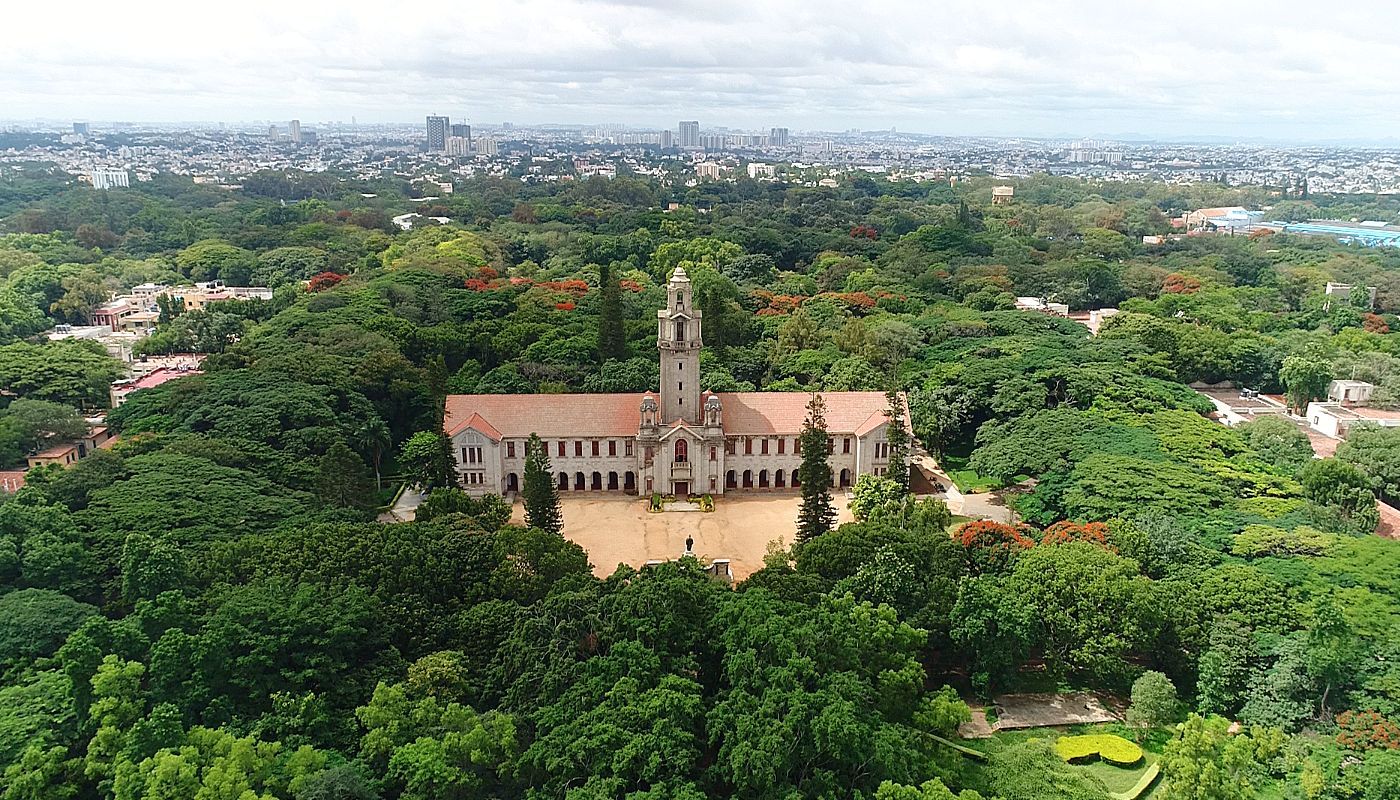
Introduction about Ph.D. in Electronics and Instrumentation at Indian Institute of Science
The pursuit of a Ph.D. in Electronics and Instrumentation at the Indian Institute of Science (IISc), Bangalore, represents the pinnacle of academic and research excellence in India. Established as a premier sanctuary for intellectual growth, IISc provides an ecosystem where innovation meets rigor. For professionals and aspiring researchers, this program is not just a degree but a transformative journey into the heart of technological advancement. The Department of Instrumentation and Applied Physics at IISc is renowned for pushing the boundaries of what is possible, from quantum sensing to advanced medical electronics. Embarking on this journey requires a profound commitment to original inquiry, often supported by specialized Thesis and Dissertation Writing Services to ensure that your doctoral contributions meet the exacting standards of global scientific literature. At IISc, you are mentored by world-class faculty and provided with state-of-the-art laboratory facilities that empower you to solve complex real-world problems through precision instrumentation and design.
Ph.D Admission 2026-2027 & Writing Support Services by Shiksha Research
Eligibility Criteria for Ph.D. in Electronics and Instrumentation at Indian Institute of Science
The Indian Institute of Science maintains stringent eligibility criteria to ensure that only the most dedicated and capable scholars join its research ranks. Candidates generally fall into two primary categories:
- Postgraduate Degree Holders: Candidates with an M.E., M.Tech., M.Sc. (Engg), or an equivalent degree in Electronics, Instrumentation, Electrical Engineering, or Physics are eligible. A consistently high academic record throughout their undergraduate and postgraduate education is mandatory.
- Undergraduate Degree Holders (Direct Ph.D.): Exceptionally brilliant students with a B.E. or B.Tech. degree in relevant disciplines from a recognized university can apply. Usually, a high GATE score is mandatory for these candidates, along with a top-tier CGPA.
- Professional Experience: Candidates with significant industrial experience or those currently employed in R&D organizations are encouraged to apply, provided they meet the basic academic thresholds.
Entrance Exam for Ph.D. in Electronics and Instrumentation at Indian Institute of Science
Admission to the Ph.D. program is highly competitive and primarily driven by national-level entrance examinations. The most recognized pathway is through the Graduate Aptitude Test in Engineering (GATE). High percentiles in GATE (Electronics and Communication or Instrumentation Engineering) are typically required to secure an interview call. Additionally, candidates who have qualified for the Junior Research Fellowship (JRF) through CSIR-UGC NET, or possess a valid INSPIRE fellowship, are also eligible to apply. The entrance exam serves as a filter to gauge the candidate's fundamental understanding of core electronics principles, mathematical aptitude, and analytical reasoning skills.
Fee Structure for Ph.D. in Electronics and Instrumentation at Indian Institute of Science
One of the most attractive aspects of pursuing a Ph.D. at IISc is the highly subsidized fee structure, which is designed to ensure that financial constraints do not hinder intellectual pursuits. Below is an approximate breakdown of the annual fee structure for various categories:
| Fee Head | General/OBC Category (Approx. Annual) | SC/ST Category (Approx. Annual) |
|---|---|---|
| Tuition Fee | INR 15,000 - 20,000 | Waived |
| Gymkhana & Amenities | INR 5,000 | INR 5,000 |
| Statutory Deposits (Refundable) | INR 7,500 | INR 7,500 |
| Library & IT Services | INR 4,000 | INR 4,000 |
| Total Estimated Yearly Fee | INR 31,500 - 36,500 | INR 16,500 - 18,500 |
Admission Process for Ph.D. in Electronics and Instrumentation at Indian Institute of Science
The admission process at IISc is multi-layered. First, candidates are shortlisted based on their GATE/NET scores and undergraduate/postgraduate performance. Shortlisted candidates are then invited for a comprehensive technical interview conducted by a panel of faculty members. This interview tests both depth and breadth of knowledge. During this stage, presenting a strong research vision is crucial. Many candidates utilize Research Paper Writing Services during their preparatory years to build a portfolio of publications that demonstrate their research potential to the selection committee. The final selection is based on the cumulative performance in the qualifying exam and the interview.
Ph.D. Subjects and Specializations in Electronics and Instrumentation at Indian Institute of Science
The program is structured to allow scholars to specialize in niche areas that bridge the gap between theoretical physics and applied engineering. Some of the core subjects and specializations include:
- Advanced Signal Processing and Embedded Systems
- Microelectronics and VLSI Design
- Quantum Instrumentation and Metrology
- Biomedical Instrumentation and Bio-sensors
- Fiber Optic Sensors and Photonics
- Precision Mechatronics and Control Systems
- Internet of Things (IoT) in Industrial Instrumentation
Research Areas in Electronics and Instrumentation at Indian Institute of Science
Research at IISc is characterized by its interdisciplinary nature. Scholars are encouraged to collaborate across departments to solve multifaceted problems. Key research areas include the development of high-precision analytical instruments and the study of sensor technologies for harsh environments. Conducting such intricate studies often involves complex data sets; therefore, scholars frequently leverage Research Data Analysis Services to process high-resolution experimental results. Prominent areas include Nanotechnology-based sensors, Smart Materials, and the development of indigenous instrumentation for space and defense applications.
Documents Required for Ph.D. in Electronics and Instrumentation at Indian Institute of Science
When preparing your application, ensure you have the following documents ready to avoid last-minute hurdles:
- Official transcripts and certificates for Class 10, 12, Graduation, and Post-graduation.
- Valid GATE/NET/JRF Scorecard.
- Detailed Statement of Purpose (SOP) outlining research interests.
- Experience certificates (if applying as a professional or sponsored candidate).
- Caste certificate/EWS certificate (if applicable).
- Updated Curriculum Vitae (CV) emphasizing research projects.
- Copies of published research articles or survey papers. For those in the early stages of survey design, Questionnaire Design and Development expertise can be a vital component of the documentation for social-tech research projects.
Indian Institute of Science Ph.D. Syllabus for Electronics and Instrumentation
The Ph.D. syllabus at IISc is not a fixed curriculum but a tailored roadmap. During the first year, students must complete mandatory "Course Work" which includes:
- Core Coursework: Advanced Mathematical Methods, Instrumentation Electronics, and Research Methodology.
- Elective Courses: Students choose from subjects like MEMS, Power Electronics, Digital Image Processing, and Machine Learning for Instrumentation.
- Comprehensive Examination: After completing coursework, candidates must pass a comprehensive viva-voce to officially begin their thesis research.
- Thesis Research: The primary focus remains on original research contributing to the field of Electronics and Instrumentation.
How To Apply for Ph.D. in Electronics and Instrumentation at Indian Institute of Science
The application process is conducted entirely online through the IISc Admissions Portal. While the window usually opens in February for the August session and in October for the Mid-year session, candidates should check the official website frequently. Steps include:
- Registering on the IISc online admissions portal.
- Filling out personal and academic details.
- Uploading the required digital documents and photographs.
- Paying the application fee via online banking or credit/debit cards.
- Submitting the application and saving the application number for future correspondence.
Career Scope and Job Opportunities After Ph.D. in Electronics and Instrumentation from Indian Institute of Science
Graduating with a Ph.D. from IISc opens doors to the most prestigious roles in academia and industry. Careers paths include:
- Academics: Professorships at top-tier institutes like IITs, NITs, and international universities.
- Industrial R&D: Leading research divisions at global giants like Intel, Texas Instruments, GE Healthcare, and Samsung.
- Scientific Officer: High-ranking roles in national laboratories such as ISRO, DRDO, and BARC.
- Entrepreneurship: Founding deep-tech startups focused on indigenous instrumentation and sensor technologies.
- Post-Doctoral Research: Fellowship opportunities at world-leading labs like MIT, Stanford, or Max Planck Institutes.
Scholarship for Ph.D. in Electronics and Instrumentation at Indian Institute of Science
IISc ensures that its Ph.D. scholars are well-supported through various financial aid programs. Most scholars receive the Junior Research Fellowship (JRF) or Senior Research Fellowship (SRF) from the Ministry of Education. Additionally:
- PMRF (Prime Minister?s Research Fellowship): Exceptionally talented scholars can receive a monthly stipend ranging from INR 70,000 to 80,000 plus an annual research grant.
- Institute Fellowship: For those not covered under external agencies, the institute provides fellowships competitive with national standards.
- Industry-Sponsored Fellowships: Companies like Google, TCS, and IBM often provide specialized fellowships for high-impact research in electronics and AI.
FAQs Regarding Ph.D. in Electronics and Instrumentation at Indian Institute of Science
Q1: Is it possible to pursue a Ph.D. at IISc while working?
A: IISc does have provisions for "External Registration" for candidates working in R&D organizations that have a formal MOU with the institute.
Q2: What is the average duration of the Ph.D. program?
A: While the minimum residence requirement is usually 2 years, most scholars complete their research and viva within 4.5 to 5.5 years.
Q3: Is a GATE score mandatory for M.Tech holders?
A: For many departments, M.Tech holders from recognized Indian universities are also shortlisted based on their postgraduate scores, but a valid GATE score is always highly advantageous.
Q4: Are there opportunities for international collaborations?
A: Yes, IISc has numerous exchange programs and collaborative research initiatives with leading universities in Europe, the USA, and Asia.
Q5: Can I change my research area after joining?
A: While you are admitted into a department, the specific research problem is finalized after discussions with your supervisor during the first year.




