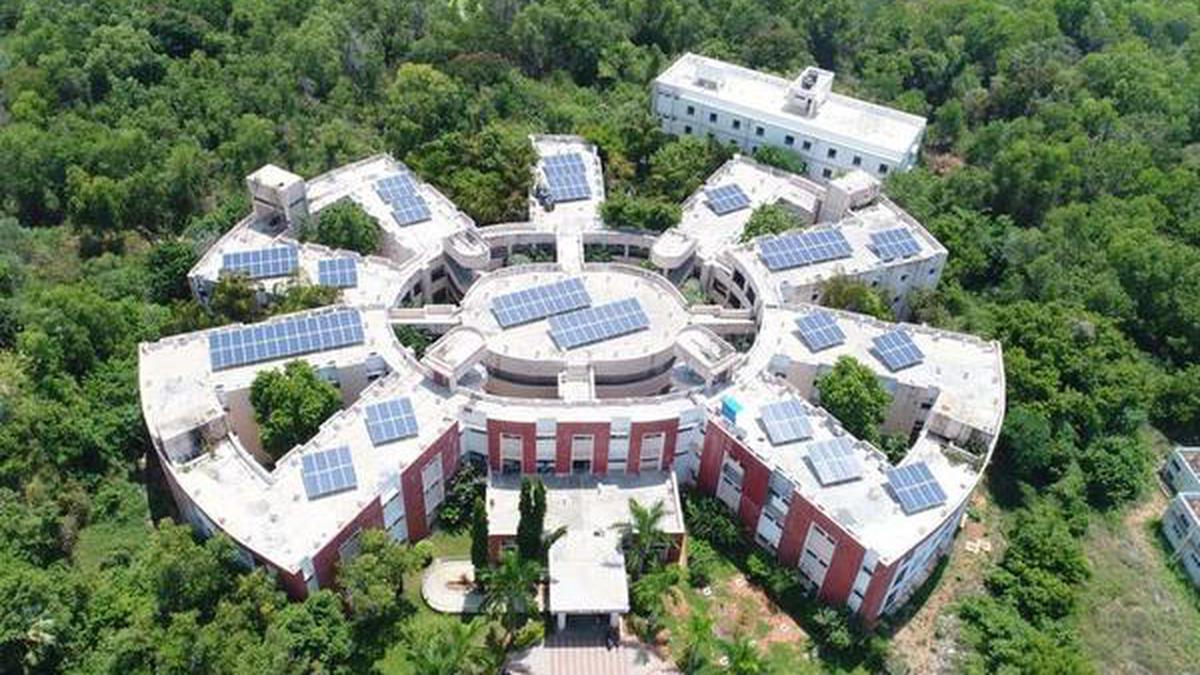
Introduction about Ph.D. in Electronics Engineering at Pondicherry University
Embarking on a Ph.D. in Electronics Engineering at Pondicherry University is more than just an academic pursuit; it is a transformative journey into the heart of innovation. As a premier central university located in the serene and culturally rich locale of Puducherry, the university offers a stimulating environment for researchers to push the boundaries of technology. For professionals looking to transition from corporate engineering roles to high-level research and development or academia, this program serves as the ultimate catalyst. Pondicherry University is renowned for its state-of-the-art laboratory facilities, a distinguished faculty composed of industry veterans and visionary scholars, and a research culture that fosters critical thinking and interdisciplinary collaboration. By choosing this program, you aren't just earning a degree; you are positioning yourself at the forefront of the electronic revolution that powers our modern world.
Ph.D Admission 2026-2027 & Writing Support Services by Shiksha Research
Eligibility Criteria for Ph.D. in Electronics Engineering at Pondicherry University
To ensure that the research community maintains the highest standards of academic excellence, Pondicherry University has established rigorous eligibility criteria. Aspiring doctoral candidates must demonstrate both academic consistency and a profound aptitude for advanced research.
- Qualification: Candidates must hold a Master?s degree (M.E./M.Tech) in Electronics Engineering, Electronics and Communication Engineering, Electrical and Electronics Engineering, or an allied discipline from a recognized university.
- Minimum Marks: A minimum of 55% marks (or an equivalent grade) in the qualifying postgraduate degree is mandatory. A relaxation of 5% is granted to candidates belonging to reserved categories (SC/ST/OBC/Differently-abled).
- Professional Experience: While not always mandatory, professionals with significant industry experience in R&D are highly encouraged to apply, provided they meet the academic prerequisites.
- National Level Exams: Candidates who have qualified for UGC-NET (including JRF), CSIR-NET (including JRF), GATE, or teacher fellowship holders are often given preference and may be exempt from the written entrance examination.
Entrance Exam for Ph.D. in Electronics Engineering at Pondicherry University
The entrance examination is the gateway to identifying the most capable minds. Pondicherry University conducts its own All India Entrance Examination to screen applicants. The exam is designed to test not only the candidate's technical knowledge but also their logical reasoning and research aptitude. The question paper typically consists of multiple-choice questions covering core electronics engineering subjects such as Signal Processing, VLSI Design, Embedded Systems, and Electromagnetic Theory. Success in this exam requires a strategic approach and a deep understanding of the fundamentals. For those who find the transition from industry back to academic testing challenging, seeking professional guidance can be beneficial.
Fee Structure for Ph.D. in Electronics Engineering at Pondicherry University
Pondicherry University, being a central institution, offers a highly subsidized and competitive fee structure compared to private technical institutes. This ensures that financial constraints do not hinder the progress of deserving researchers. Below is an approximate breakdown of the fee components for the doctoral program.
| Fee Component | Estimated Amount (INR) - Indian Residents | Frequency |
|---|---|---|
| Registration Fee | ?1,000 - ?2,000 | One-time |
| Tuition Fee | ?10,000 - ?15,000 | Per Annum |
| Library & Laboratory Fee | ?5,000 - ?8,000 | Per Annum |
| Examination/Evaluation Fee | ?5,000 - ?10,000 | At the time of submission |
| Cauition Deposit (Refundable) | ?2,000 - ?5,000 | One-time |
Note: The fee structure is subject to change based on university notifications. Candidates should check the latest prospectus for precise figures.
Admission Process for Ph.D. in Electronics Engineering at Pondicherry University
The admission process is a multi-step journey intended to select researchers who can contribute meaningfully to the scientific community. The process typically proceeds as follows:
- Online Application: Interested candidates must apply through the university's official portal during the admission window (usually announced in the summer).
- Entrance Test: Shortlisted candidates appear for the entrance exam (unless exempt).
- Interview and Presentation: Candidates who qualify the entrance test or have valid NET/GATE scores are called for a personal interview. Here, you are expected to present your research interest or a preliminary proposal before a Departmental Research Committee (DRC).
- Merit List: Admission is granted based on the combined performance in the entrance exam (70%) and the interview (30%). For exempt candidates, the interview carries full weightage.
- Verification and Final Admission: Selected candidates undergo document verification and pay the admission fees to secure their seat.
Ph.D. Subjects and Specializations in Electronics Engineering at Pondicherry University
Pondicherry University offers a wide spectrum of specializations within Electronics Engineering, allowing researchers to specialize in niche domains. These subjects are designed to keep pace with the Rapid technological advancements in the Industry 4.0 era. Candidates can choose to specialize in:
- Advanced Digital Signal Processing
- VLSI Design and Nanotechnology
- Wireless Communication and 5G/6G Networks
- Embedded Systems and Real-Time Architectures
- Control Systems and Robotics
- Biomedical Electronics
- Optical Communication
Research Areas in Electronics Engineering at Pondicherry University
Identifying the right research area is critical for a successful Ph.D. The university encourages exploration in both theoretical and applied electronics. Current high-impact research areas include the Internet of Things (IoT), Machine Learning hardware acceleration, Renewable Energy systems, and Sensor networks. During the early stages of your research, articulating your ideas into a formal document is essential. Many scholars find that utilizing Research Paper Writing Services helps them structure their preliminary findings according to international publishing standards, ensuring their work gains the visibility it deserves.
Documents Required for Ph.D. in Electronics Engineering at Pondicherry University
Maintaining a complete set of documentation is vital for a smooth application process. The university requires verified copies of the following:
- SSLC/HSC Mark sheets for age proof.
- UG and PG Degree Certificates and Consolidated Mark Lists.
- Transfer Certificate (TC) and Migration Certificate.
- National Level Entrance Exam Scorecards (GATE/NET/JRF).
- Detailed Research Proposal (Statement of Purpose).
- Community Certificate (if applicable).
- No Objection Certificate (NOC) from the current employer for working professionals.
When drafting your research instruments for the field-work or experimental phase, it is often wise to seek professional assistance in Questionnaire Design and Development to ensure the data you collect is robust and analytically sound.
Pondicherry University Ph.D. Syllabus for Electronics Engineering
The Ph.D. journey consists of two main phases: Coursework and the Experimental/Thesis phase. The coursework is designed to ground the researcher in advanced methodology and subject-specific depth.
- Paper I: Research Methodology - Covering quantitative methods, research ethics, and technical writing.
- Paper II: Advanced Subject Paper - Tailored to the candidate's specialization (e.g., Advanced VLSI or Digital Communication).
- Paper III: Directed Study - A specific topic related to the proposed research area chosen in consultation with the supervisor.
Successful completion of coursework allows the candidate to proceed to full-time research. To bridge the gap between complex research and a polished final document, many candidates leverage Thesis and Dissertation Writing Services to help refine their narrative and ensure linguistic precision.
How To Apply for Ph.D. in Electronics Engineering at Pondicherry University
Applying to Pondicherry University is a streamlined online experience. Follow these steps to ensure a successful application:
- Visit the official admission portal at pondiuni.edu.in.
- Create a user profile and fill in your demographic and academic details.
- Upload scanned copies of your photographs, signature, and necessary certificates.
- Select "Ph.D. in Electronics Engineering" and the relevant department.
- Pay the application fee via online banking or credit/debit card.
- Download and print the application form for future reference during the interview.
Career Scope and Job Opportunities After Ph.D. in Electronics Engineering from Pondicherry University
A Ph.D. from a central university like Pondicherry University opens doors to elite career paths. In the professional world, doctoral degree holders are seen as subject matter experts and strategic thinkers. Career opportunities include:
- Research Scientist: In national labs like ISRO, DRDO, or private R&D centers of tech giants like Intel, Qualcomm, and Samsung.
- Professor/Academic Leader: Tenure-track positions in premier engineering colleges and universities worldwide.
- Consultant: Providing technical expertise to government agencies or engineering firms.
- Entrepreneurship: Founding deep-tech startups based on patented research.
To succeed in these roles, the ability to derive insights from data is paramount. Scholars often collaborate with Research Data Analysis Services to interpret their experimental results, providing the empirical weight needed for high-impact career advancements.
Scholarship for Ph.D. in Electronics Engineering at Pondicherry University
Pondicherry University is committed to supporting its researchers financially. Several scholarship avenues are available:
- University Fellowship: Provided to full-time Ph.D. scholars who are not receiving any other financial assistance.
- JRF/SRF: Candidates who have qualified NET-JRF or GATE are eligible for fellowships through UGC, CSIR, or DST.
- Project Fellowships: Working on funded research projects under faculty members offers both a stipend and valuable hands-on experience.
- Visvesvaraya PhD Scheme: Specific to electronics and IT, providing substantial monthly stipends and annual research grants.
FAQs Regarding Ph.D. in Electronics Engineering at Pondicherry University
Q1: Is Pondicherry University a good choice for a Ph.D. in Electronics?
A1: Absolutely. As a central university with high NAAC ratings and excellent NIRF rankings, it offers prestige and infrastructure that are hard to match.
Q2: Can I pursue a Ph.D. while working in the corporate sector?
A2: Yes, Pondicherry University offers a part-time Ph.D. category for internal and external candidates, provided they have the necessary NOC from their employer.
Q3: How long does it take to complete the Ph.D. program?
A3: The minimum duration is 3 years, while the maximum is typically 6 years, depending on the progress of the research.
Q4: Do I need a published paper before applying?
A4: It is not a requirement for application, but having a publication can significantly strengthen your profile during the interview stage.
In conclusion, pursuing a Ph.D. in Electronics Engineering at Pondicherry University is an invitation to innovate, lead, and excel. With the right support and dedication, your research can contribute to the global technological narrative, paving the way for a brilliant professional future.




