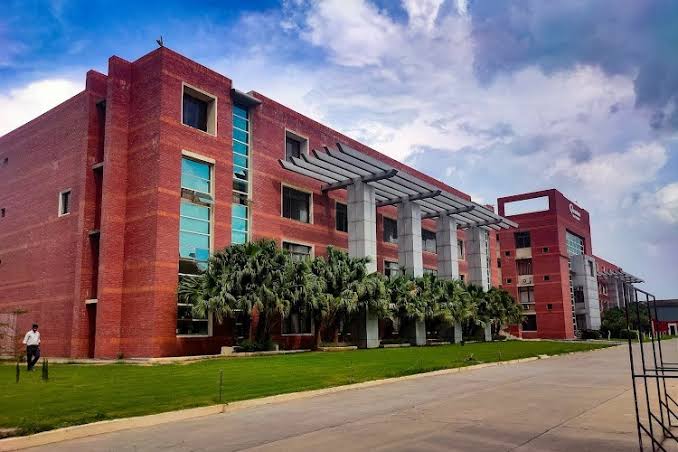
Introduction about Ph.D. in Engineering at Quantum University
Embarking on a Ph.D. in Engineering at Quantum University is more than just a pursuit of a higher degree; it is a commitment to spearheading innovation and becoming a catalyst for global technological change. Located in the heart of the educational hub of Roorkee, Quantum University offers a unique interdisciplinary approach that bridges the gap between traditional engineering and the demands of the modern industrial revolution. Through their "Passion Programs," the university encourages doctoral candidates to think beyond the blueprints, fostering a research environment where engineering meets sustainability, artificial intelligence, and societal impact. For professionals looking to cement their legacy as thought leaders, this program provides the intellectual rigor and the cutting-edge infrastructure necessary to transform complex problems into breakthrough solutions.
Ph.D Admission 2026-2027 & Writing Support Services by Shiksha Research
Eligibility Criteria for Ph.D. in Engineering at Quantum University
Quantum University maintains a high standard for its doctoral candidates to ensure that the research output remains world-class. To be eligible for the Ph.D. in Engineering program, candidates must hold a Master?s degree in Engineering (M.E.) or technology (M.Tech) in a relevant discipline from a recognized university. A minimum aggregate of 55% marks (or an equivalent grade) is required. For professionals who have been away from academia, certain Relaxations are offered to candidates from reserved categories as per the UGC guidelines. The university values diversity in thought and experience, making it an ideal destination for those who wish to transition from executive roles to research-driven leadership. Often, the journey starts with professional PhD Admission Assistance to navigate the specific prerequisites successfully.
Entrance Exam for Ph.D. in Engineering at Quantum University
The gateway to the doctoral program involves a comprehensive evaluation of the candidate's analytical and technical aptitude. Quantum University conducts its own entrance examination, which typically Tests research methodology and core engineering concepts. However, candidates who have already qualified for national-level examinations such as GATE, UGC-NET, or CSIR-NET are often given preference or exempted from the university?s written entrance test. Following the entrance exam, shortlisted candidates are invited for a personal interview where they must defend their research interests before a panel of eminent academicians. This rigorous selection process ensures that only the most dedicated minds enter the research fold.
Fee Structure for Ph.D. in Engineering at Quantum University
The investment in a Ph.D. at Quantum University is designed to be affordable yet comprehensive, reflecting the university's commitment to democratizing high-level research. The fee structure covers academic registration, semester-wise tuition, library access, and laboratory usage. Below is a detailed breakdown of the approximate investment involved:
| Component | Fee (Approx. INR) | Frequency |
|---|---|---|
| Registration & Application Fee | ?1,000 - ?2,000 | One-time |
| Annual Program Fee | ?70,000 - ?90,000 | Yearly |
| Security Deposit (Refundable) | ?5,000 | One-time |
| Thesis Submission & Examination Fee | ?15,000 - ?20,000 | At the time of submission |
| Material & Lab Charges | As per Research Scope | Per Semester |
Admission Process for Ph.D. in Engineering at Quantum University
The admission process at Quantum University is streamlined and transparent, designed to accommodate the schedules of working professionals. The cycle generally begins with the release of an official notification on the university website. After submitting the application form along with the necessary documentation, candidates appear for the entrance test. The most crucial part of the process is the presentation of a research synopsis. To ensure your proposal stands out, many scholars seek expert PhD Topic Selection and Proposal Assistance to align their vision with global engineering trends. Once the interview panel approves the proposal, the candidate is formally enrolled and assigned a supervisor.
Ph.D. Subjects and Specializations in Engineering at Quantum University
Quantum University offers a wide spectrum of specializations, allowing engineers to delve deep into their specific niche. The interdisciplinarity of the curriculum ensures that researchers are not confined to silos. Major specializations include:
- Computer Science & Engineering: Focusing on AI, Machine Learning, and Cybersecurity.
- Mechanical Engineering: Research in Thermal Engineering, Robotics, and Advanced Manufacturing.
- Civil Engineering: Sustainable Construction, Structural Dynamics, and Geotechnical Engineering.
- Electronics & Communication: VLSI Design, Embedded Systems, and IoT.
- Electrical Engineering: Renewable Energy Systems and Power Electronics.
Research Areas in Engineering at Quantum University
The research ecosystem at Quantum University is vibrant and forward-looking. The university encourages projects that have real-world applications. Emerging research areas include Smart Cities infrastructure, Green Technologies, Nanotechnology applications in Engineering, and Big Data Analytics for industrial optimization. The university provides state-of-the-art labs and encourages interdisciplinary research that spans across different engineering departments. For those looking to validate their innovative findings, the university provides a pathway for Patent Filing and Support Services to protect their intellectual property and contributions to technology.
Documents Required for Ph.D. in Engineering at Quantum University
Maintaining a complete and accurate portfolio of documents is essential for a smooth admission experience. Candidates are generally required to provide:
- Post-Graduate degree certificate and mark sheets (Self-attested copies).
- Under-Graduate degree certificate and mark sheets.
- A detailed Research Proposal (Synopsis).
- Work experience certificates (if applying as a professional).
- No Objection Certificate (NOC) from the current employer (if applicable).
- Valid ID proof and recent passport-sized photographs.
- Entrance exam scorecards (GATE/NET/Q-CARE).
Quantum University Ph.D. Syllabus for Engineering
The Ph.D. syllabus is divided into two main phases: Course Work and Independent Research. The initial coursework is mandatory and designed to equip the scholar with advanced academic tools. Key subjects usually include:
- Research Methodology: Covering qualitative and quantitative research techniques, data analysis, and software tools.
- Research Publication & Ethics: Understanding academic integrity and the nuances of scientific writing.
- Advanced Engineering Mathematics: Specialized mathematical modeling for engineering problems.
- Review of Literature: In-depth exploration of existing research within the chosen specialization.
- Elective Subject: A specific advanced course related to the candidate's research area.
How To Apply for Ph.D. in Engineering at Quantum University
Prospective candidates can apply through the university's official portal. The application process is entirely digital. First, register on the website and fill in the personal and academic details. Upload the required documents and pay the application fee online. Ensure that your research summary is concise yet impactful. After submission, keep track of the entrance exam dates and interview schedules sent via email. Given the competitive nature of the program, some candidates opt for Honorary Doctorate Programs if they already possess decades of exceptional contribution to the field, though the Ph.D. remains the standard for academic research.
Career Scope and Job Opportunities After Ph.D. in Engineering from Quantum University
A Ph.D. from Quantum University opens doors to elite career trajectories that go beyond traditional roles. Graduates find themselves in high-demand positions such as Chief Technology Officer (CTO), Senior Research Scientist in global R&D labs, and Tenure-track Professors in prestigious universities. Furthermore, the doctorate empowers individuals to act as high-level consultants for government and private engineering projects. The path to these roles is often paved by consistent high-quality publications. Scholars often utilize Research Publication Support to ensure their work reaches indexed journals like Scopus or Web of Science, further enhancing their professional standing and global employability.
Scholarship for Ph.D. in Engineering at Quantum University
Quantum University believes in rewarding merit and supporting innovation. Full-time researchers may be eligible for university fellowships or teaching assistantships, where they provide support in undergraduate labs and lectures in exchange for a stipend. Furthermore, the university assists students in applying for government-funded scholarships and external research grants. Scholarships are often granted based on the quality of the research proposal and the candidate's academic track record. To ensure your scholarship application and final thesis are of the highest linguistic and technical standard, professional Editing and Proofreading Services can be a vital resource for ensuring clarity and precision.
FAQs Regarding Ph.D. in Engineering at Quantum University
Q1: Is Part-time Ph.D. available for working professionals?
A: Yes, Quantum University offers a flexible Ph.D. track designed for professionals who wish to continue their research alongside their careers.
Q2: How long does it take to complete the Ph.D.?
A: The minimum duration is three years, while the maximum duration typically extends to six years, depending on the research progress.
Q3: Does Quantum University host international research collaborations?
A: Yes, the university has multiple MoUs with international institutions to facilitate global exposure and collaborative research for its Ph.D. scholars.
Q4: Is the Ph.D. from Quantum University UGC recognized?
A: Absolutely. The doctoral degrees awarded by Quantum University are fully recognized by the University Grants Commission (UGC), ensuring their validity for academic and government jobs.




