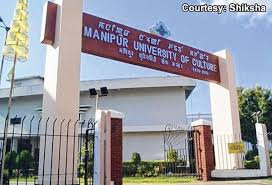
Introduction about Ph.D. in English at Manipur University
Embarking on a doctoral journey in English at Manipur University opens doors to a world where literature, culture, and critical thought intersect. The program is meticulously crafted for professionals who aspire to become thought leaders, researchers, and educators. Whether your passion lies in postcolonial studies, digital humanities, or linguistic theory, this Ph.D. equips you with the scholarly rigor and creative freedom to shape the future of English studies.
Eligibility Criteria for Ph.D. in English at Manipur University
To qualify for the Doctor of Philosophy in English, candidates must meet the following requirements:
- A Master’s degree (M.A.) in English or a related discipline with at least 55% marks (or equivalent CGPA) from a recognized university.
- Candidates who hold a NET/SET qualification or a Ph.D. in another subject are exempted from the entrance test.
- Professional experience in academia, publishing, or research enhances your profile but is not mandatory.
- Age limit is not stipulated; the program welcomes scholars of all ages.
Entrance Exam for Ph.D. in English at Manipur University
The entrance examination assesses both subject knowledge and research aptitude. It comprises:
- Written Test (100 marks) – Includes literary theory, criticism, and research methodology.
- Interview (30 marks) – Evaluates the candidate’s proposed research topic, analytical skills, and communication.
Preparation resources, such as past papers and recommended reading lists, are available on the university’s official portal. Candidates with NET/SET clearance are directly invited for the interview stage.
Fee Structure for Ph.D. in English at Manipur University
| Component | Amount (INR) |
|---|---|
| Application Fee (online) | 1,000 |
| Admission Fee (once) | 5,000 |
| Annual Tuition & Lab Fees | 12,000 per year |
| Library & Resource Center Charge | 1,500 per year |
| Examination & Evaluation Fee | 2,000 (per assessment) |
| Total Approximate Cost (3‑Year Program) | 45,000 – 55,000 |
Fees are subject to annual revision by the university council. Scholarships and fee waivers are discussed later in this article.
Admission Process for Ph.D. in English at Manipur University
The admission workflow is streamlined to ensure transparency:
- Online Application: Fill the application form on the university website and upload scanned copies of academic certificates.
- Document Verification: Submit originals for verification at the Admission Office within the stipulated timeframe.
- Entrance Examination: Appear for the written test (unless exempted).
- Interview: Present your research proposal before the Departmental Committee.
- Final Selection: Merit list released; successful candidates receive an admission letter.
- Enrollment: Pay the admission fee and register for the semester.
Ph.D. Subjects and Specializations in English at Manipur University
Manipur University offers a diverse range of specializations to align with contemporary scholarly trends:
- Postcolonial Literature and Theory
- Comparative Literature
- Digital Humanities and Textual Studies
- English Linguistics and Sociolinguistics
- Creative Writing and Narrative Studies
- Ecocriticism and Environmental Humanities
Research Areas in English at Manipur University
Faculty mentors guide doctoral candidates through cutting‑edge research domains, including:
- Indigenous narratives of Northeast India
- Gender and queer studies in English literature
- Transnational literary flows and diaspora studies
- Critical discourse analysis of media and politics
- Intersections of literature and technology
- Preservation of oral traditions through digital archiving
Documents Required for Ph.D. in English at Manipur University
| Document | Details |
|---|---|
| Completed Application Form | Online submission with a unique application ID. |
| Academic Transcripts | Original mark sheets of M.A. (English) and earlier degrees. |
| Proof of NET/SET (if applicable) | Scorecard copy and certificate. |
| Research Proposal | 1500‑2000 words outlining objectives, methodology, and bibliography. |
| Curriculum Vitae (CV) | Professional and academic achievements, publications, and conference participation. |
| Two Academic References | Signed letters from supervisors or senior academicians. |
| Identity Proof | Aadhaar Card, Passport, or Driving Licence. |
Manipur University Ph.D. Syllabus for English
The syllabus integrates core theoretical frameworks with research methodology:
- Semester 1: Advanced Literary Theory, Research Design, Critical Methodologies.
- Semester 2: Contemporary Critical Debates, Quantitative & Qualitative Analysis, Academic Writing.
- Semester 3‑5: Specialized electives (choose based on specialization), Fieldwork, Data Collection, Drafting Chapters.
- Semester 6: Thesis Submission, Viva‑voce, Publication Planning.
How To Apply for Ph.D. in English at Manipur University
Follow these step‑by‑step instructions to submit a successful application:
- Visit the official Ph.D. English portal and click “Apply Now”.
- Register using a valid email address; you will receive a login ID and password.
- Complete the personal and academic sections, ensuring all fields are accurate.
- Upload scanned copies of the required documents (refer to the Documents Required table).
- Pay the non‑refundable application fee via net banking or credit card.
- Submit the form and note down the confirmation number for future reference.
- Monitor your email for invitations to the entrance exam and interview.
Career Scope and Job Opportunities After Ph.D. in English from Manipur University
A doctorate in English unlocks a spectrum of professional avenues:
- Academic Positions: Assistant Professor, Associate Professor, Head of Department, and research faculty in universities across India and abroad.
- Research Institutes: Fellowships at literary research councils, cultural heritage agencies, and think‑tanks.
- Publishing Industry: Editorial leadership, literary agent roles, and content strategy for publishing houses.
- Media & Communication: Senior analyst, scriptwriter, and content director for television, radio, and digital platforms.
- Policy & NGOs: Programme manager for literacy, cultural preservation, and language policy initiatives.
- Freelance & Consultancy: Independent scholar, grant writer, and consultant for curriculum development.
Scholarship for Ph.D. in English at Manipur University
Financial aid is available through multiple channels:
- University Merit Scholarship: Covers tuition and provides a monthly stipend of INR 6,000 for eligible candidates.
- UGC‑JRF & SRF: National scholarships with a generous stipend, health insurance, and travel allowance.
- State Government Fellowships: Certain state departments fund research that aligns with regional development goals.
- External Grants: Opportunities from the Indian Council of Social Science Research (ICSSR) and private foundations.
Applicants are encouraged to explore Editing and Proofreading Services to polish their research proposals, and consider PhD Topic Selection and Proposal Assistance for a competitive edge.
FAQs Regarding Ph.D. in English at Manipur University
- Q1: How long does the Ph.D. program typically take?
- A: The standard duration is 3 years, but extensions up to 5 years are permissible based on research progress.
- Q2: Is there a provision for part‑time study?
- A: Yes, qualified professionals can enroll as part‑time candidates, subject to departmental approval.
- Q3: Can I change my research supervisor during the course?
- A: Supervisor changes are allowed with mutual consent of the current supervisor, the prospective supervisor, and the Ph.D. Board.
- Q4: What is the role of PhD Admission Assistance services?
- A: They help streamline the application, ensure document compliance, and provide guidance on entrance preparation.
- Q5: Are there opportunities for interdisciplinary research?
- A: Absolutely. The university encourages collaboration with departments like Sociology, History, and Computer Science, especially for digital humanities projects.
- Q6: How do I apply for the Honorary Doctorate Programs?
- A: Information can be




