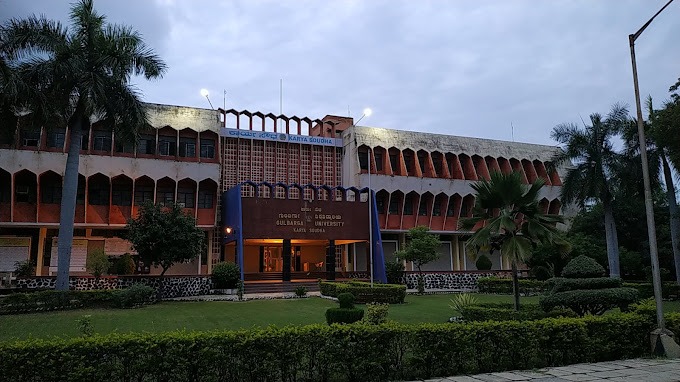
Ph.D. in Environmental Science from Gulbarga University
Gulbarga University stands as a beacon for research-driven education in Karnataka, offering a robust Ph.D. in Environmental Science that equips professionals with the analytical tools and scientific acumen required to tackle pressing ecological challenges. This comprehensive guide unpacks every facet of the program—from eligibility and entrance examinations to fee structures, research domains, and lucrative career pathways—helping aspirants make an informed decision and embark on a transformative academic journey.
Eligibility Criteria for Ph.D. in Environmental Science at Gulbarga University
Prospective candidates must satisfy the following minimum requirements:
- Possession of a Master’s degree (M.Sc., M.Tech., or equivalent) in Environmental Science, Ecology, Geography, Chemistry, Biology, or any allied discipline with at least 55% marks (or 5.0 CGPA) in the aggregate.
- For candidates with a UGC-NET qualification, the minimum percentage requirement may be relaxed to 50%.
- Valid score in the university‑conducted entrance test or equivalent national level test (e.g., GATE, CSIR‑NET).
- Applicants should have a demonstrable research interest, substantiated by a statement of purpose and at least two academic references.
Entrance Exam for Ph.D. in Environmental Science at Gulbarga University
The university conducts a rigorous entrance examination to assess candidates’ foundational knowledge and research aptitude. The exam pattern typically includes:
- Duration: 2 hours
- Sections: General Aptitude, Subject‑Specific (Environmental Science), Research Methodology, and English Proficiency.
- Mode: Offline (pen‑and‑paper) or online depending on the year's logistical framework.
- Evaluation: Objective questions (multiple‑choice) followed by an interview/Viva‑voce for shortlisted candidates.
Preparation resources, sample papers, and past year questions are routinely updated on the university’s official portal.
Fee Structure for Ph.D. in Environmental Science at Gulbarga University
| Fee Component | Amount (INR) | Notes |
|---|---|---|
| Application Processing Fee | 1,500 | Non‑refundable, payable at time of submission. |
| Entrance Examination Fee | 2,000 | Includes test materials and evaluation. |
| Annual Tuition & Laboratory Charges | 15,000 | Payable in two installments each academic year. |
| Research Project Grant (Optional) | Variable | Based on project scope; may be funded by external agencies. |
| Library & Miscellaneous Fees | 1,000 | Includes access to digital resources and campus facilities. |
| Total Approximate Cost (3‑Year Programme) | 50,000 – 55,000 | Excludes scholarships and external grants. |
Admission Process for Ph.D. in Environmental Science at Gulbarga University
- Online Registration: Create an account on the university’s admission portal and fill the Ph.D. application form.
- Document Upload: Submit scanned copies of academic transcripts, degree certificates, research proposal abstract, and identity proof.
- Application Fee Payment: Pay the processing fee via net banking, credit card, or UPI.
- Entrance Examination: Appear for the scheduled test; results are announced within four weeks.
- Interview & VIVA: Shortlisted candidates are invited for a personal interview with the department panel.
- Final Admission Offer: Successful candidates receive an admission letter outlining registration dates and fee payment schedules.
Ph.D. Subjects and Specializations in Environmental Science at Gulbarga University
Students can tailor their research trajectory by selecting from the following specializations:
- Climate Change Modeling & Impact Assessment
- Environmental Toxicology & Risk Assessment
- Water Resources Management & Sustainable Hydrology
- Renewable Energy Systems & Policy Analysis
- Ecological Restoration & Biodiversity Conservation
- Geospatial Technologies and Remote Sensing
- Environmental Policy, Governance, and Law
Research Areas in Environmental Science at Gulbarga University
Grounded in interdisciplinary collaboration, the department emphasizes cutting‑edge research themes such as:
- Carbon sequestration techniques and greenhouse gas mitigation.
- Pollutant dynamics in urban and rural water bodies.
- Impact of industrial effluents on soil health and agricultural productivity.
- Development of low‑cost air quality monitoring systems.
- Integration of GIS and machine learning for environmental hazard prediction.
- Socio‑economic implications of climate resilience strategies.
Documents Required for Ph.D. in Environmental Science at Gulbarga University
| Document | Details | Format |
|---|---|---|
| Application Form | Completed online with personal and academic details. | |
| Mark Sheets & Degree Certificates | All semesters of Master’s degree and graduation. | Scanned PDF (Clear copy) |
| Research Proposal Abstract | 150‑200 word synopsis of intended research. | Word Document |
| UGC‑NET / GATE Score Card (if applicable) | Original score sheet. | |
| Identity Proof | Aadhaar Card / Passport. | Scanned PDF |
| Two Academic References | Letters from supervisors or senior faculty. |
Gulbarga University Ph.D. Syllabus for Environmental Science
The curriculum blends core theoretical modules with intensive research work. Major components include:
- Advanced Environmental Chemistry
- Statistical Methods for Environmental Data
- Research Methodology & Scientific Writing
- Ecological Modelling & Simulation
- Special Topics (Electives) – e.g., Climate Policy, Waste Management, Renewable Energy.
- Comprehensive Thesis & Defense.
How To Apply for Ph.D. in Environmental Science at Gulbarga University
Follow these step‑by‑step instructions for a seamless application experience:
- Visit the official Gulbarga University website and navigate to the “Admissions – Ph.D.” section.
- Register using a valid email address and create a secure password.
- Complete the online application form, ensuring accuracy in personal, academic, and research details.
- Upload the required documents (as listed in the “Documents Required” table).
- Pay the non‑refundable processing fee through the integrated payment gateway.
- Submit the application and note the generated Application ID for future reference.
- Monitor your email for notifications regarding entrance exam dates, results, and interview schedules.
Career Scope and Job Opportunities After Ph.D. in Environmental Science from Gulbarga University
A doctoral degree opens diverse avenues across academia, industry, and government. Typical roles include:
- Assistant/Associate Professor & Research Scientist in universities and research institutes.
- Environmental Consultant for multinational corporations and NGOs.
- Policy Analyst for state and central environmental ministries.
- Project Leader in climate adaptation and sustainable development programs.
- Senior Analyst in environmental data analytics firms.
- Chief Technical Officer or Head of R&D in clean‑tech startups.
According to recent industry surveys, the demand for Ph.D. holders in environmental sciences is projected to grow at an annual rate of 12% over the next five years, reflecting the escalating global focus on sustainability.
Scholarship for Ph.D. in Environmental Science at Gulbarga University
The university offers merit‑based scholarships and financial aid to outstanding candidates:
- University Merit Scholarship: Covers up to 50% of tuition fees for students securing a rank within the top 10% of the entrance exam.
- UGC‑JRF (Junior Research Fellowship): Nationally funded fellowship providing a monthly stipend of INR 31,000.
- State Government Stipends: Additional monthly assistance for Karnataka residents.
- Research Project Grants: Funding for fieldwork, laboratory equipment, and conference participation.
Applicants are encouraged to consult the university’s scholarship portal for detailed eligibility criteria, application deadlines, and required documentation.
FAQs Regarding Ph.D. in Environmental Science at Gulbarga University
- What is the minimum duration to complete the Ph.D. program?
- The typical minimum period is three years, provided the candidate fulfills coursework, research milestones, and thesis submission requirements.
- Can I pursue the Ph.D. part‑time while working?
- Yes, the university permits part‑time enrollment with flexible class schedules, though the total duration may extend up to six years.
- Is there any provision for foreign nationals?
- International candidates may apply, subject to equivalence of their prior qualifications and English proficiency (IELTS/TOEFL scores).
- Do I need to publish research papers before enrollment?
- Publication is not mandatory at the admission stage, but a strong research proposal and prior conference presentations enhance candidacy.
- How are supervisors assigned?
- After shortlisting, candidates may propose preferred faculty members. Final allocation is based on mutual agreement and research alignment.
For professional assistance throughout your doctoral journey, consider the following services:




