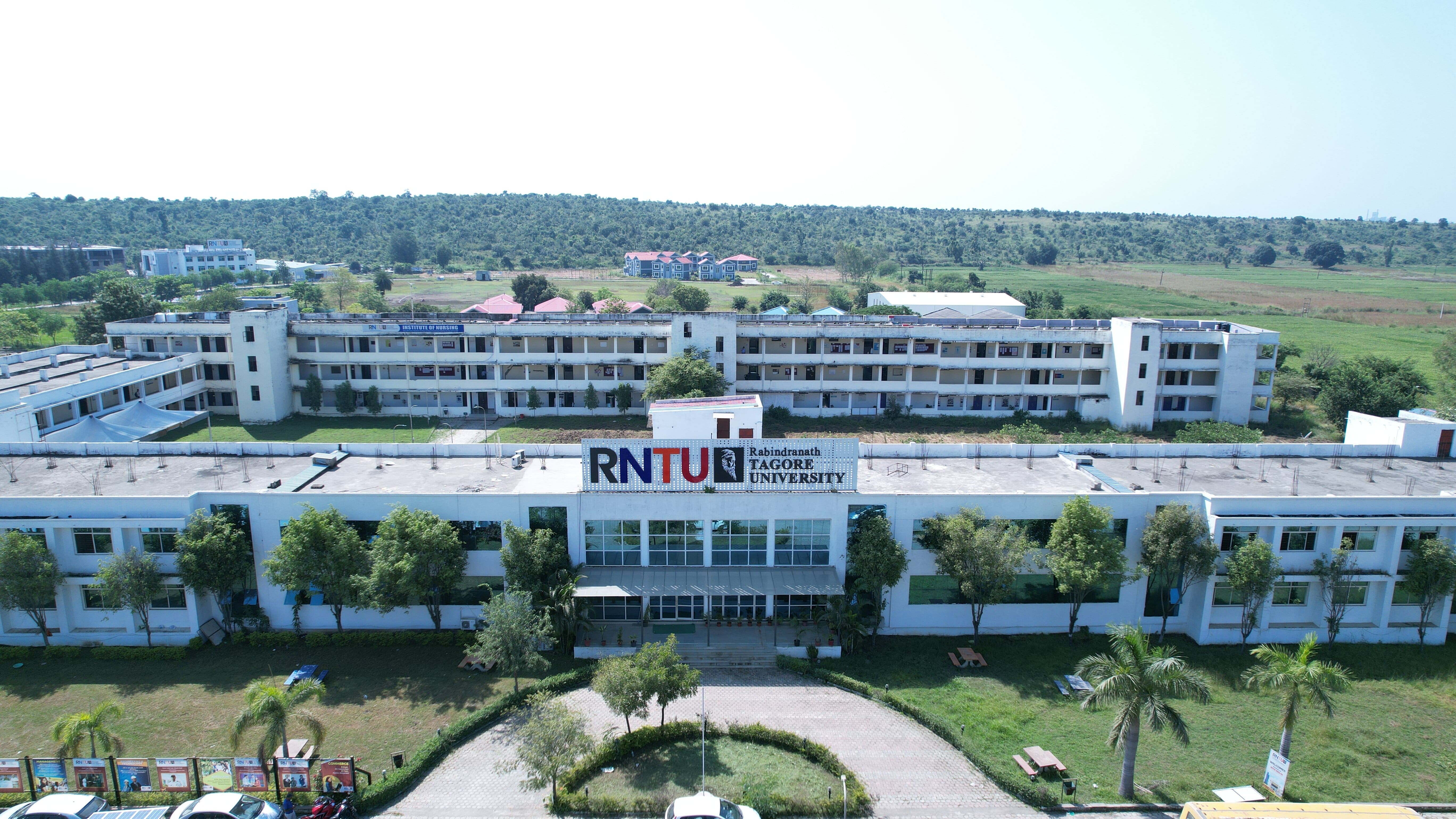
Introduction about Ph.D. in Environmental Science at Rabindranath Tagore University
The Doctor of Philosophy (Ph.D.) in Environmental Science at Rabindranath Tagore University is a premier research‑oriented programme designed for professionals who aspire to become thought leaders in sustainable development, climate change mitigation, and ecosystem management. By integrating advanced scientific methodology with real‑world environmental challenges, the programme equips scholars with the analytical rigor and interdisciplinary perspective required to influence policy, drive innovation, and contribute to global environmental stewardship.
Eligibility Criteria for Ph.D. in Environmental Science at Rabindranath Tagore University
- Master’s degree (M.Sc., M.Tech., M.A.) in Environmental Science, Ecology, Geography, Biology, Chemistry, Physics or any related discipline with a minimum of 55% aggregate.
- Valid GATE, NET, or UGC‑CSIR score is preferred but not mandatory.
- Candidates must have a strong research background demonstrated through publications, conference presentations, or project experience.
- Minimum age of 21 years at the time of admission.
- English language proficiency (IELTS/TOEFL) for international candidates.
Entrance Exam for Ph.D. in Environmental Science at Rabindranath Tagore University
The university conducts its own entrance examination for candidates without a valid national-level score. The exam evaluates:
- Fundamental concepts in environmental science and related disciplines.
- Research methodology, statistics, and data interpretation.
- Critical thinking and problem‑solving through case studies.
The test is followed by a personal interview where the candidate’s research proposal, motivation, and alignment with faculty expertise are examined.
Fee Structure for Ph.D. in Environmental Science at Rabindranath Tagore University
| Component | Annual Fee (INR) | One‑Time Charges |
|---|---|---|
| Tuition & Laboratory Fees | 85,000 | — |
| Library & Digital Resources | 12,000 | — |
| Research Project Grant (mandatory) | — | 30,000 |
| Registration & Examination Fee | — | 10,000 |
| Total Approx. First Year Cost | 97,000 | 40,000 |
Note: Fees are subject to revision annually. Scholarships and assistantships can significantly reduce the financial burden.
Admission Process for Ph.D. in Environmental Science at Rabindranath Tagore University
- Online Application: Fill the web‑based application form and upload required documents.
- Screening of Academic Credentials: The admissions committee verifies eligibility and research potential.
- Entrance Examination / Interview: Candidates either appear for the university‑level test or submit a valid national‑level score, followed by a personal interview.
- Provisional Admission Letter: Issued upon successful clearance of the exam and interview.
- Final Admission & Enrollment: Pay the first installment of fees and register for the semester.
Ph.D. Subjects and Specializations in Environmental Science at Rabindranath Tagore University
The programme offers flexible specialization tracks, allowing scholars to tailor their research to emerging environmental challenges:
- Climate Change Modeling & Impact Assessment
- Environmental Toxicology & Pollution Control
- Renewable Energy Systems & Sustainable Technology
- Conservation Biology & Biodiversity Management
- Water Resources Management & Hydrology
- Urban Ecology & Smart Cities
Research Areas in Environmental Science at Rabindranath Tagore University
Faculty members lead cutting‑edge research in the following domains:
- Carbon sequestration and greenhouse gas mitigation strategies.
- Microplastics in marine and freshwater ecosystems.
- Air quality monitoring using IoT‑enabled sensor networks.
- Ecological restoration and habitat connectivity.
- Life‑cycle assessment of renewable energy installations.
- Policy analysis for climate resilience in developing regions.
Documents Required for Ph.D. in Environmental Science at Rabindranath Tagore University
| Document | Format | Remarks |
|---|---|---|
| Academic Transcripts (Post‑graduate) | PDF (Scanned) | Certified copies required |
| Research Proposal (2,000‑2,500 words) | DOCX or PDF | Outline objectives, methodology, and expected outcomes |
| Curriculum Vitae | Include publications, conferences, and work experience | |
| Proof of National‑Level Entrance Exam (if applicable) | GATE, NET, UGC‑CSIR scorecard | |
| English Proficiency Test Score (for foreign nationals) | IELTS/TOEFL | |
| Passport‑size Photograph | JPEG (300 dpi) | White background |
Rabindranath Tagore University Ph.D. Syllabus for Environmental Science
The curriculum is divided into three phases:
- Coursework (Year 1): Core modules on advanced environmental chemistry, statistical methods, GIS & remote sensing, and research ethics.
- Comprehensive Examination (End of Year 1): Written and oral assessment covering all core subjects.
- Dissertation Research (Years 2‑4): Independent research under the guidance of a faculty supervisor, culminating in a thesis and viva‑voce.
How To Apply for Ph.D. in Environmental Science at Rabindranath Tagore University
Follow these steps to submit a successful application:
- Visit the official university portal and click on “Apply for Ph.D.”
- Register with a valid email address to create a user profile.
- Complete the online application form, ensuring all fields are accurately filled.
- Upload scanned copies of the required documents (see Documents Required section).
- Pay the non‑refundable application fee of INR 2,500 via net banking or credit card.
- Submit the form and note the application reference number for future correspondence.
Career Scope and Job Opportunities After Ph.D. in Environmental Science from Rabindranath Tagore University
Graduates enjoy a broad spectrum of high‑impact career paths:
- Academic & Research Positions: Assistant Professor, Post‑Doctoral Fellow, Research Scientist in universities and research institutes.
- Government & Public Policy: Environmental Analyst, Climate Policy Advisor, Senior Scientist in ministries of environment, water resources, and energy.
- Industry & Corporate: Sustainability Manager, ESG Analyst, R&D Lead in renewable energy firms, waste management, and consulting agencies.
- International Organizations: Programme Officer at UNDP, World Bank, WHO, or NGOs focusing on environmental health and climate action.
- Entrepreneurship: Founder of green tech startups, environmental consultancy, or eco‑tourism ventures.
Scholarship for Ph.D. in Environmental Science at Rabindranath Tagore University
Several merit‑based and need‑based financial aids are available:
- University Merit Scholarship: Up to 50% tuition waiver for students with a minimum 70% aggregate.
- National Fellowship (UGC‑CSIR): Full tuition remission and monthly stipend.
- Research Assistantship: Stipend of INR 15,000 per month for participation in funded projects.
- External Grants: Opportunities to apply for grants from the Ministry of Environment, Forest and Climate Change, and international bodies.
FAQs Regarding Ph.D. in Environmental Science at Rabindranath Tagore University
- Q1: Can I pursue the Ph.D. part‑time while working?
- Yes, the university offers a flexible part‑time mode for professionals with a minimum of 3 years of relevant work experience.
- Q2: Is there a minimum duration for completing the doctorate?
- The minimum prescribed period is 3 years, with a maximum of 6 years for full‑time candidates.
- Q3: Do I need to publish research papers before enrollment?
- Publication is not mandatory for admission, but a strong research record (conference papers, journal articles) enhances eligibility.
- Q4: What language is the thesis submitted in?
- Theses may be submitted in English or Hindi, subject to departmental approval.
- Q5: Are there opportunities for interdisciplinary collaboration?
- Absolutely. The university encourages joint supervision with departments such as Engineering, Agriculture, and Management.
Research Support Services
Rabindranath Tagore University partners with leading service providers to assist Ph.D. candidates throughout their research journey:




