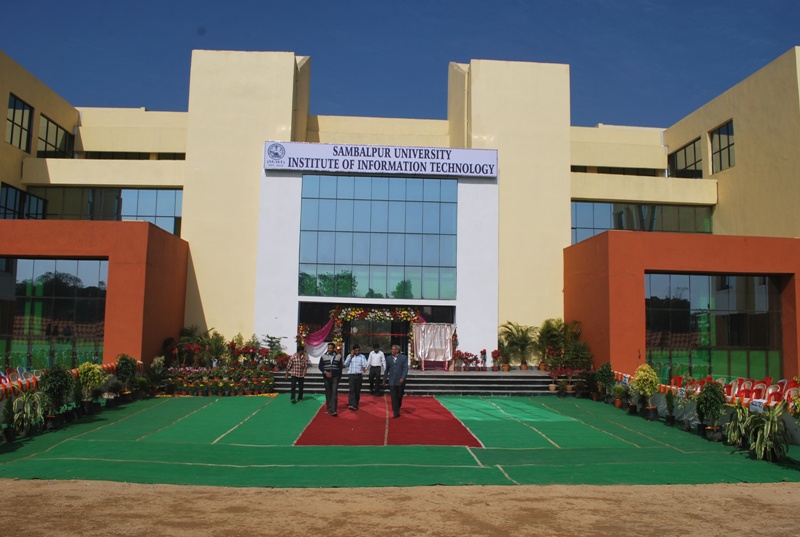
Introduction about Ph.D. in Environmental Science at Sambalpur University
Pursuing a Ph.D. in Environmental Science at Sambalpur University offers a unique blend of rigorous academic training, cutting‑edge research facilities, and a vibrant community of scholars dedicated to sustainable development. As climate challenges intensify, the demand for experts who can devise innovative solutions has never been higher. This blog provides an exhaustive overview for professionals aiming to advance their careers through doctoral research, covering eligibility, entrance examinations, fee structures, admission procedures, specialization options, research domains, syllabus outlines, scholarship opportunities, and future career pathways.
Eligibility Criteria for Ph.D. in Environmental Science at Sambalpur University
Candidates must meet the following minimum requirements:
- A Master's degree (or equivalent) in Environmental Science, Ecology, Biology, Chemistry, Geology, or a related discipline with at least 55% marks (or 5.5 CGPA on a 10‑point scale).
- For candidates holding a UG degree with a valid NET/JRF, the minimum percentage requirement is relaxed to 50%.
- Eligibility is also extended to holders of a recognized Ph.D. in a related field who wish to undertake a second doctorate for specialization.
- Age limit: No upper age restriction, though candidates should be capable of completing the program within the stipulated period.
The university also evaluates candidates based on research aptitude, publications, and professional experience.
Entrance Exam for Ph.D. in Environmental Science at Sambalpur University
Admission is primarily based on the Sambalpur University Ph.D. Entrance Test (SUTET). Key details include:
- Mode: Offline (pen‑and‑paper) and occasional online sessions.
- Pattern: Multiple Choice Questions (MCQs) and descriptive sections covering core environmental concepts, research methodology, statistics, and subject‑specific topics.
- Duration: 2 hours.
- Scoring: Candidates must secure a minimum of 50% marks in the overall exam and at least 40% in each section.
- Relaxations: Candidates qualified in UGC NET/JRF, CSIR NET, GATE, or equivalent national level examinations are exempted from the written test and are evaluated on an interview basis only.
Fee Structure for Ph.D. in Environmental Science at Sambalpur University
| Category | Annual Fee (INR) | Notes |
|---|---|---|
| General Category | 12,000 | Payable at the start of each academic year. |
| SC/ST/OBC (Non‑Creamy Layer) | 6,000 | Subsidised fee as per Government norms. |
| International Students | 18,000 | Additional processing charges may apply. |
| Late Payment Penalty | 2,000 (per installment) | Applicable after the 30th day of due date. |
Admission Process for Ph.D. in Environmental Science at Sambalpur University
The admission workflow is streamlined into distinct phases:
- Online Application: Candidates register on the university portal, fill in personal and academic details, and upload required documents.
- Entrance Examination: Eligible candidates sit for SUTET, unless exempted by qualifying national-level exams.
- Interview & Presentation: Shortlisted candidates present a research proposal and undergo a viva‑voce with the department panel.
- Final Selection: Merit list is prepared based on academic score, entrance test performance, interview rating, and research experience.
- Admission Confirmation: Successful candidates receive an admission letter, pay the first-year fee, and are enrolled in the Ph.D. programme.
Ph.D. Subjects and Specializations in Environmental Science at Sambalpur University
The university offers a diverse set of specializations allowing scholars to focus on niche areas:
- Ecological Modelling & Conservation
- Environmental Toxicology & Risk Assessment
- Water Resources Management & Hydrology
- Atmospheric Sciences & Climate Change
- Renewable Energy Systems
- Solid Waste Management & Circular Economy
- Geospatial Technologies & Remote Sensing
- Environmental Policy & Governance
Each specialization is supported by dedicated faculty, state‑of‑the‑art laboratories, and collaboration with regional research institutes.
Research Areas in Environmental Science at Sambalpur University
Current research thrusts align with national priorities and global sustainability goals:
- Impact of industrial effluents on riverine ecosystems.
- Climate resilience strategies for agriculture in Eastern India.
- Bioremediation of heavy metals using indigenous microbial strains.
- Assessment of air quality indices in urban corridors.
- Development of low‑cost sensors for real‑time environmental monitoring.
- Policy analysis of carbon trading mechanisms.
- Community‑based approaches to solid waste segregation.
Prospective candidates are encouraged to align their proposals with these focal points, thereby enhancing funding prospects and collaborative opportunities.
Documents Required for Ph.D. in Environmental Science at Sambalpur University
| Document | Purpose / Details |
|---|---|
| Academic Transcripts | Certified copies of all degree certificates (Graduation & Post‑Graduation). |
| Research Proposal | Brief (1500‑2000 words) outlining objectives, methodology, and expected outcomes. |
| Curriculum Vitae (CV) | Highlights academic achievements, publications, and relevant work experience. |
| Letter of Recommendation (2) | From academicians or industry experts familiar with the applicant’s research potential. |
| NET/JRF Scorecard (if applicable) | Proof of national‑level qualification for exam exemption. |
| Identity Proof | Aadhaar card, passport, or any government‑issued ID. |
Sambalpur University Ph.D. Syllabus for Environmental Science
The syllabus is structured into three progressive phases:
- Phase I – Core Foundations (Year 1): Advanced Environmental Chemistry, Research Methodology, Statistics for Environmental Data, and GIS & Remote Sensing.
- Phase II – Specialization (Year 2): Subject‑specific electives such as Climate Modelling, Waste Management Technologies, or Ecotoxicology, accompanied by laboratory rotations.
- Phase III – Thesis Research (Year 3‑5): Independent research, regular progress evaluations, publication of findings, and final dissertation defense.
Continuous assessment through seminars, journal clubs, and conference participation is integral to the programme.
How To Apply for Ph.D. in Environmental Science at Sambalpur University
Follow these step‑by‑step instructions:
- Visit the official Sambalpur University admission portal and create a new user account.
- Select “Ph.D. – Environmental Science” from the list of programmes.
- Upload scanned copies of the required documents (as listed in the Documents table).
- Pay the application fee online via net banking, credit/debit card, or UPI.
- Submit the online form and note the application reference number for future tracking.
- Prepare for the entrance examination or arrange for an interview if exempted.
- Upon successful selection, complete the enrollment formalities at the university’s Department of Environmental Science.
Career Scope and Job Opportunities After Ph.D. in Environmental Science from Sambalpur University
Graduates enjoy a wide array of career pathways:
- Academic Positions: Assistant Professor, Associate Professor, or Research Fellow in universities and colleges.
- Research Institutions: Senior Scientist roles at CSIR, ICAR, IGCAR, and international research labs.
- Government Agencies: Environmental consultancy




