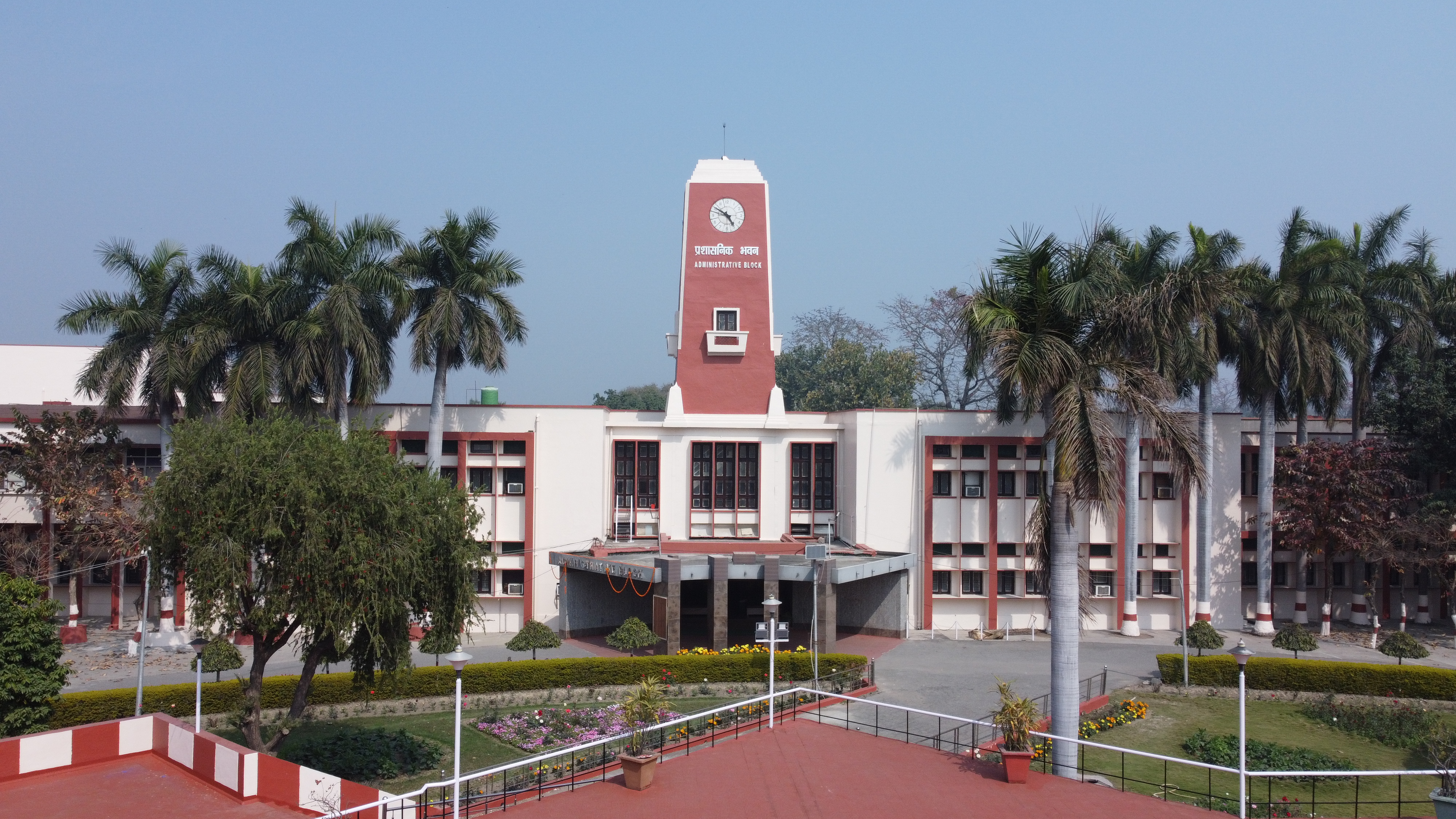
Introduction about Ph.D. in Farm Machinery and Power Engineering at G.B. Pant University
Embarking on a journey toward a Ph.D. in Farm Machinery and Power Engineering at Govind Ballabh Pant University of Agriculture and Technology (GBPUAT), Pantnagar, is more than just pursuing an academic degree; it is a commitment to revolutionizing the backbone of the global economy?agriculture. As the first agricultural university in India, established in 1960 and modeled after the Land Grant University pattern of the USA, GBPUAT stands as a beacon of excellence in research and innovation. The Department of Farm Machinery and Power Engineering under the College of Technology provides a sophisticated ecosystem where engineering principles meet the soil. For professionals seeking to lead the next agricultural revolution, this program offers the perfect blend of legacy, advanced technology, and a vision for sustainable mechanization. It is an invitation to solve complex challenges such as labor scarcity, energy efficiency, and precision farming using cutting-edge engineering interventions.
Ph.D Admission 2026-2027 & Writing Support Services by Shiksha Research
Eligibility Criteria for Ph.D. in Farm Machinery and Power Engineering at G.B. Pant University
To join this prestigious doctoral program, candidates must demonstrate a high level of academic proficiency and a solid foundation in engineering principles. The eligibility criteria are designed to ensure that only the most dedicated and capable professionals enter the research fray. Primarily, applicants must hold a Master?s degree (M.Tech. or M.E.) in Farm Machinery and Power Engineering or an equivalent specialization from a recognized university. A minimum Overall Grade Point Average (OGPA) of 6.50/10.000 or 65% marks in the aggregate is generally required for the general category, with relaxation provided for reserved categories as per university and state government norms. Furthermore, candidates are expected to have a strong background in agricultural sciences and mechanical engineering, bridging the gap between hardware design and field application.
Entrance Exam for Ph.D. in Farm Machinery and Power Engineering at G.B. Pant University
Admission to the Ph.D. program is highly competitive and is primarily governed by the University Entrance Examination conducted by GBPUAT. This rigorous test evaluates the candidate?s depth of knowledge in core subjects such as Soil Dynamics, Tractor Design, Renewable Energy Sources, and Instrumentation. The examination typically consists of objective and subjective components that test analytical skills and research aptitude. Additionally, candidates who have cleared national-level examinations like GATE or have secured ICAR-SRF (Senior Research Fellowship) often find themselves at a distinct advantage during the selection process. The entrance exam serves as a gateway to ensure that the researchers entering the department possess the technical caliber required to handle advanced laboratory equipment and complex computational models.
Fee Structure for Ph.D. in Farm Machinery and Power Engineering at G.B. Pant University
Investment in a Ph.D. at G.B. Pant University is an investment in a lifetime of professional leadership. The fee structure is designed to be affordable while maintaining world-class facilities. While fees are subject to periodic revisions, the following table provides a breakdown of the typical costs involved for a doctoral candidate:
| Fee Component | Approximate Amount (Per Semester/Annual) |
|---|---|
| Admission/Registration Fee | ?5,000 (One-time) |
| Tuition Fee | ?25,000 - ?35,000 (Per Semester) |
| Hostel Charges | ?10,000 - ?15,000 (Per Year) |
| Library and Laboratory Fee | ?8,000 (Annual) |
| Caution Money (Refundable) | ?10,000 (One-time) |
Please note that extra charges for mess, student activities, and insurance may apply. The university also offers various financial aids to assist meritorious students coming from diverse economic backgrounds.
Admission Process for Ph.D. in Farm Machinery and Power Engineering at G.B. Pant University
The admission process at GBPUAT is systematic and transparent. It begins with the release of the official notification, usually in the early months of the year. Candidates must fill out the online application form and appear for the University Entrance Exam. Based on the merit list generated from the entrance scores, shortlisted candidates are invited for a counseling session and a personal interview. During the interview, the departmental committee assesses the candidate's research interest and alignment with the department?s current projects. Professionals often seek Thesis and Dissertation Writing Services early in their journey to understand the structure of high-quality scientific documentation required throughout this process and subsequent residency. Final admission is granted after document verification and payment of the admission fee.
Ph.D. Subjects and Specializations in Farm Machinery and Power Engineering at G.B. Pant University
The curriculum for Ph.D. students is comprehensive, focusing on both theoretical depth and practical mastery. It is designed to mold students into experts who can lead R&D departments in top-tier organizations. Some of the core subjects and specialized electives include:
- Advanced Farm Power: Study of internal combustion engines, biofuels, and electric propulsion in tractors.
- Soil-Machine Dynamics: Analysis of the interaction between tillage tools and different soil types for optimized energy consumption.
- Ergonomics and Safety: Enhancing the comfort and safety of farm operators through human-factor engineering.
- Precision Agriculture: Integration of GPS, GIS, and Remote Sensing in farm equipment for variable rate technology.
- Mechatronics in Ag-Machinery: Application of sensors and automation in modern agricultural equipment.
Research Areas in Farm Machinery and Power Engineering at G.B. Pant University
Research is the heartbeat of the Ph.D. program at Pantnagar. The university encourages innovative projects that address the immediate needs of the Indian farmer while keeping pace with global technological trends. Key research areas include the development of carbon-neutral farm machinery, AI-driven autonomous tractors, and advanced threshing mechanisms for diverse crops. To ensure the validity of their findings, many researchers utilize Research Data Analysis Services to process complex field data and environmental variables. Furthermore, the development of specialized survey tools through Questionnaire Design and Development is crucial when assessing the socio-economic impact of mechanization on small-scale farmers. The department provides access to state-of-the-art testing centers and fabrication labs to bring these research ideas to life.
Documents Required for Ph.D. in Farm Machinery and Power Engineering at G.B. Pant University
To ensure a smooth admission and registration process, candidates must keep the following documents ready for verification:
- High School and Intermediate Certificate/Marksheets.
- Bachelor?s Degree (B.Tech./B.E.) Certificate and Transcripts.
- Master?s Degree (M.Tech./M.E.) Certificate and Transcripts.
- Valid Scorecard of Entrance Exam (GBPUAT/ICAR/GATE).
- Character Certificate from the last attended institution.
- Migration Certificate and Transfer Certificate.
- Category Certificate (if applicable for OBC/SC/ST/EWS).
- Research Proposal or Statement of Purpose (SOP).
- Passport-size photographs and Identity Proof (Aadhar/Passport).
G.B. Pant University Ph.D. Syllabus for Farm Machinery and Power Engineering
The Ph.D. syllabus at GBPUAT is structured to provide a balance between advanced coursework and intensive research. The initial semesters focus on credit-based courses that lay the groundwork for the dissertation. Key modules include:
- FMP 601: Advanced Heat Engines and Renewable Energy Sources.
- FMP 602: Design and Testing of Farm Machinery.
- FMP 605: System Engineering in Agriculture.
- FMP 700: Seminar (Doctoral) to improve presentation and critical thinking.
- FMP 790: Doctoral Research (Thesis work spanning several semesters).
The syllabus is designed to evolve, incorporating the latest advancements in drone technology, robotics, and smart irrigation systems, ensuring that graduates are ready for the future of "Agri-Tech 4.0".
How To Apply for Ph.D. in Farm Machinery and Power Engineering at G.B. Pant University
Applying for a Ph.D. at G.B. Pant University is a structured process that requires attention to detail. Follow these steps to secure your application:
- Visit the Portal: Go to the official GBPUAT admissions website.
- Registration: Create a user profile using a valid email and mobile number.
- Fill the Form: Complete the online application form with accurate personal, academic, and professional details.
- Upload Documents: Upload scanned copies of the required documents and your signature/photo in the specified format.
- Payment: Pay the non-refundable application fee via net banking, credit card, or debit card.
- Admit Card: Download the admit card once the university releases it and prepare for the entrance examination.
- Counseling: Upon qualifying, attend the physical/online counseling session for seat allotment.
Career Scope and Job Opportunities After Ph.D. in Farm Machinery and Power Engineering from G.B. Pant University
The career trajectory for a Ph.D. holder from GBPUAT is exceptionally promising, with opportunities spanning across academia, government research, and the private sector. Graduates often find themselves in high-ranking positions such as Lead Scientists in ICAR (Indian Council of Agricultural Research) or as Professors in prestigious State Agricultural Universities. In the corporate world, companies like John Deere, Mahindra & Mahindra, and TAFE actively seek PhD-qualified engineers for their R&D divisions to design the next generation of tractors and implements. Additionally, the flourishing Agri-Tech startup ecosystem offers roles for Chief Technology Officers (CTOs) and Innovators. Many alumni also utilize Research Paper Writing Services to consistently publish their work in high-impact international journals, establishing themselves as thought leaders and consultants in the field of sustainable agriculture.
Scholarship for Ph.D. in Farm Machinery and Power Engineering at G.B. Pant University
Recognizing the importance of financial support for long-term research, GBPUAT provides several scholarship avenues. The most prominent is the University Graduate Assistantship, awarded to top-ranking students. Furthermore, students who have qualified for the ICAR-SRF receive substantial monthly fellowships and contingency grants. Specialized research projects funded by organizations like the Department of Science and Technology (DST) or the Department of Biotechnology (DBT) also provide Junior Research Fellowships (JRF) and Senior Research Fellowships (SRF). These financial aids allow students to focus entirely on their research without the burden of financial constraints, fostering a culture of academic excellence and continuous innovation.
FAQs Regarding Ph.D. in Farm Machinery and Power Engineering at G.B. Pant University
1. Can I apply for a Ph.D. after an M.Tech. in Mechanical Engineering?
While the primary requirement is an M.Tech. in Farm Machinery and Power Engineering, candidates with an M.Tech. in Mechanical Engineering may be considered if they meet specific credit requirements in agricultural sciences or have relevant research experience, depending on the current university guidelines.
2. Is there a residency requirement for this program?
Yes, G.B. Pant University typically requires Ph.D. scholars to be in residence for a minimum period (usually 2-3 years) to complete their coursework and conduct on-field research.
3. What is the typical duration of the Ph.D. program?
The program generally takes between 3 to 5 years to complete, depending on the complexity of the research and the speed of data collection and analysis.
4. Are part-time Ph.D. options available for working professionals?
GBPUAT offers provisions for staff and sponsored candidates to pursue Ph.D. programs, though it is essential to check the latest prospectus for specific rules regarding "In-Service" candidates and NOC requirements.
5. Does the university assist in publishing research papers?
The university has a vibrant academic environment where mentors guide students through the publication process. Faculty members often collaborate with students to publish findings in reputed national and international journals.




