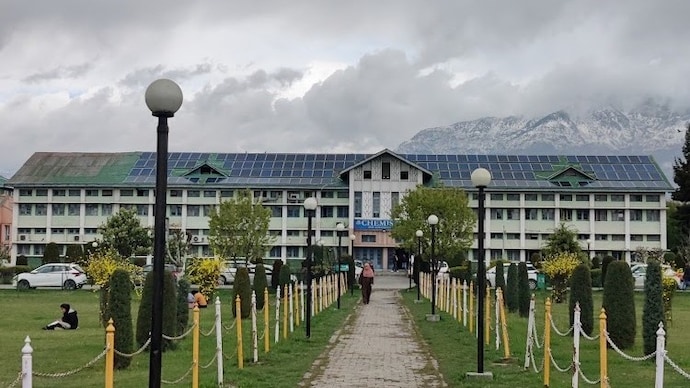
Introduction about Ph.D. in Food Technology at Kashmir University
The Doctor of Philosophy (Ph.D.) in Food Technology offered by Kashmir University is a research?intensive programme designed for professionals who aspire to become pioneers in food science, product development, and safety management. With state?of?the?art laboratories, a vibrant academic community, and strong industry linkages, the university equips scholars with the expertise required to tackle global food challenges.
Eligibility Criteria for Ph.D. in Food Technology at Kashmir University
- Master?s degree (M.Sc., M.Tech., M.Phil.) in Food Technology, Food Science, Biotechnology, Chemistry or a related discipline with a minimum of 55% aggregate (or equivalent grade).
- NET/JRF qualified candidates are exempted from the university?level entrance test.
- For candidates holding a Ph.D. in a related field, a minimum of 2 years of post?doctoral research experience is preferred.
- English proficiency (IELTS/TOEFL) is not mandatory for Indian nationals but may be required for overseas applicants.
Entrance Exam for Ph.D. in Food Technology at Kashmir University
Applicants who are not NET/JRF qualified must appear for the Kashmir University Ph.D. Entrance Examination. The exam consists of two parts:
- Paper?I (General): Reasoning, Quantitative Aptitude, and General English.
- Paper?II (Subject Specific): Food Chemistry, Food Microbiology, Food Engineering, and Research Methodology.
The selection is based on the combined score of both papers followed by a personal interview.
Fee Structure for Ph.D. in Food Technology at Kashmir University
| Category | Annual Fee (INR) | Notes |
|---|---|---|
| General Category | 12,500 | Includes tuition, library, and lab charges. |
| SC/ST/PWD | 6,250 | Half?fee concession as per university policy. |
| Scholarship/Assistantship | 0 | Full waiver with stipend of ?15,000/month. |
Admission Process for Ph.D. in Food Technology at Kashmir University
- Online application submission through the university?s portal.
- Upload scanned copies of academic certificates, experience letters, and research proposal (if available).
- Payment of application fee (?1,500 for general, ?750 for SC/ST).
- Appear for the entrance exam (unless NET/JRF qualified).
- Shortlisting based on exam scores and interview performance.
- Final admission approval and issuance of the offer letter.
Ph.D. Subjects and Specializations in Food Technology at Kashmir University
- Food Chemistry and Nutraceuticals
- Food Microbiology and Safety
- Food Engineering and Processing Technology
- Functional Foods and Biotechnology
- Packaging Technology and Quality Assurance
Research Areas in Food Technology at Kashmir University
Students can undertake cutting?edge research in the following domains:
- Development of low?glycemic index foods.
- Natural preservatives and bio?active compounds.
- High?pressure processing and novel preservation techniques.
- Food waste valorisation and sustainability.
- Consumer sensory evaluation and market trend analysis.
Documents Required for Ph.D. in Food Technology at Kashmir University
| Document | Details |
|---|---|
| Application Form | Completed online with payment receipt. |
| Academic Transcripts | Original mark sheets of Bachelor and Master degrees. |
| NET/JRF Scorecard | If applicable, latest scorecard for exemption. |
| Research Proposal | Brief 2?page proposal outlining research objectives. |
| Identity Proof | Aadhaar/Passport copy. |
| Experience Certificates | For candidates with relevant industry or teaching experience. |
Kashmir University Ph.D. Syllabus for Food Technology
The syllabus is structured into three semesters of coursework followed by comprehensive research work:
- Semester 1: Advanced Food Chemistry, Research Methodology, Statistics for Food Scientists.
- Semester 2: Food Microbiology, Food Process Engineering, Quality Management Systems.
- Semester 3: Electives (e.g., Functional Foods, Packaging Technology), Seminar, and Thesis Writing.
How To Apply for Ph.D. in Food Technology at Kashmir University
- Visit the official Kashmir University admission portal.
- Register using a valid email address and create a password.
- Fill in personal, academic, and contact details.
- Upload the required documents in PDF format (max 2?MB each).
- Pay the non?refundable application fee via net banking or credit card.
- Submit the application and note the registration number for future correspondence.
Career Scope and Job Opportunities After Ph.D. in Food Technology from Kashmir University
Graduates can explore diverse roles such as:
- Senior Research Scientist in FMCG & Food Processing Companies.
- University Lecturer / Assistant Professor.
- Food Safety Auditor and Regulatory Consultant.
- Product Development Manager in nutraceutical firms.
- Entrepreneur ? launching start?ups focused on functional foods.
According to recent industry surveys, the average salary for a Ph.D. holder in Food Technology ranges between ?8?Lakhs to ?15?Lakhs per annum, with higher compensation in multinational corporations.
Scholarship for Ph.D. in Food Technology at Kashmir University
Kashmir University offers merit?based scholarships and research assistantships covering tuition fees and providing a monthly stipend. Additional funding can be accessed through:
- University Grants Commission (UGC) Junior Research Fellowships (JRF).
- ICAR (Indian Council of Agricultural Research) scholarships.
- External fellowships from international bodies such as the Commonwealth Scholarship.
FAQs Regarding Ph.D. in Food Technology at Kashmir University
- What is the minimum duration to complete the Ph.D.?
- Typically 3 to 4 years, depending on research progress and publication requirements.
- Can I pursue the Ph.D. part?time while working?
- Yes, the university permits part?time enrolment for professionals with a minimum of 6?hours weekly research commitment.
- Is there a requirement for publishing research papers?
- At least two papers published in peer?reviewed journals are mandatory for thesis submission.
- Are there collaborations with industry for research projects?
- Yes, the department has active MoUs with leading food processing units for joint R&D initiatives.
Editing and Proofreading Services




