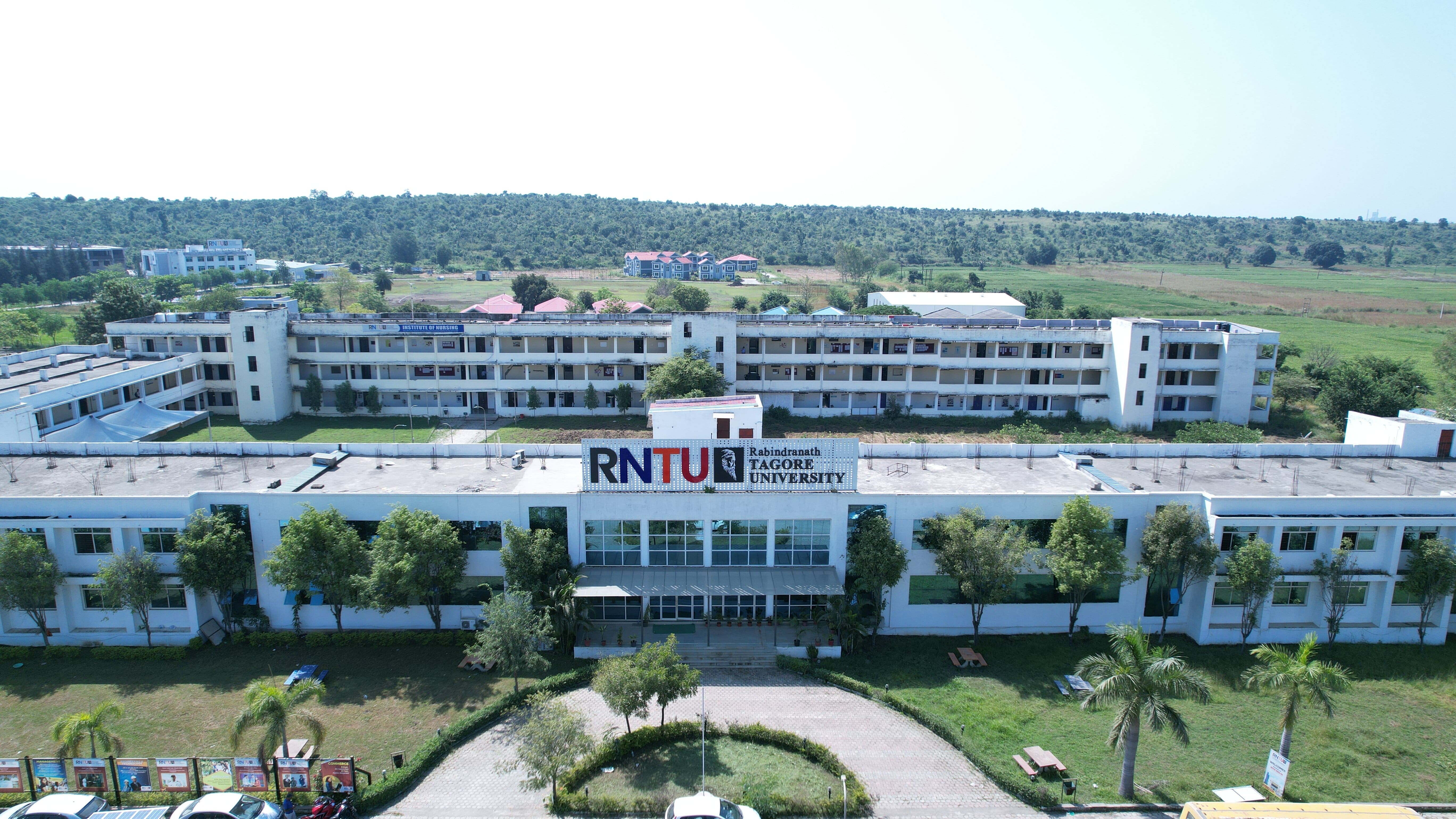
Introduction about Ph.D. in Geo-Informatics at Rabindra Bharati University
In an era where data-driven decision-making governs the sustainability of our planet, the Ph.D. in Geo-Informatics at Rabindra Bharati University stands as a beacon for professionals and scholars alike. This program is meticulously designed for those who wish to bridge the gap between traditional geography and cutting-edge technology. Rabindra Bharati University (RBU), established in the memory of the polymath Rabindranath Tagore, has evolved into a powerhouse of multidimensional education. By offering a doctoral program in Geo-Informatics, the university invites visionaries to explore the nuances of Remote Sensing (RS), Geographic Information Systems (GIS), and Global Positioning Systems (GPS) to solve real-world complexities. This journey is not merely about earning a degree; it is about becoming a pioneer in spatial intelligence and contributing to the global narrative of environmental resilience and urban planning.
Ph.D Admission 2026-2027 & Writing Support Services by Shiksha Research
Eligibility Criteria for Ph.D. in Geo-Informatics at Rabindra Bharati University
The academic rigors of a doctoral program at Rabindra Bharati University require candidates to possess a solid foundational knowledge. To be eligible for the Ph.D. in Geo-Informatics, aspirants must meet the following criteria:
- Academic Qualification: Candidates must hold a Master?s degree in Geo-Informatics, Geography, Geology, Environmental Science, Computer Science, or a related field from a recognized university.
- Minimum Marks: A minimum of 55% marks in aggregate (or an equivalent grade in a point scale) at the postgraduate level is mandatory. A relaxation of 5% is typically provided to candidates belonging to SC/ST/OBC (non-creamy layer) and PwD categories.
- National Level Exams: Candidates who have qualified for UGC-NET (including JRF), CSIR-NET, SET, or GATE are often exempted from the university?s written entrance test, though they must still appear for the personal interview.
- Professional Experience: While not mandatory, relevant professional experience in spatial data handling can provide a significant advantage during the interview phase.
Entrance Exam for Ph.D. in Geo-Informatics at Rabindra Bharati University
The selection process is highly competitive, ensuring that only the most dedicated minds enter the research fold. The university conducts a Research Entrance Test (RET) specifically designed to evaluate the candidate's analytical and subject-specific prowess. The exam generally consists of two parts:
- Part A: Research Methodology: This section tests the candidate's understanding of research ethics, statistical tools, and qualitative/quantitative analysis techniques.
- Part B: Subject Specific Knowledge: This section focuses on core Geo-Informatics concepts, including Spatial Database Management, Digital Image Processing, and Photogrammetry.
The entrance exam serves as a gateway to demonstrate your readiness for intensive independent study. Success in this exam reflects a candidate's potential to contribute meaningfully to the scientific community.
Fee Structure for Ph.D. in Geo-Informatics at Rabindra Bharati University
Investing in a Ph.D. is an investment in your future expertise. Rabindra Bharati University maintains a transparent and affordable fee structure to encourage research across diverse socio-economic backgrounds. Below is an approximate breakdown of the costs involved:
| Fee Component | Estimated Amount (INR) | Frequency |
|---|---|---|
| Admission/Application Fee | ?500 - ?1,000 | One-time |
| Registration Fee | ?5,000 - ?8,000 | One-time |
| Course Work Fee | ?10,000 - ?15,000 | Once (during coursework) |
| Annual Tuition Fee | ?5,000 - ?10,000 | Yearly |
| Thesis Submission Fee | ?8,000 - ?12,000 | One-time |
Note: The fees mentioned above are indicative and subject to change based on university notifications. Candidates are advised to check the official prospectus for the current academic session.
Admission Process for Ph.D. in Geo-Informatics at Rabindra Bharati University
The admission process at RBU is systematic and merit-based. It follows the University Grants Commission (UGC) guidelines to ensure academic integrity. The steps are as follows:
- Online Application: Interested candidates must register through the official RBU admission portal during the notification period.
- Entrance Examination (RET): Eligible candidates must appear for the Research Entrance Test.
- Declaration of Shortlisted Candidates: A list of candidates who passed the RET (or are exempted) is published for the interview round.
- Interview/Viva-Voce: This is a crucial stage where candidates discuss their research interests and professional goals before an expert committee.
- Final Merit List: Admission is offered based on the combined performance in the entrance test (for non-exempted) and the interview.
- Enrollment and Coursework: Once admitted, the scholar must complete the mandatory six-month Ph.D. coursework before proceeding with full-scale research.
Ph.D. Subjects and Specializations in Geo-Informatics at Rabindra Bharati University
The curriculum is designed to transform professionals into specialized experts. While the overall focus is on Geo-Informatics, scholars can specialize in various domains based on their master's background and career goals. Key subjects covered during the coursework and research phase include:
- Advanced Remote Sensing and Satellite Imagery.
- Geospatial Intelligence and Big Data.
- WebGIS and Mobile Mapping.
- Geostatistics and Spatial Modeling.
- Machine Learning in Geospatial Analysis.
Research Areas in Geo-Informatics at Rabindra Bharati University
Research at Rabindra Bharati University is not confined to the laboratory; it extends to the fields, forests, and urban jungles. Scholars have the opportunity to engage in high-impact research areas such as:
- Urban Dynamics: Modeling the growth of smart cities and urban heat islands.
- Agricultural Monitoring: Using hyperspectral imaging for crop health and yield prediction.
- Natural Disaster Management: Developing early warning systems for floods and landslides using real-time spatial data.
- Environmental Conservation: Mapping biodiversity and forest cover changes.
To ensure the precision of findings, many scholars utilize professional Research Data Analysis Services to handle complex spatial datasets and statistical modeling.
Documents Required for Ph.D. in Geo-Informatics at Rabindra Bharati University
Preparation is key to a smooth application. Ensure you have the following documents ready:
- Post-graduate Degree Certificate and Marksheets.
- Under-graduate Degree Certificate and Marksheets.
- NET/SET/GATE Qualification Certificate (if applicable).
- A detailed Research Proposal (Statement of Purpose).
- No Objection Certificate (NOC) from the current employer for working professionals.
- Identity Proof (Aadhar Card, Passport, etc.).
- Caste/Category Certificate (if applicable).
Since the research proposal is the backbone of your application, many candidates seek assistance from Thesis and Dissertation Writing Services to refine their research objectives and methodology before submission.
Rabindra Bharati University Ph.D. Syllabus for Geo-Informatics
The Ph.D. syllabus at RBU is divided into two distinct phases: the pre-registration coursework and the post-registration research period. The coursework structure includes:
- Paper I: Research Methodology: Ethics, Literature Review, and Philosophy of Science.
- Paper II: Advanced Geo-Informatics: Recent trends in GIS technology and Satellite Sensor Systems.
- Paper III: Statistical and Computational Techniques: Mastery of software like ArcGIS, QGIS, and Python for Geospatial data.
- Paper IV: Term Paper/Seminar: Presentation of a pilot study related to the candidate's chosen research topic.
During the data collection phase, creating scientific data collection tools is vital. Scholars often focus on Questionnaire Design and Development to gather primary socio-geographic data from field surveys.
How To Apply for Ph.D. in Geo-Informatics at Rabindra Bharati University
Applying for a Ph.D. at RBU is a digital-first process. Follow these steps carefully:
- Visit the official RBU website and navigate to the 'Admission' section.
- Register with a valid email ID and phone number.
- Fill in the personal, academic, and professional details.
- Upload the scanned copies of required documents in the specified format.
- Pay the application fee via the secure online payment gateway.
- Submit the application and download the confirmation page for future reference.
Career Scope and Job Opportunities After Ph.D. in Geo-Informatics from Rabindra Bharati University
The career trajectory for a Ph.D. holder in Geo-Informatics is exceptionally promising. Professionals can transcend traditional roles and step into leadership positions such as:
- Geospatial Scientist: Working with space agencies like ISRO or NASA.
- Urban Planner: Consulting for smart city projects and municipal corporations.
- Associate Professor: Shaping the next generation of geographers in prestigious universities.
- GIS Consultant: Providing spatial insights for multinational corporations in telecommunications and logistics.
- Research Fellow: Leading international projects funded by the UN or World Bank.
The ability to publish significant findings is vital for career growth. Engaging with Research Paper Writing Services can help scholars present their findings in high-impact, peer-reviewed journals, thereby enhancing their professional credibility.
Scholarship for Ph.D. in Geo-Informatics at Rabindra Bharati University
To support full-time research, several financial aids are available to scholars at Rabindra Bharati University:
- UGC Junior Research Fellowship (JRF): For candidates who have qualified the NET-JRF exam.
- Swami Vivekananda Merit-cum-Means Scholarship: Provided by the Government of West Bengal for meritorious students from economically weaker sections.
- University Fellowships: Occasional fellowships provided by RBU based on departmental funding and merit.
- ICSSR/CSIR Fellowships: Available for specific social science or scientific research projects.
FAQs Regarding Ph.D. in Geo-Informatics at Rabindra Bharati University
A: Yes, RBU allows working professionals to pursue a Ph.D., provided they submit an NOC from their employer and comply with the coursework requirements.
Q2: What is the duration of the Ph.D. program?A: The minimum duration is 3 years, including coursework, and the maximum is usually 6 years.
Q3: Can I apply if my Master's is in Computer Science?A: Yes, as long as you have an interest in spatial technology and meet the minimum 55% marks requirement.
Q4: Does the university provide hostel facilities for research scholars?A: Yes, RBU offers hostel facilities for outstation candidates, though seats are limited and allotted based on availability and university norms.
Q5: How important is the research proposal for the interview?A: Extremely important. Your proposal demonstrates your clarity of thought, the feasibility of your study, and your familiarity with existing literature.




